If your thread keeps shredding, start by double-checking your machine’s threading, needle installation, and alignment. Make sure your thread and bobbin are compatible and properly wound, and check your tension settings—too tight or loose can cause issues. Regularly clean lint and dust from the tension discs and bobbin area, and replace bent or dull needles promptly. Following these tips will help you pinpoint the problem and prevent future shredding—there’s more to uncover to keep your stitches smooth.

Get business pricing on tools and workshop supplies
- Business-only prices and quantity discounts
- Tax-exempt purchasing
- Multiple users, one account, clear invoices
Key Takeaways
- Ensure the sewing machine is properly threaded, passing through all guides, tension discs, and the take-up lever correctly.
- Regularly check and adjust tension settings to match thread type and fabric for balanced stitches.
- Use compatible bobbins and thread, and keep the bobbin area clean and well-maintained.
- Replace bent or dull needles promptly and confirm correct needle installation.
- Perform routine cleaning, lubrication, and maintenance to prevent lint buildup and mechanical issues.
sewing machine needle replacement kit
As an affiliate, we earn on qualifying purchases.
As an affiliate, we earn on qualifying purchases.
Why Does My Thread Keep Shredding While Sewing?
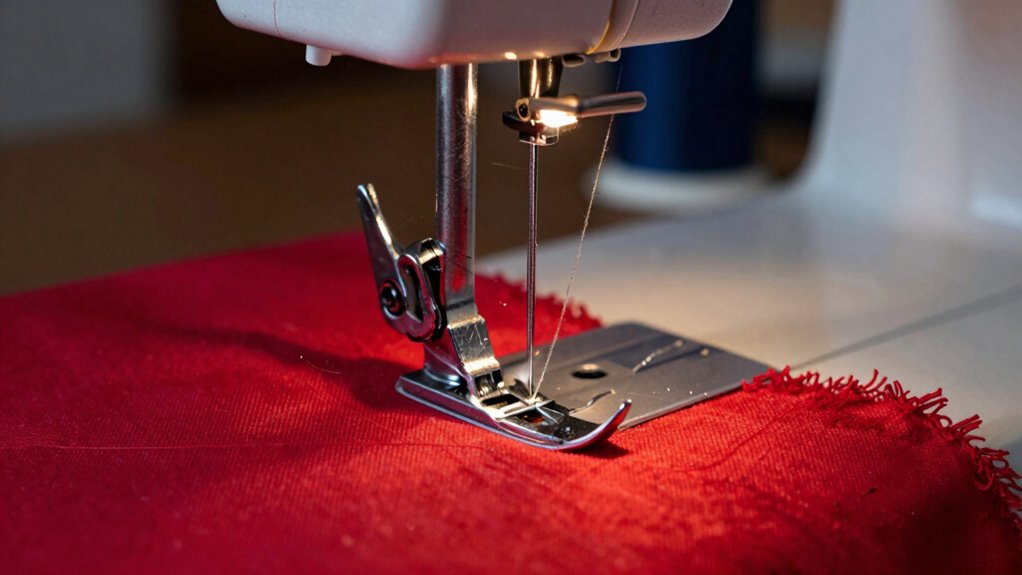
If your thread keeps shredding while sewing, the problem often lies in the quality or compatibility of the thread and needle. The thread color can also impact tension and smoothness; using a thread that clashes or is too thin may cause shredding. Pay attention to the thread material, as some fabrics require specific types like polyester or cotton. Low-quality or incompatible thread materials tend to weaken easily under tension, leading to breakage and shredding. Additionally, if the thread color doesn’t match the fabric or isn’t suited for the project, it might require more tension or cause resistance, increasing the risk of shredding. Proper thread tension settings and using the correct needle size can also significantly reduce shredding issues. Ensuring that the thread quality is high and suitable for your sewing machine can prevent many common problems related to shredding. Regularly inspecting your sewing machine and maintaining it can help identify issues before they cause thread damage. Being aware of machine maintenance routines can further improve sewing performance and prevent shredding problems. It’s also helpful to choose compatible thread and needle to minimize unnecessary tension adjustments.
How to Check and Fix Thread and Bobbin Compatibility
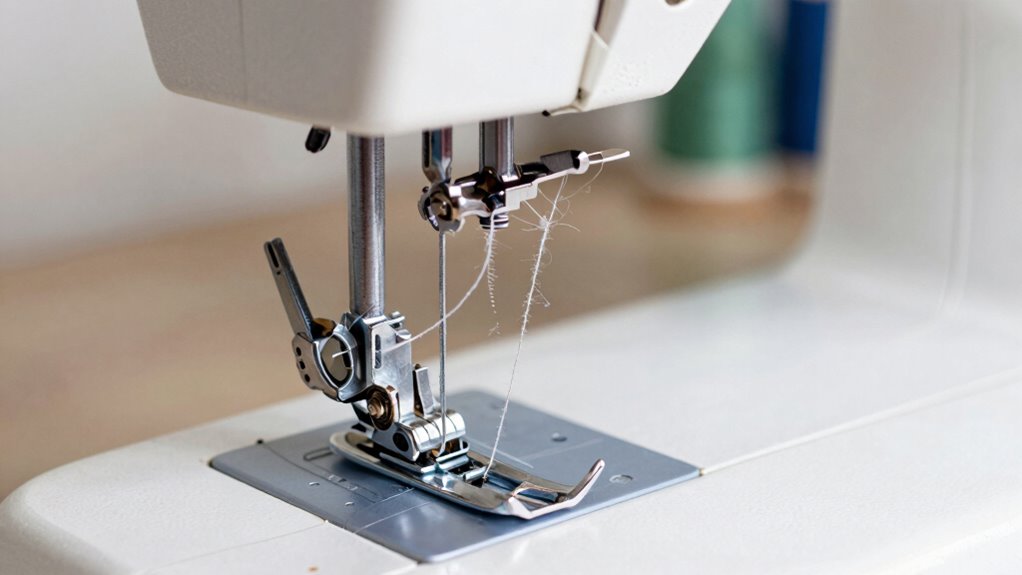
Ensuring your thread and bobbin are compatible is essential for smooth sewing. Start by checking the thread compatibility with your fabric and machine. Use the recommended thread type and size for your project. Next, examine your bobbin—make sure it matches your machine’s specifications. Incorrect bobbin size or type can cause tension issues and shredding. During bobbin troubleshooting, remove the bobbin and inspect it for damage or dirt, and ensure it spins freely. Rewind the bobbin if needed, making sure the thread winds evenly. When replacing the bobbin, always follow your machine’s guidelines. Properly threaded bobbins and compatible thread help prevent tension problems, reducing the risk of shredding and ensuring a smooth sewing experience. Additionally, understanding the Free Floating threading mechanism can help you troubleshoot tension issues more effectively. Regularly cleaning your machine’s tension discs can also prevent thread shredding caused by buildup or misalignment, and paying attention to thread tension settings will keep your stitches even and secure.
How to Adjust Thread Tension to Prevent Shredding
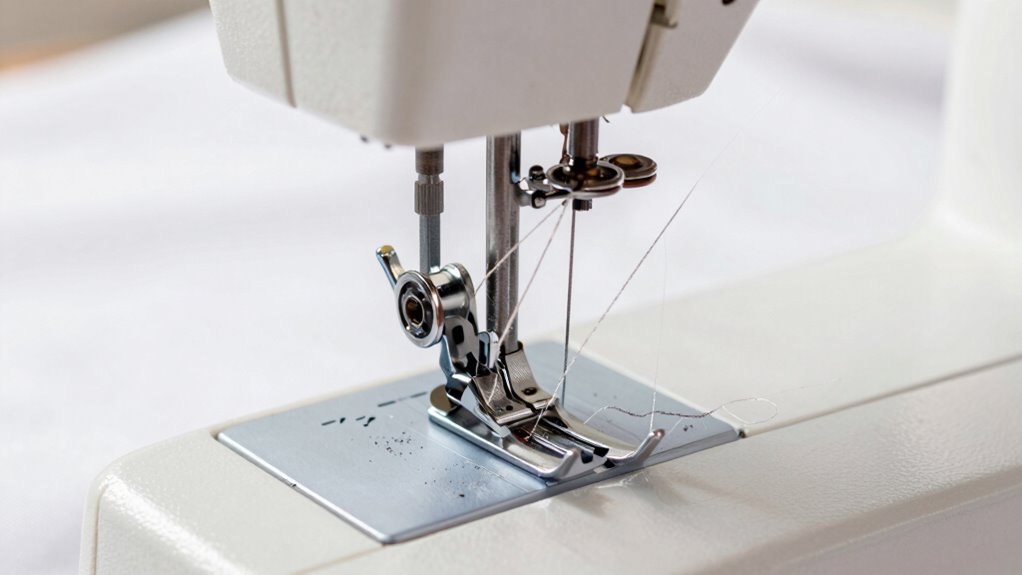
Start by checking the thread path to make certain it’s correctly seated and smoothly guided through the machine. Next, adjust the tension settings gradually, testing on scrap fabric until the stitches are even and secure. Proper tension control helps prevent thread shredding and keeps your sewing smooth.
Check Thread Path
Sometimes, thread shredding happens because the thread isn’t running smoothly through the machine’s path. To fix this, check that the thread follows the correct route, avoiding tangles or obstructions. A clear thread path guarantees consistent stitch quality and prevents damage.
- Ensure the thread is properly seated in the tension discs.
- Check for any lint or debris blocking the thread guides.
- Confirm the thread is correctly threaded through all guides and the needle.
- Use compatible thread for your fabric to minimize stress on the thread and improve stitch quality.
- Regularly inspect and clean the thread path to maintain optimal operation and prevent issues.
Adjust Tension Properly
Have you noticed your stitches puckering or the thread breaking frequently? Adjusting your thread tension correctly is key to fixing this. Start by testing on a scrap fabric and gradually tighten or loosen the tension dial until your stitches look even and balanced. Proper thread tension ensures the stitch quality stays consistent, with neither loose nor tight stitches. If tension is too tight, your thread may shred or the fabric could pucker. Conversely, too loose tension causes skipped stitches or unraveling. Use the tension indicator to set a neutral starting point, then tweak it as needed. Remember, small adjustments make a big difference. Regularly checking and adjusting your thread tension helps prevent shredding and results in professional-looking, durable stitches. Additionally, proper sewing machine maintenance can provide insights into how proper tuning and adjustments can optimize overall performance. Paying attention to machine calibration and ensuring all parts are clean and well-lubricated also contributes to consistent tension and stitch quality. Moreover, understanding air purifier maintenance dos and don’ts can help keep your sewing area free of dust and allergens, contributing to a cleaner workspace.
How to Check and Replace Your Sewing Machine Needle Correctly
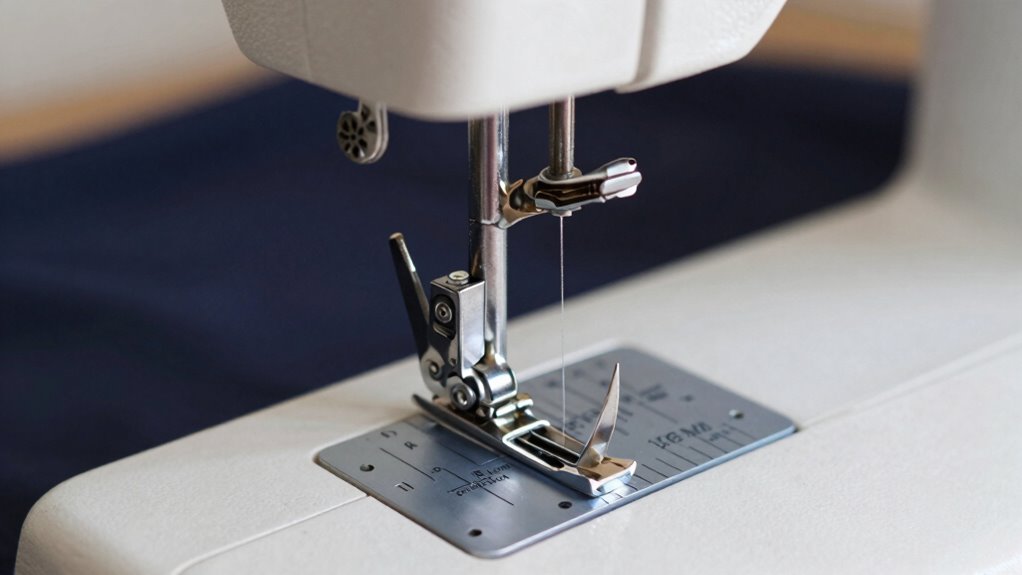
When checking or replacing your sewing machine needle, make sure you choose the right type and size for your fabric and project. Proper installation is key—insert the needle correctly and tighten it securely. Using the wrong needle or an improperly installed one can cause shredding and stitching issues. Additionally, ensuring your needle is compatible with your machine’s specifications body jewelry materials can help prevent unnecessary damage or complications.
Needle Types and Sizes
Choosing the right sewing machine needle is essential for smooth stitching and preventing thread shredding. Selecting the correct needle type and size ensures compatibility with your fabric types and thread materials. For delicate fabrics like silk, use a microtex needle, while heavy denim calls for a denim or leather needle. The needle size should match your thread weight: thinner threads need smaller needles, and thicker threads require larger ones. Proper needle selection also helps reduce thread shredding and improves overall stitch quality. Considering fabric compatibility when choosing needles ensures optimal results. Consider these factors when checking and replacing your needle:
- Fabric weight and fiber type
- Thread diameter and material
- Needle point style (sharp, ballpoint, embroidery)
- Proper needle size for specific fabrics and threads
Regularly inspecting and swapping out needles keeps your machine running smoothly and reduces shredding issues. Be sure to also review your sewing machine maintenance to keep all components functioning properly.
Proper Installation Techniques
To guarantee your sewing machine operates smoothly and prevents thread shredding, you need to check and replace your needle correctly. Start by removing the old needle carefully, ensuring you handle it by the shank to avoid damage. When performing thread installation, make sure the needle is inserted fully and securely into the needle clamp. Proper needle positioning is essential for sewing machine calibration, as misalignment can cause skipped stitches and shredding. Always match the needle size and type to your fabric and thread, and double-check that the needle is straight and undamaged before installing. Regularly inspecting and replacing your needle ensures ideal thread flow and stitch quality, reducing the risk of thread shredding and keeping your sewing machine running smoothly. Additionally, understanding the sewing machine terminology can help you troubleshoot and maintain your equipment more effectively. Being familiar with maintenance schedules can also help you identify issues early before they lead to problems like thread shredding. Incorporating routine maintenance into your sewing routine can prevent many common issues related to thread breakage. Checking thread tension regularly is also crucial, as improper tension can contribute to shredding and uneven stitches.
How to Properly Thread Your Machine and Ensure Thread Path Alignment

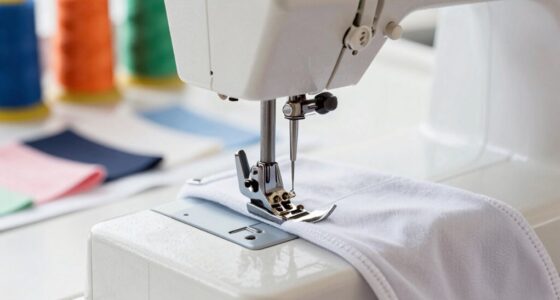
Properly threading your machine is essential for smooth sewing and preventing thread shredding. Mistakes in threading can cause tension issues and lead to breakage. To avoid threading mistakes, double-check that each thread follows the correct path, from spool to needle. Confirm the thread passes through all tension discs, guides, and the take-up lever correctly. Keep the thread snug but not tight in the guides to maintain proper tension. Misalignment in the thread path can cause uneven tension, increasing shredding risk. Additionally, regularly inspecting the thread path ensures that no obstructions or misalignments are present that could cause issues. Verify the thread is securely seated in the tension discs. Confirm the thread passes through all guides without crossing or twisting. Check the take-up lever is properly positioned. Use the correct needle and thread combination for your fabric and machine, and consult your machine’s manual for specific threading instructions to avoid common threading errors. Paying attention to proper thread tension can also significantly reduce shredding problems.
Tips for Maintaining Your Sewing Machine to Keep It Running Smoothly
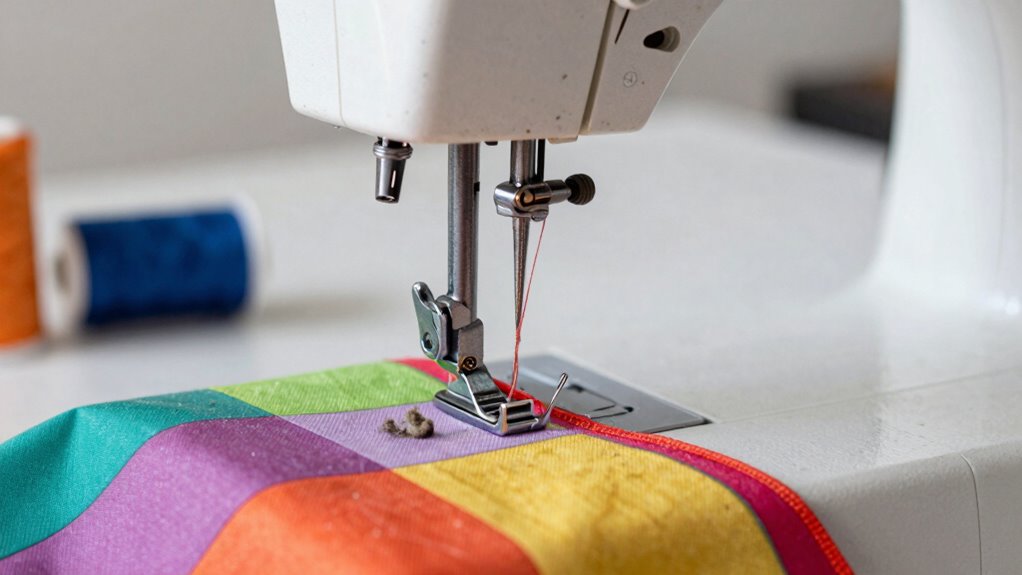
Regular maintenance is key to keeping your sewing machine running smoothly and preventing thread shredding. Consistently clean lint and dust from the machine, especially around the bobbin area and feed dogs, to avoid build-up that can cause tension issues. Regular sewing machine maintenance also includes oiling moving parts as recommended by your manufacturer, which keeps everything operating smoothly. When it comes to thread selection tips, always use high-quality thread suited for your fabric and machine; cheap or incompatible thread increases the risk of shredding. Check your needle frequently and replace it if it’s bent or dull. Properly maintaining your sewing machine helps prevent problems before they start, ensuring your projects stay hassle-free and your stitches stay perfect. Additionally, understanding the mechanics of your machine can help you identify issues early and ensure optimal performance. Staying aware of common sewing machine problems can also guide you in troubleshooting issues quickly and effectively.
Frequently Asked Questions
Can Using the Wrong Thread Type Cause Shredding?
Yes, using the wrong thread type can cause shredding. If you choose a thread material that’s too thick or not suited for your fabric, it can jam or shred easily. Also, mismatched thread color might lead you to force the needle, increasing shredding risk. Always select the right thread material for your project and verify your thread color complements your fabric for smooth sewing.
How Often Should I Clean My Sewing Machine?
An ounce of prevention is worth a pound of cure, so you should clean your sewing machine every 8-12 hours of use. Regular cleaning keeps thread lubrication ideal and reduces sewing machine noise. Dust, lint, and fabric fibers can build up, causing jams and shred thread. Make sure to remove lint from the bobbin area and check for loose parts to keep your machine running smoothly and prevent issues.
Does Fabric Type Affect Thread Shredding?
Yes, fabric type definitely affects thread shredding. When sewing stretchy fabrics, you need to use thread compatible with the fabric’s stretch to prevent shredding. Thin or delicate fabrics may require finer thread, while heavy or denim fabrics need stronger, thicker thread. Always match your thread to the fabric’s stretch and weight, and choose the right needle to avoid tension issues that cause shredding.
What Are Signs My Sewing Machine Needs Servicing?
You’ll notice your sewing machine needs servicing if stitches become uneven or thread keeps shredding despite proper tension. Check if the thread tension is consistent and not too tight, which can cause shredding. Also, if your needle quality is poor or it’s dull, it can lead to skipping stitches and damage. Regular maintenance, including replacing the needle and adjusting tension, keeps your machine running smoothly and prevents issues.
Can Improper Bobbin Placement Lead to Shredding?
Yes, improper bobbin placement can cause shredding. If your bobbin isn’t correctly aligned or the thread tension is off, it disrupts the thread path, leading to tension issues and shredded thread. Make sure your bobbin is inserted properly and check that the bobbin tension is set correctly. When these elements are correct, your sewing machine runs smoothly, preventing thread shredding and ensuring better stitches.
Conclusion
If your thread keeps shredding, don’t give up—use this checklist to troubleshoot. For example, imagine you’re sewing a delicate fabric, and suddenly your thread snaps. By checking your tension, re-threading properly, and replacing a dull needle, you could save hours of frustration. Keep your machine well-maintained and follow these steps to make certain of smooth sewing every time. With a little patience, you’ll enjoy flawless stitches and a stress-free sewing experience.
Halloween Picks
halloween
As an affiliate, we earn on qualifying purchases.