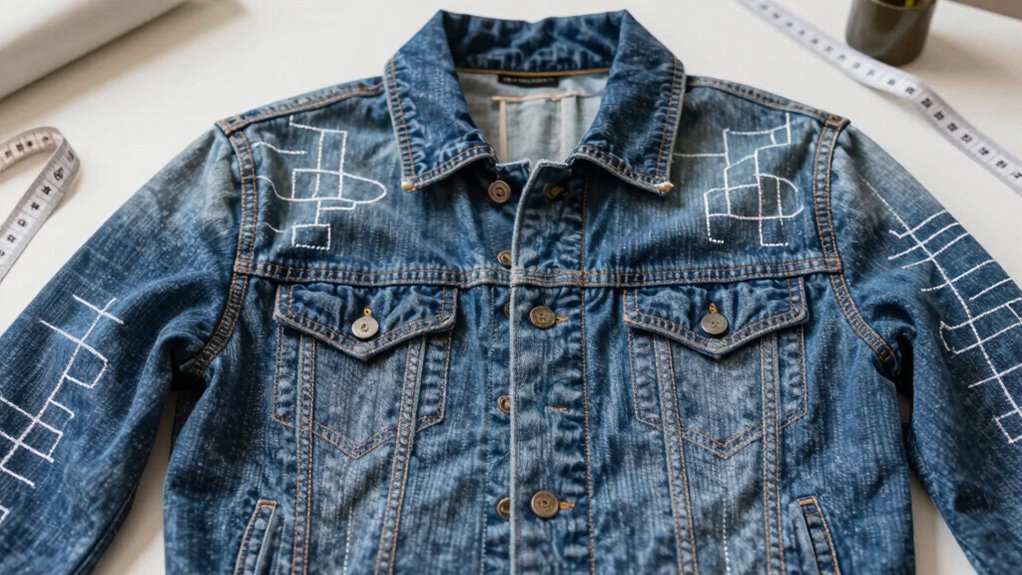
When planning embroidery placement on jackets, start by choosing a design size that complements the garment without overwhelming it. Position larger designs on open back areas, keeping them centered and balanced, while smaller ones suit sleeves or chest. Consider fabric type and stretch, adjusting tension and stabilizers for a smooth finish. Careful placement around seams and zippers guarantees a professional look. To create a cohesive design, focus on balance and flow—explore these tips to master embroidery planning effectively.

Get business pricing on tools and workshop supplies
- Business-only prices and quantity discounts
- Tax-exempt purchasing
- Multiple users, one account, clear invoices
Key Takeaways
- Measure and visualize the garment’s proportions to select appropriately sized embroidery that complements the space.
- Use stabilizers and tension adjustments tailored to fabric type to ensure smooth, puckering-free embroidery.
- Plan placement considering garment features like seams, zippers, and movement areas for optimal visibility and durability.
- Position designs at comfortable heights and align with natural flow for a balanced, professional look.
- Preview placement with fabric markers or tape to refine layout before stitching for cohesive design integration.
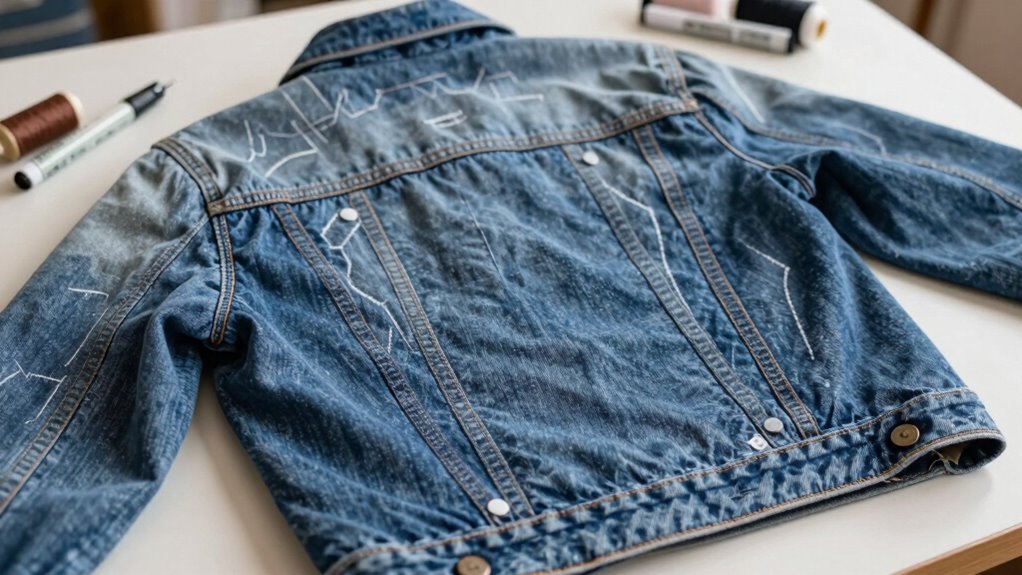
Planning embroidery placement is a crucial step to guarantee your design looks balanced and professional. Before you start stitching, you need to think about the embroidery size and the fabric considerations. Your embroidery size should complement the overall garment without overpowering it. For jackets, sleeves, and backs, larger designs work well on the back, where you have more space, while smaller, more subtle embroidery fits nicely on sleeves or chest areas. Keep in mind that a design that’s too big can look crowded or unrefined, while one that’s too small might get lost or seem insignificant. Measure your design carefully, and consider how it will appear in relation to the garment’s proportions.
Careful embroidery placement ensures a balanced, professional look that enhances your garment’s overall style.
Fabric considerations are equally important. Different fabrics behave differently when embroidered, which impacts the placement. For example, a sturdy denim jacket provides a solid base that can support larger, more complex embroidery without puckering. On the other hand, delicate fabrics like silk or thin cotton require smaller, simpler designs and careful tension adjustments to avoid damage or distortion. When planning embroidery on sleeves, think about the fabric stretch and movement; a sleeve with a lot of stretch might need stabilizers or specific embroidery techniques to maintain the design’s integrity. On jackets, consider the fabric’s thickness—thicker materials can handle larger, more detailed embroidery, but thinner fabrics may need lighter stitches or backing to prevent puckering. Additionally, understanding fabric behavior can help you choose the right embroidery approach, ensuring your design remains smooth and professional. Being aware of how fabric stretch impacts embroidery can help you prevent distortion and puckering, especially on flexible areas. Incorporating proper tension adjustments during setup can further enhance the final appearance and durability of the embroidery.
As you plan, also think about the natural flow of the garment. Embroidery on the back often serves as a focal point, so position your design centered and at a comfortable height—never too close to the collar or hem, which can distort the look. On sleeves, align your embroidery with the arm’s natural movement, avoiding areas that bend or stretch excessively. When placing embroidery on jackets, consider seams and zippers; these elements can interfere with the design or make placement tricky. Using a visualization method like fabric markers or tape to visualize the design’s position before you commit to stitching can prevent misalignment and ensure a balanced layout.
Ultimately, your goal is to achieve a balanced, visually appealing look that enhances the garment without overwhelming it. Think about how each element—embroidery size, fabric considerations, and placement—interacts to create a cohesive design. By carefully planning your embroidery placement, you ensure a professional finish that elevates the overall aesthetic of jackets, sleeves, and backs, making every piece unique and polished.
embroidery stabilizers for jackets
As an affiliate, we earn on qualifying purchases.
As an affiliate, we earn on qualifying purchases.
Frequently Asked Questions
Can I Customize Embroidery Sizes for Different Jacket Styles?
Yes, you can customize embroidery sizes for different jacket styles. When choosing embroidery size, consider the jacket’s design and proportions to make sure it fits well and looks balanced. Some jacket styles, like bomber or varsity jackets, may require smaller or larger embroidery to complement their shape. Adjusting the embroidery size helps create a tailored look that enhances each style’s unique features and visual appeal.
What Materials Work Best for Outdoor Jacket Embroidery?
For outdoor jackets, you want embroidery materials that withstand weather resistance and fabric compatibility. Opt for durable, waterproof threads like polyester or nylon, which resist moisture and fading. Use embroidery stabilizers suited for rugged fabrics like nylon or Gore-Tex, ensuring your design stays crisp despite exposure to rain, mud, or sun. These materials keep your embroidery vibrant and intact, even in tough outdoor conditions, making your jacket both stylish and resilient.
How Do I Ensure Embroidery Durability With Frequent Washing?
To guarantee embroidery durability with frequent washing, you should focus on proper fabric care and advanced embroidery techniques. Use a high-quality stabilizer during stitching to prevent puckering, and opt for reinforced stitches like satin or zigzag. Always turn the jacket inside out before washing, use gentle cycle settings, and avoid harsh detergents. Following these steps helps preserve the embroidery’s integrity, keeping it looking fresh despite regular washing.
Are There Legal Restrictions on Logo Placement on Jackets?
Did you know that 70% of companies enforce strict trademark regulations on logo placement? You should check branding guidelines and local trademark laws before embroidering on jackets. Legal restrictions often specify where logos can appear, especially on visible areas like the back or sleeves. Ensuring compliance protects your brand’s integrity and avoids legal issues. Always review relevant regulations to confirm your embroidery placement aligns with legal standards.
How Does Embroidery Placement Affect Jacket Comfort and Wearability?
Embroidery placement directly impacts your jacket’s comfort and wearability. If you position embroidery too close to seams or on high-stress areas, it can cause irritation or restrict movement. Keep embroidery away from areas that bend or stretch, like elbows or the collar, to maintain embroidery comfort. Thoughtful placement guarantees your jacket remains comfortable during wear, preserving its look and functionality without sacrificing style or ease of movement.
Conclusion
In wrapping up, remember that thoughtful planning transforms embroidery from simple stitching to stunning statement. With careful considerations of placement, proportion, and purpose, you’ll produce pieces that pop and please. Play with positioning, picture perfect proportions, and purposeful patterns to punch up your design. Practice patience, prioritize precision, and prepare to produce polished, professional embroidery that impresses. By balancing boldness with finesse, you’ll bring your embroidery ideas to life and leave lasting impressions.
Halloween Picks
halloween
As an affiliate, we earn on qualifying purchases.