Using too much fabric softener mist can leave residues on your fabric, causing machines to jam or stitches to skip. Skipping proper fabric prep like washing and ironing makes these issues worse. Mistakes also happen when you rely on softener sprays instead of proper pressing, which sets seams and creates crisp edges. Overusing softeners can damage both your fabric and sewing machine. Want to avoid these pitfalls? Keep going for essential tips to perfect your sewing technique.

Get business pricing on tools and workshop supplies
- Business-only prices and quantity discounts
- Tax-exempt purchasing
- Multiple users, one account, clear invoices
Key Takeaways
- Overusing fabric softener mists leaves residues that can cause fabric sticking, needle jams, and uneven stitches.
- Relying on softener mists instead of proper pressing weakens seam setting and results in unprofessional finishes.
- Skipping pre-washing and ironing leads to static and wrinkles, which softener mist cannot effectively fix.
- Excessive residues from softener mists can damage sewing machines and reduce their lifespan.
- Using inappropriate or too much softener mist risks fabric damage and compromised sewing quality.
Many people mistakenly believe that fabric softener mists are completely safe and simple to use, but using them incorrectly can lead to unwanted results. When it comes to sewing and fabric crafts, these mists can cause more harm than good if not handled properly. If you’re aiming for crisp, professional-looking seams and smooth finishes, relying solely on fabric softener mists isn’t the best approach. Instead, you need to understand their limitations and explore alternatives to achieve the quality you want.
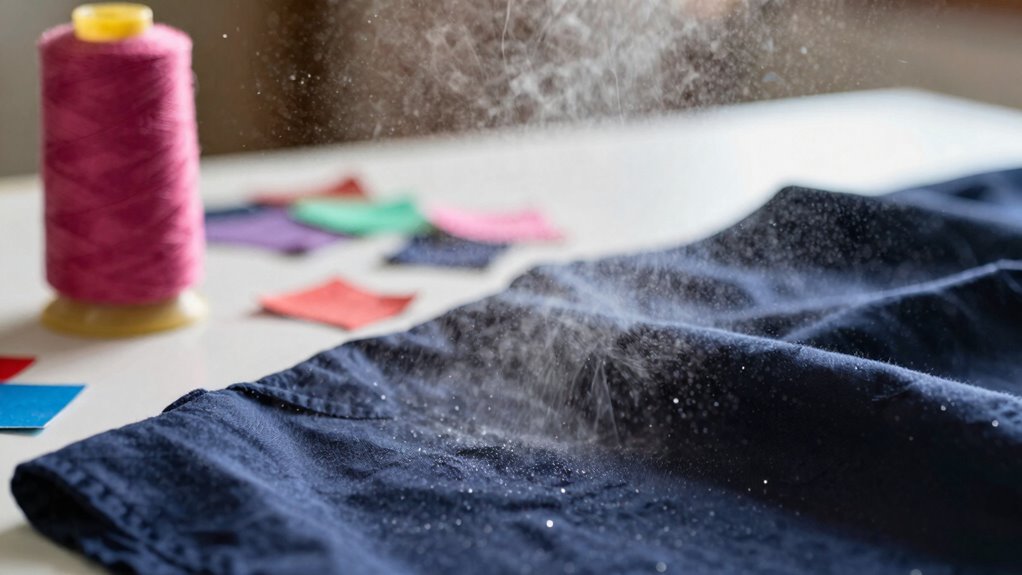
One common mistake is overusing fabric softener mists, thinking that more will make fabrics softer or easier to work with. In reality, excessive application can leave residues that interfere with sewing precision. These residues can cause fabrics to stick to the needle or jam the sewing machine, resulting in uneven stitches or skipped stitches. If you’re trying to achieve perfectly pressed seams or neatly pressed fabric edges, this buildup can be a major obstacle. Instead, it’s advisable to use softener alternative options that are designed specifically for sewing projects or to lightly mist fabrics with water and a small amount of vinegar for a natural, residue-free finish. Recognizing the importance of fabric preparation can help prevent these issues before they start. Additionally, knowing how fabric residues affect sewing equipment can help you avoid costly repairs or replacements.
Another mistake is assuming that DIY fabric crafts require no preparation or treatment of fabrics beforehand. Many crafters skip the step of properly preparing their fabric, which can lead to sewing mishaps and uneven results. Instead of relying on fabric softener mists to fix unprepared fabric, take time to pre-wash and iron your fabric. This ensures that it’s clean, free of manufacturing residues, and less prone to wrinkling or static, making it easier to sew. For softer fabric handling, consider using softener alternative options like diluted vinegar or commercial fabric relaxers. These options can help you achieve a softer feel without risking fabric damage or machine jams.
Additionally, some crafters believe that fabric softener mists can replace proper pressing or ironing. In truth, pressing is a key step in sewing, helping to set seams and create crisp edges. Relying on misting instead of pressing can leave your project looking uneven or unprofessional. Instead, use your iron and press cloths as intended, and consider natural softener options if you want a softer touch. These may include natural oils or specific sewing aids that don’t leave residues or compromise fabric integrity. Proper preparation and pressing are crucial to achieving the best sewing results, and understanding fabric treatment methods can help prevent common mistakes.
Popular right now

Breville Bambino Espresso Machine, Brushed Stainless Steel

Philips 4400 Series Fully Automatic Espresso Machine with LatteGo Milk System

De'Longhi Stilosa Compact Manual Espresso Machine with Milk Frother
As an affiliate, we earn on qualifying purchases.
Frequently Asked Questions
Can Fabric Softener Be Used on All Fabric Types Safely?
You shouldn’t use fabric softener on all fabric types safely. It can leave a fabric residue that affects certain materials, especially delicate or moisture-wicking fabrics. Additionally, softener may cause static buildup in some textiles, making sewing more difficult. Always check the fabric’s care label first. For safe use, test on a small area, and avoid softener on fabrics like microfiber, athletic wear, or anything prone to damage.
How Often Should I Use Fabric Softener Mist on Sewing Projects?
You should use fabric softener mist sparingly on sewing projects, ideally after ironing or pressing. Overuse can lead to excessive scent retention and fabric stiffness, making your project less flexible and more difficult to work with. Aim for light, even application, and avoid frequent misting. This way, you maintain a pleasant scent without compromising fabric drape or softness, ensuring your sewing results stay smooth and professional.
Does Fabric Softener Affect Fabric Dye or Color?
Imagine you’re sewing a vibrant blue dress, and you notice color fading after using fabric softener mist. Softener residue can interact with fabric dye, potentially causing fading or uneven coloring. It’s essential to know that fabric softener may affect dye stability, especially on delicate or brightly colored fabrics. To prevent this, always test a small area first, and avoid excessive softener use to preserve your fabric’s original color and vibrancy.
Can Fabric Softener Mist Cause Allergies or Skin Irritation?
Yes, fabric softener mist can cause allergies or skin irritation, especially if you have skin sensitivity. The chemicals and fragrances in softeners act as allergy triggers for some people, leading to redness, itching, or dermatitis. To avoid issues, test a small area first, or opt for hypoallergenic or fragrance-free softeners. Always wash your hands after applying softener mist and consider wearing gloves if you have sensitive skin.
Is There an Eco-Friendly Alternative to Fabric Softener Mist?
Did you know that over 60% of people seek eco-friendly alternatives for their homes? You can use natural fabric softening methods, like adding a cup of white vinegar or baking soda to your wash cycle. These eco-friendly options effectively soften fabrics without harsh chemicals, reducing skin irritation and environmental impact. Natural fabric softening is safe, affordable, and sustainable, making it a smart choice for eco-conscious sewing and laundry routines.
Conclusion
So, next time you’re tempted to toss fabric softener into your sewing project, remember—you’re not just softening fabric, you’re risking your masterpiece! Skip the softener, avoid the pitfalls, and let your stitches shine. After all, who needs smooth, fluffy fabric when you can have a perfectly imperfect sewing adventure? Embrace the chaos, and maybe, just maybe, your seams will thank you. Happy sewing—without the softener sabotage!