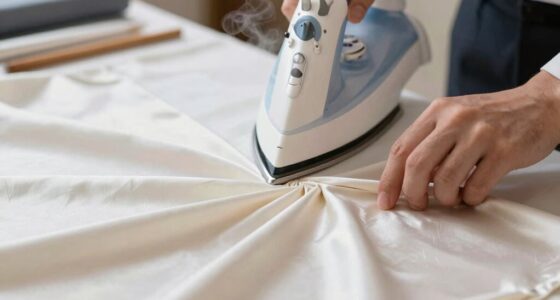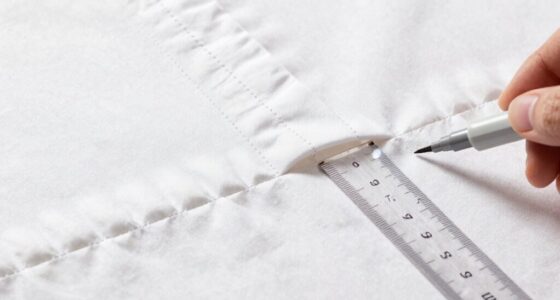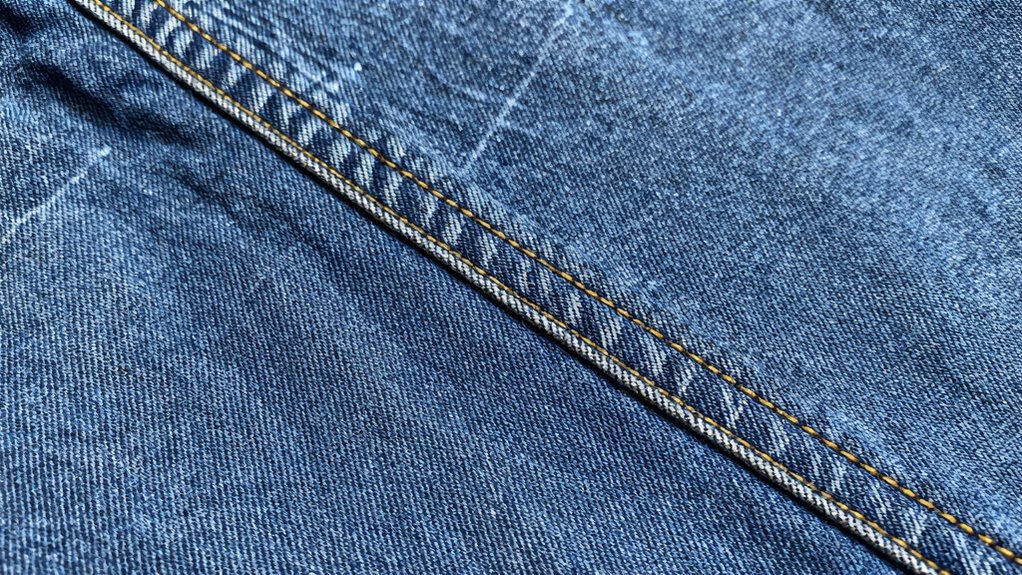
To sew a flat-felled seam without bulk, start by choosing the right fabric and selecting a narrow seam allowance for lighter materials. Sew your initial seam, then trim seam allowances close to the stitching to reduce bulk. Fold one allowance over the other and press each fold flat as you sew the second row of stitches, enclosing raw edges. Finish by pressing the entire seam—this guarantees a smooth, durable finish. Keep going for more tips on achieving professional results.

Get business pricing on tools and workshop supplies
- Business-only prices and quantity discounts
- Tax-exempt purchasing
- Multiple users, one account, clear invoices
Key Takeaways
- Trim seam allowances close to the stitching line after sewing to reduce bulk.
- Use a narrower seam allowance for lighter fabrics to avoid unnecessary thickness.
- Press seams frequently during construction to flatten layers and minimize bulk buildup.
- Enclose raw edges by folding allowances and sewing a second row of stitching carefully.
- Test techniques on scrap fabric to determine the best handling method for each fabric type.
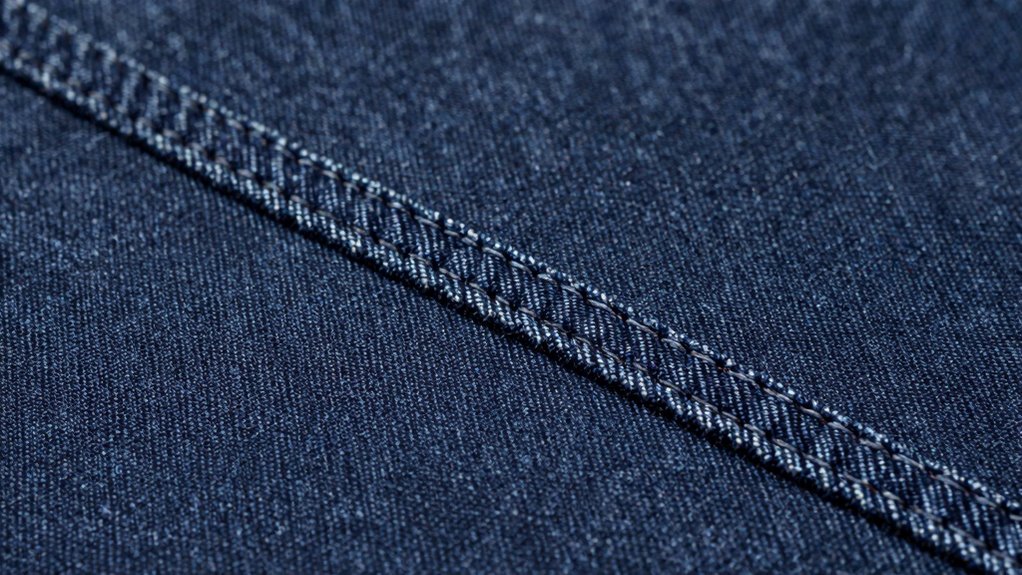
A flat-felled seam is a durable, professional finish often used in jeans and heavy-duty garments, but it can create bulky layers if not sewn carefully. To avoid this, you need to pay close attention to fabric types and seam finishing techniques. Different fabrics behave differently, so understanding their properties helps you choose the right approach. For example, denim and canvas are thick fabrics that require specific handling, while lighter fabrics like twill or chambray need less seam allowance and less folding to prevent bulk.
Flat-felled seams are durable but can add bulk; choose fabric-specific techniques for a smooth finish.
When working with sturdy fabrics, you should trim the seam allowances carefully. Use sharp scissors to reduce excess fabric and avoid unnecessary bulk. Pressing seams flat as you sew is vital; it helps the fabric lie smoothly and reduces bulk at the fold. Before stitching, press the seam allowances open or to one side, depending on the fabric and pattern instructions. This step creates a cleaner, flatter finish and minimizes thickness.
Choosing the right seam finishing techniques is essential to prevent bulk buildup. For heavier fabrics, you might start by sewing a standard seam, then trim the seam allowances close to the stitching line. Fold the allowances to one side, press, and then sew the second row of stitching along the folded edge to enclose the raw edges. This is the core of the flat-felled seam, and pressing each fold as you go ensures it stays flat. Using appropriate seam allowances and techniques is crucial for a neat finish, especially with thicker fabrics.
When sewing the second row, keep your stitches close to the edge of the folded allowances. Using a slightly narrower seam allowance during the initial sewing stage can help reduce bulk, especially with thicker fabrics. For lighter fabrics, you might omit some of the folding or use a narrower seam allowance to avoid unnecessary thickness. Always test on scrap fabric first to see how the layers behave.
Another tip is to use a reinforced needle and strong thread suitable for the fabric type. This guarantees smooth stitching without pulling or puckering, which can add to bulk. Also, sew slowly and steadily, maintaining even stitch length to keep the seam flat and professional-looking. Proper seam allowances and techniques are crucial for a neat finish, especially with thicker fabrics. Additionally, paying attention to fabric properties can help you choose the most effective sewing methods for different materials. When all is done, press the finished seam again to set the stitches and flatten any remaining bulk.
As an affiliate, we earn on qualifying purchases.
Frequently Asked Questions
What Types of Fabrics Are Best for Flat-Felled Seams?
For flat-felled seams, choose durable fabrics like denim, twill, or canvas that provide excellent seam reinforcement. These fabrics withstand stress and hold up well over time, making your seams less prone to fraying or tearing. Avoid overly thick or stretchy materials, as they can cause bulk buildup. Instead, opt for medium-weight, tightly woven fabrics that facilitate smooth sewing and guarantee a strong, neat finish.
Can I Use a Flat-Felled Seam on Curved Edges?
Yes, you can use a flat-felled seam on curved edges. To do this, sew the seam carefully along the curve, maintaining even seam allowance and using seam reinforcement techniques to prevent fraying. This method provides a clean, durable finish and offers decorative options for your project. Just take your time to sew smoothly along the curve, and you’ll achieve a professional look without bulk buildup.
How Do I Fix Mistakes Made While Sewing the Seam?
If you make mistakes while sewing the seam, start by seam ripping carefully to avoid damaging the fabric. Then, identify where the stitches need adjustment, and re-sew with the correct seam allowance. Take your time to confirm the stitches are even, and double-check your work before finishing. This way, you can fix mistakes effectively, keeping your flat-felled seam neat and durable without bulk buildup.
What Tools Are Essential for Sewing Flat-Felled Seams?
Did you know that using the right tools can improve your sewing precision by up to 80%? To sew flat-felled seams without bulk, you’ll need a seam ripper for corrections, a pressing cloth to protect fabric while pressing, and good quality scissors for clean cuts. These tools help you achieve neat, durable seams, minimizing bulk buildup. Always press carefully to flatten the seam allowances for a professional finish.
How Do I Finish Raw Edges Before Sewing the Seam?
To finish raw edges before sewing, start with edge finishing by trimming the fabric to a consistent seam allowance. Then, use a zigzag stitch or serger to secure the edges, preventing fraying during seam preparation. Press the raw edges flat, and if needed, reinforce with bias tape or binding. This guarantees your flat-felled seam stays clean, durable, and free from bulk, resulting in a professional-looking finish.
Conclusion
Now that you’ve mastered the art of sewing a flat-felled seam without extra bulk, you can enjoy creating polished, professional-looking garments with ease. Think of it as giving your projects a smooth, refined finish that whispers quality without overwhelming the fabric. With a little practice, this technique will become second nature, allowing you to craft beautiful, durable seams that elevate your sewing game. Happy sewing, and enjoy every perfectly finished detail!
Halloween Picks
halloween
As an affiliate, we earn on qualifying purchases.