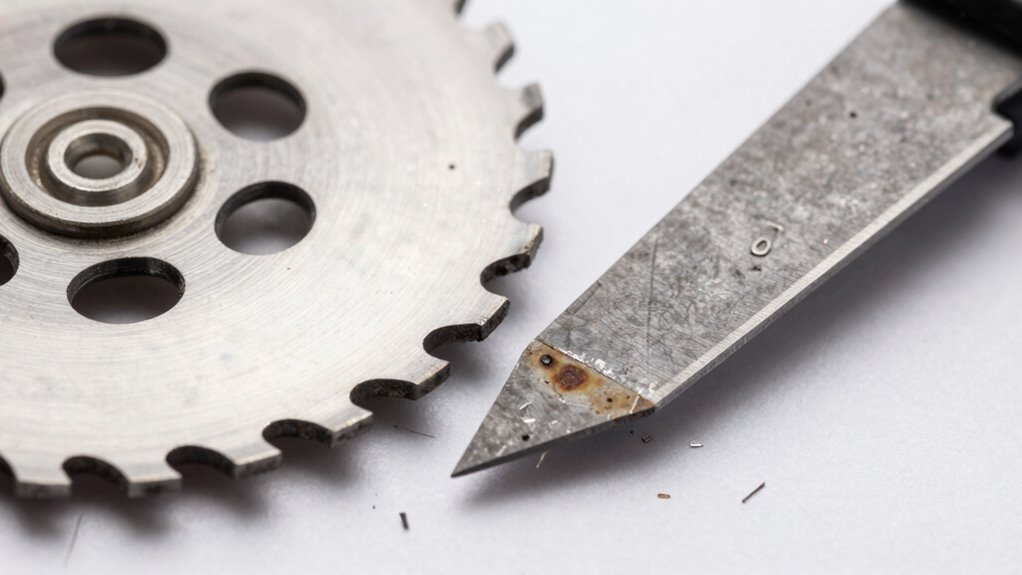

Rotary blades dull faster than you think because of factors like cutting too much material at once, using the wrong blade for tough surfaces, and applying excessive force. Poor maintenance, dirty blades, and improper storage also speed up dulling. Hard or abrasive materials wear blades out quickly if you don’t choose the right one or sharpen regularly. Keep these in mind, and you’ll discover even more ways to extend your blades’ lifespan.

Get business pricing on tools and workshop supplies
- Business-only prices and quantity discounts
- Tax-exempt purchasing
- Multiple users, one account, clear invoices
Key Takeaways
- Softer blade materials like carbon steel dull quicker than tungsten carbide or stainless steel.
- Excessive cutting force and rushing increases heat, accelerating blade wear.
- Cutting tough or abrasive materials without proper blades causes faster dulling.
- Poor maintenance, such as neglecting cleaning and sharpening, shortens blade lifespan.
- Improper storage or handling leads to damage and premature dulling of rotary blades.

You might not realize it, but your rotary blades are dulling much faster than you expect, which can substantially impact the quality of your cuts and the efficiency of your work. One of the main reasons for this rapid dulling is the type of blade material used. Not all blades are created equal; some materials wear down quickly under regular use. For example, blades made from softer metals like carbon steel tend to dull faster than those crafted from harder materials like stainless steel or tungsten carbide. The composition of the blade material determines its durability and resistance to wear. If you’re using blades with inferior or softer materials, expect to replace or sharpen them more often, which interrupts your workflow and increases costs.
Choosing durable blade materials like tungsten carbide extends cutting life and improves work efficiency.
Cutting techniques also play a pivotal role in how quickly your blades dull. When you apply excessive force or use improper handling, you put unnecessary strain on the blades, accelerating their wear. For instance, trying to cut through thick, tough materials with a blade not suited for such tasks forces the blade to work harder, leading to quicker dulling. Additionally, improper angles or inconsistent pressure during cutting can cause uneven wear, making the blade less effective over time. Speed can also be a factor; rushing through cuts without proper control often results in blade overheating, which weakens the metal and shortens its lifespan. Moreover, cutting techniques that are not optimized can introduce unnecessary stress and heat, further speeding up the dulling process. Being aware of blade wear factors such as material composition and usage conditions can help you better prevent premature dulling. Understanding and applying proper cutting practices can significantly extend the life of your blades.
Another aspect to contemplate is the type of materials you’re cutting. Harder or abrasive materials, like thick plywood or dense plastics, wear down blades faster regardless of the blade material or technique. If you’re frequently working with tough materials, it’s essential to choose the right blade designed for those specific tasks. Using a blade meant for lighter materials on heavier ones not only diminishes the blade’s lifespan but also affects the quality of your cut, leaving ragged edges or uneven surfaces. Additionally, selecting the appropriate blade for each task is crucial to prevent unnecessary wear and tear. Furthermore, maintenance habits influence how long your blades stay sharp. Regular cleaning to remove debris, avoiding cutting dirty or gritty materials, and sharpening blades when needed can extend their usefulness. Neglecting these practices accelerates dulling, forcing you to replace blades more often. Proper storage can also help prevent damage and corrosion, which further degrade blade performance. Ultimately, understanding the importance of selecting the right blade material, adopting proper cutting techniques, and maintaining your blades can greatly slow down dulling. Staying mindful of these factors ensures cleaner cuts, better efficiency, and a longer lifespan for your rotary blades.
Popular right now

Breville Barista Pro Espresso Machine with Grinder, Brushed Stainless Steel
Dyson Car+Boat Cordless Handheld Vacuum

iRobot Roomba Max 715 Pet Robot Vacuum with AutoEmpty Dock
As an affiliate, we earn on qualifying purchases.
Frequently Asked Questions
Can Blade Material Affect Dulling Speed?
Yes, blade material markedly affects dulling speed. When you choose blades with superior blade manufacturing and high-quality materials, you get better cutting edge durability. These blades resist wear and tear longer, meaning you won’t need to replace them as often. Cheaper or lower-grade materials tend to dull quickly, leading to inefficient cuts and more frequent replacements. Investing in high-quality blades ensures your rotary blades stay sharp longer and perform at their best.
How Does Blade Storage Impact Sharpness Longevity?
Did you know that improper storage can reduce a blade’s sharpness by up to 50%? When you store blades improperly, they’re prone to corrosion, which dulls them faster. Good storage practices—keeping blades dry, in a protective case, and away from humidity—preserve their edge longer. Proper storage minimizes blade corrosion, extending sharpness longevity and ensuring your blades stay effective for more cuts.
Do Different Grass Types Dull Blades Differently?
Yes, different grass types can dull your blades differently. Tall grass or thick, coarse varieties like Bermuda or Zoysia put more strain on your blades, especially if the grass height is high. A proper blade angle helps maintain sharpness, but cutting through tougher grass increases dulling. You’ll notice blades dull faster when mowing over dense, high grass, so adjusting your cutting height and keeping blades sharp is essential.
Is It Better to Sharpen or Replace Dull Blades?
Think of your mower blades like a sword—sharpening keeps them cutting sharp and efficient. When blades dull, your cut becomes uneven and less effective. For ideal blade maintenance and cutting efficiency, it’s better to sharpen dull blades rather than replace them, unless they’re severely damaged. Sharpening extends blade life and guarantees a clean cut, keeping your lawn healthy and your mower running smoothly.
How Often Should I Check My Blades for Dullness?
You should check your blades for dullness every 3 to 4 uses or roughly once a month, especially during peak mowing season. Dull blades can harm your lawn aesthetics and increase blade noise, making mowing less efficient. Regular inspections help you catch dullness early, ensuring a cleaner cut and healthier grass. Always look for signs like uneven cuts or increased vibration to determine if your blades need sharpening or replacing.
Conclusion
So, now that you know why rotary blades dull faster than you thought, it’s clear you need to give them proper care. Sharpen or replace blades regularly and avoid cutting through debris or thick grass. Think of it like tending to a trusty tool—if you neglect it, it’ll let you down when you need it most. Keep your blades sharp and your work smooth, and you’ll stay ahead of the game without breaking a sweat.