If you’re choosing between single-needle and multi-needle embroidery machines, think about your needs. Single-needle machines work like regular sewing machines, with manual thread changes for each color, making them slower but simple to operate. Multi-needle machines handle several colors automatically, speeding up large, colorful projects with less manual effort. They also offer features like automatic thread trimming and easier adjustments. To discover how each fits your projects, explore more details below.
Key Takeaways
- Single-needle machines are simpler and slower, requiring manual thread and color changes, while multi-needle machines are faster with automatic color switching.
- Multi-needle machines can handle complex, multi-color designs more efficiently due to multiple needles and automated features.
- Single-needle machines need manual adjustments for thread tension, needle size, and fabric changes, whereas multi-needle machines often have automated settings.
- Multi-needle embroidery machines are ideal for high-volume, detailed projects, saving time with automatic features like thread trimming.
- Both types require understanding thread tension and needle selection for best results, but multi-needle machines simplify adjustments through control panels.
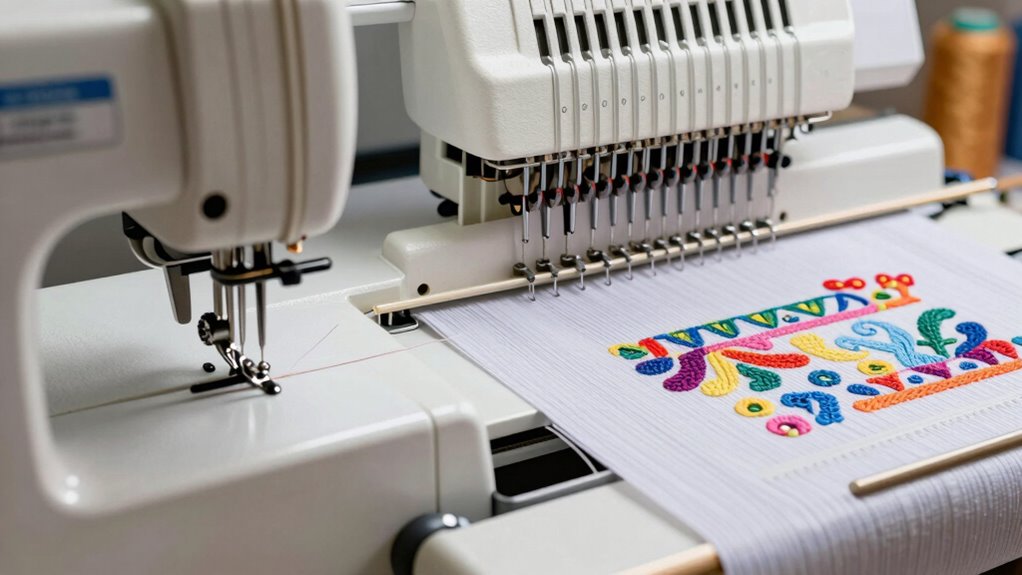
When choosing an embroidery machine, understanding the differences between single-needle and multi-needle options is essential. These differences influence how you’ll work with thread tension, needle size, and overall efficiency. A single-needle machine operates much like a standard sewing machine, with one needle that moves up and down to create your designs. You’ll need to change the thread and needle manually if you want to switch colors or adjust for different types of fabric. This means paying close attention to thread tension, as it affects the quality of your stitches. Too tight, and the fabric will pucker; too loose, and the stitches will look uneven. Adjusting thread tension on a single-needle machine is straightforward but requires a bit more manual effort each time you change colors or fabric thickness. Needle size becomes important here too, as using the appropriate needle for your fabric and thread helps prevent breakage and ensures clean stitches. For delicate or thick materials, you’ll need to switch to a different needle size, which is simple but requires you to keep extra needles handy. Additionally, understanding thread tension is crucial for achieving professional results and avoiding common sewing issues.
In contrast, a multi-needle embroidery machine comes equipped with multiple needles, usually ranging from four to fifteen or more. This setup allows you to change colors automatically without stopping your project. Since each needle has its own thread, you can set up multiple colors before starting, making large, colorful designs quicker and more efficient. Thread tension management in multi-needle machines is usually automated or preset, reducing the need for manual adjustments during operation. This automation helps maintain consistent stitch quality, especially when working with complex designs or multiple thread colors. Many multi-needle machines also feature automatic thread trimming, which saves time and produces cleaner finished projects. Needle size adjustments are also easier, as many multi-needle machines allow you to select different needle sizes directly through the control panel. This feature is particularly useful when working with various fabrics, from lightweight silk to heavy denim, because it ensures the stitches are clean and the fabric isn’t damaged.
best multi-needle embroidery machine
As an affiliate, we earn on qualifying purchases.
As an affiliate, we earn on qualifying purchases.
Frequently Asked Questions
How Do I Choose Between a Single-Needle and Multi-Needle Machine?
You should choose a multi-needle machine if you want more machine versatility and faster embroidery speed, especially for complex designs or small business use. A single-needle machine is better if you’re just starting out or prefer simpler projects, as it’s usually less expensive and easier to operate. Think about your project scope, budget, and how often you’ll use it to decide which kind suits your needs best.
Are Multi-Needle Machines Suitable for Beginners?
Multi-needle machines can be suitable for beginners, especially since they increase embroidery speed and make thread changing easier with multiple colors ready at once. Did you know these machines can handle up to 15 needles? This feature reduces time spent switching threads, making them more efficient. While they might seem complex initially, many beginners find that with some practice, they quickly adapt and enjoy the faster, more professional results.
What Maintenance Do Multi-Needle Embroidery Machines Require?
You need to regularly check and adjust the thread tension to keep your multi-needle embroidery machine running smoothly. Also, replace the needles promptly when they become dull or damaged to prevent fabric snags and stitching issues. Clean the machine’s bobbin area and lint traps frequently, and oil moving parts as recommended in the manual. Proper maintenance guarantees your machine stays in top shape and produces high-quality embroidery work.
Can Single-Needle Machines Handle Complex Designs?
Yes, single-needle machines can handle complex designs, but they often require more manual effort and patience. Their simplicity offers versatility for basic and detailed work, yet intricate design complexity can challenge their capacity. You’ll need to carefully control stitches and thread changes. If you want faster, flawless results for complex designs, multi-needle machines excel with their automatic features and enhanced machine versatility, making them a better fit for intricate projects.
What Is the Cost Difference Between the Two Types?
You’ll find that single-needle machines are generally more affordable, making them a good choice if you’re on a budget. Multi-needle embroidery machines tend to cost considerably more upfront, but they offer faster, more efficient production for larger projects. When considering investment, think about your volume of work and long-term needs. The pricing comparison shows that while multi-needle options require a bigger initial investment, they can save you time and labor costs over time.
Conclusion
Choosing between a single-needle and multi-needle embroidery machine depends on your needs. While some believe multi-needle machines are always faster and better, that’s not always true—your project size and complexity matter. If you’re just starting out or working on simple designs, a single-needle machine might be perfect. But for larger, more detailed work, a multi-needle could save you time. Ultimately, understanding your projects helps you pick the right machine for your embroidery journey.