
To store vintage patterns without cracking the tissue, handle them gently by unfolding carefully and smoothing out wrinkles before wrapping. Use acid-free tissue paper, folders, or sleeves for protection, and store patterns flat in sturdy, acid-free boxes to prevent creases. Keep them in a cool, dry environment away from sunlight and fluctuating temperatures. Regularly inspect and address any damage early. For more tips that help preserve your patterns long-term, keep exploring the best techniques.

Get business pricing on tools and workshop supplies
- Business-only prices and quantity discounts
- Tax-exempt purchasing
- Multiple users, one account, clear invoices
Key Takeaways
- Handle tissue patterns gently, unfolding carefully to minimize stress and prevent cracking.
- Wrap each pattern in acid-free tissue paper for protection and to reduce friction.
- Store patterns flat in sturdy, acid-free folders or boxes to avoid creases.
- Keep storage environment cool, dry, and away from direct sunlight to prevent deterioration.
- Regularly inspect patterns and rewrap if signs of damage or cracking appear.
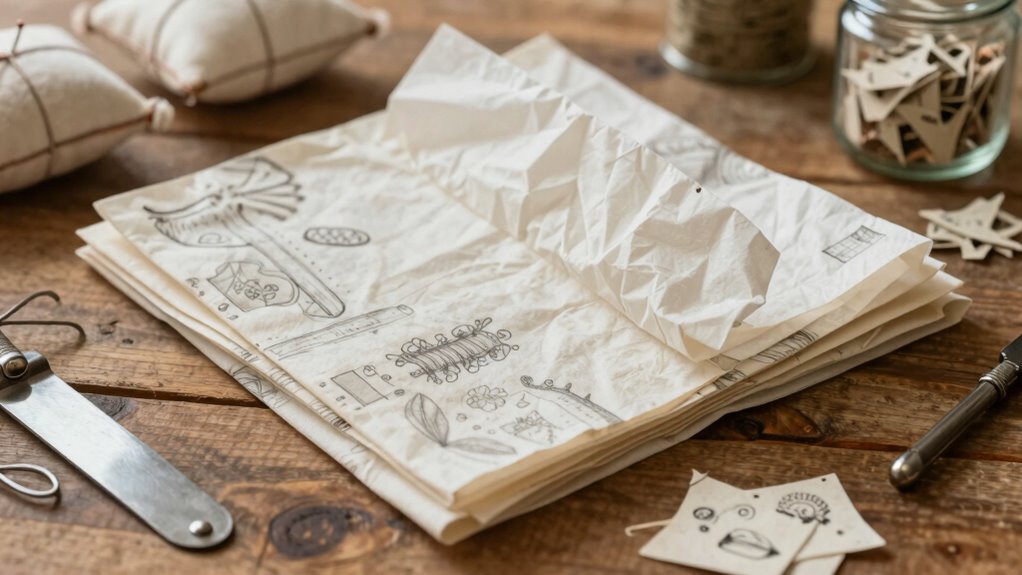
Ever wondered how to keep your vintage patterns in top condition for years to come? The key lies in proper preservation techniques and choosing the right storage materials. Vintage patterns, especially delicate tissue paper ones, are prone to tearing and yellowing over time. To prevent this, you need to be gentle with how you handle and store them. Start by carefully unfolding your patterns and avoiding any unnecessary creases. When you’re ready to store them, use acid-free, archival-quality storage materials such as tissue paper, folders, or sleeves. These materials help prevent chemical reactions that cause discoloration or brittleness. Wrap each pattern in a layer of acid-free tissue paper, making sure to smooth out any wrinkles or folds so you’re not applying additional stress to the tissue. This creates a protective barrier against light, dust, and environmental pollutants, which can all accelerate deterioration.
Once wrapped, store your patterns flat in a sturdy, acid-free folder or box. Avoid rolling them into tubes, as this can cause permanent creases and weaken the tissue over time. If space is limited, you can gently stack the wrapped patterns, but make sure they’re separated with additional tissue paper to prevent them from sticking together or causing damage. Keep these storage containers in a cool, dry place away from direct sunlight, which can fade or weaken the paper. Humidity is another enemy; high moisture levels can lead to mold or warping, so aim for a consistent, moderate environment. Proper storage techniques also involve avoiding exposure to fluctuating temperatures, which can further stress the tissue. Using archival-quality materials significantly extends their lifespan and helps maintain their original quality. Incorporating environmental controls like dehumidifiers or air purifiers can further help in maintaining ideal conditions for your collection. Regularly check on your stored patterns, inspecting for signs of damage or deterioration. If you notice any issues, address them immediately by rewrapping or transferring the pattern to a more suitable environment. Proper handling and storage are vital for safeguarding these delicate items, especially when considering the chemical reactions that can cause tissue to weaken or discolor over time. Remember, patience and careful handling are your best tools for preserving these precious pieces of history. By following these preservation techniques and choosing appropriate storage materials, you guarantee that your vintage patterns stay intact, vibrant, and ready for your next sewing project, even decades from now.
acid-free tissue paper for vintage patterns
As an affiliate, we earn on qualifying purchases.
As an affiliate, we earn on qualifying purchases.
Frequently Asked Questions
How Long Can Vintage Patterns Be Safely Stored?
You can safely store vintage patterns for decades if you use proper preservation techniques and archival materials. Keep them in a cool, dry, dark place to prevent deterioration. Use acid-free tissue paper and storage boxes to protect your patterns from cracks and damage. Regularly check on their condition, and handle them with clean hands. With careful preservation, your vintage patterns can remain in excellent shape for many years.
Can I Store Patterns in a Plastic Bag?
Yes, you can store vintage patterns in a plastic bag, but make sure it’s acid-free to prevent damage. Use clear storage containers to keep the patterns flat and avoid folding, which can cause cracking. Label each pattern clearly with its details to make retrieval easy. Avoid airtight plastic bags that trap moisture; instead, choose breathable containers or add desiccants to protect your patterns from humidity.
What Temperature Is Best for Storing Vintage Patterns?
You should store vintage patterns at a stable, cool temperature—around 65 to 70°F (18 to 21°C)—to guarantee ideal preservation. Consistent temperature control is key to preventing tissue cracking or warping. Avoid extremes like heat or humidity, which can damage delicate paper. Keep your patterns in a climate-controlled environment, away from direct sunlight, drafts, or fluctuating conditions, to maintain their integrity and prolong their lifespan.
Should Patterns Be Stored Flat or Folded?
You should store your vintage patterns flat to prevent creasing and damage, especially for delicate tissue. Flat storage supports better pattern organization and minimizes stress on the paper. Use acid-free folders or large storage boxes, and keep them in a cool, dry place. Avoid folding, as repeated creases can weaken tissue over time. Implementing proper storage techniques guarantees your patterns stay pristine and easy to access whenever you need them.
How Do I Prevent Mold on Vintage Tissue Patterns?
To prevent mold on vintage tissue patterns, you should keep them in a dry, well-ventilated space. Use silica gel packets or desiccants to absorb moisture and regularly check for signs of mold. Store patterns in acid-free tissue paper or plastic sleeves to prevent deterioration. Proper mold prevention guarantees better pattern preservation, so handle your vintage patterns carefully and avoid humid environments to maintain their condition over time.
Conclusion
Storing your vintage patterns is like tucking precious secrets into a softly padded treasure chest, protecting them from the harshness of time. Imagine each sheet wrapped gently in acid-free tissue, nestled safely within a sturdy folder or box, its edges smooth and uncracked. By carefully preserving these delicate designs, you keep their intricate lines alive—ready to inspire future creations. With tender care, your patterns will remain a timeless tapestry, ready to unfold whenever you need them.
Columbus Day / Indigenous Peoples' Day Picks
long weekend sales
As an affiliate, we earn on qualifying purchases.