
Ribbing pulls in because its stretchy, textured design allows it to expand and contract, gripping the body snugly. This natural pull-in creates a secure, close fit that’s ideal for cuffs, neckbands, or waistbands. You can use this characteristic to your advantage by choosing ribbing for areas needing elasticity and shape retention, ensuring your garment stays comfortable and maintains its form over time. If you keep exploring, you’ll discover even more ways to enhance your designs with ribbing.
Key Takeaways
- Ribbing’s elasticity causes it to contract when stretched, creating a pulling-in effect that results in a snug fit.
- The vertical ridges expand and contract, allowing ribbing to conform closely to the body’s shape.
- Use ribbing at garment edges (cuffs, neckbands) to enhance fit and prevent sagging over time.
- Exploit the pull-in effect to achieve a secure, comfortable fit while maintaining flexibility and style.
- Incorporate ribbing strategically to add texture and a professional finish to your designs.
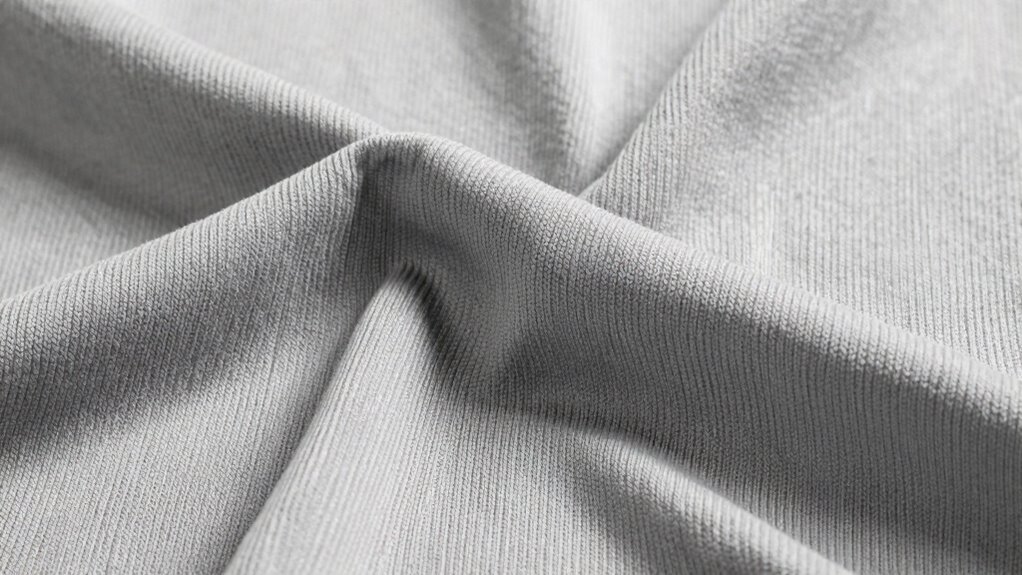
Ribbing is a popular knitting technique that creates textured, stretchy fabric perfect for cuffs, neckbands, and trims. One of its key features is how it pulls in when you wear it, giving your finished project a snug, fitted look. This pull-in effect happens because of the fabric’s elasticity, which is a core characteristic of ribbing. When you knit ribbing, you’re working with alternating knit and purl stitches, which create a series of vertical ridges. These ridges give the fabric its inherent stretchiness, allowing it to expand and contract as needed. When you wear a ribbed piece, this elasticity pulls the fabric inward, hugging your body comfortably without feeling restrictive. Understanding why ribbing pulls in helps you make better choices when designing or finishing your projects. The fabric’s elasticity means it can stretch when needed and snap back into shape, which is why ribbing is so effective at creating fitted edges. You can use this to your advantage by incorporating ribbing into areas that need a close fit, such as cuffs, neckbands, or waistbands. Not only does this ensure a secure fit, but it also adds a professional, polished look to your garment. The visual effect of ribbing is equally important. The vertical ridges created by the knit and purl stitches add texture and depth, making your piece more visually interesting. When you stretch the ribbing, the ridges expand, emphasizing their pattern and creating a dynamic, three-dimensional appearance. Additionally, the elasticity of ribbing is a fundamental knitting characteristic that allows for greater versatility in garment design. This elasticity also makes ribbing a great choice for garments that need flexibility, ensuring comfort and durability over time. Because of its stretchiness, ribbing also helps to maintain the shape of your garment over time. As you wear and wash it, the fabric’s natural elasticity prevents sagging or loss of fit, which can happen with less elastic fabrics. This durable quality makes ribbing ideal for items that need to stay snug and retain their shape, like hats, cuffs, or collar bands. Incorporating elasticity in knitting into your projects also allows for more creative and flexible design options. When you choose to incorporate ribbing into your projects, you’re leveraging its natural ability to stretch and snap back, creating a secure, comfortable fit. Plus, the visual effect of the textured ridges adds a decorative element, elevating your finished piece from simple to stylish.
As an affiliate, we earn on qualifying purchases.
Frequently Asked Questions
Can Ribbing Be Adjusted After Knitting or Sewing?
Yes, you can adjust ribbing after knitting or sewing. To do this, you’ll need to modify tension or perform seam alterations. If the ribbing is too tight, gently stretch it or loosen the tension in your knitting. For sewn pieces, you can unpick and resew the seam slightly looser. These adjustments help achieve a better fit and prevent the ribbing from pulling in too much, ensuring a more polished finish.
What Types of Yarn Work Best for Ribbing?
You should choose stretchy yarns like wool, elastic blends, or acrylic for ribbing because their elasticity helps create a snug fit. Smooth, fine yarns work well, but textured yarns add interesting variation to your ribbing pattern. These yarns maintain their shape, ensuring the ribbing pulls in nicely without losing elasticity. Opt for yarns with good stretch and texture variation to achieve the best results and a comfortable, well-defined ribbing.
How Does Ribbing Affect the Overall Garment Fit?
Ribbing pulls the garment in, thanks to its fabric elasticity, creating a snug fit around areas like the cuffs, waist, or neck. This stretchiness provides better garment stability, preventing sagging or bagging over time. When you use ribbing thoughtfully, it enhances the overall fit by shaping the garment to your body, offering comfort and a polished look. Adjusting ribbing width can also influence how tight or relaxed the fit feels.
Is Ribbing Suitable for Both Casual and Formal Wear?
Yes, ribbing suits both casual and formal wear, thanks to its fashion versatility. For casual looks, you can opt for ribbed sweaters or cuffs that add texture and comfort. For formal settings, choose ribbed details on tailored pieces to create subtle sophistication. Ribbing adapts well to seasonal styling, providing warmth in winter and a sleek finish in interim seasons. Its flexibility makes it a smart choice for all occasions.
How Long Should Ribbing Be for Different Projects?
For most projects, ribbing should be about 1-2 inches long to guarantee a snug fit without excess tightness. Adjust the ribbing tension to match your project’s purpose—tighter for cuffs, looser for necklines. Keep color coordination in mind; match or complement your main yarn. Longer ribbing can add flexibility, while shorter creates a cleaner look. Always test your tension first to get the perfect fit for your project.
Conclusion
Now that you understand how ribbing pulls in and shapes your look, you hold the power to use it to your advantage. Think of ribbing as a secret weapon—an invisible hand guiding your style with precision. By choosing the right fit and stretch, you can craft a silhouette that feels just right. Remember, when you master ribbing, you don’t just wear your clothes—you make them work for you, turning everyday into a runway of confidence.