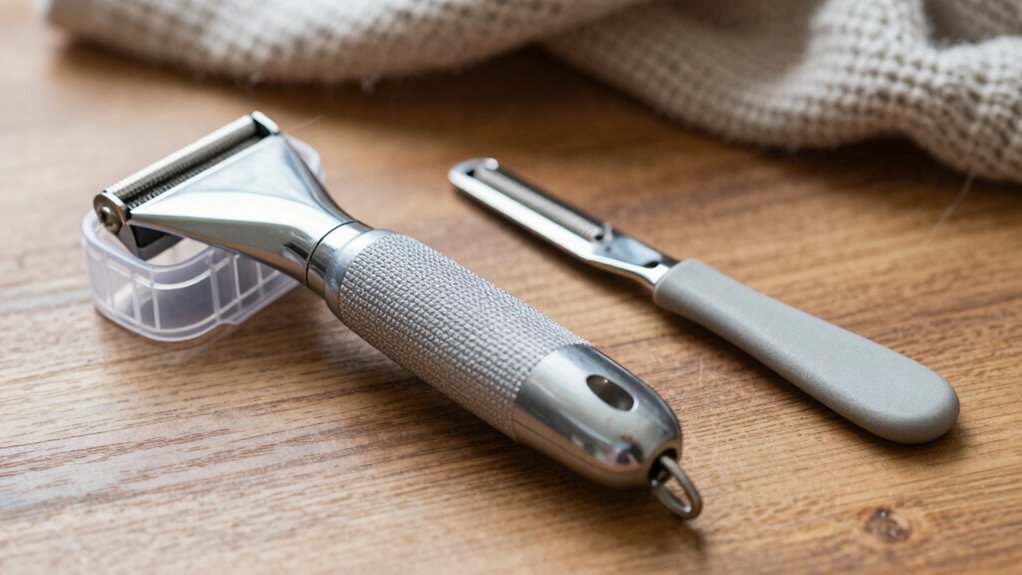
Fabric shavers are best for delicate fabrics like cashmere or wool, gently removing pills and fuzz without damaging fibers, perfect for sweaters, scarves, and soft textiles. Depillers are stronger tools meant for thicker, more durable fabrics such as denim or upholstery, tackling heavy pills and lint from sofas and jeans. Using each tool for its intended purpose helps maintain your items longer, so keep exploring to learn how to keep your fabrics looking like new.

Get business pricing on tools and workshop supplies
- Business-only prices and quantity discounts
- Tax-exempt purchasing
- Multiple users, one account, clear invoices
Key Takeaways
- Fabric shavers are ideal for delicate textiles like cashmere, wool, and fine knits to remove fuzz without damage.
- Depillers are best for thick, durable fabrics such as fleece, denim, and upholstery with heavy pill buildup.
- Use fabric shavers for light fuzz and soft fabrics; depillers for heavy pilling on rugged surfaces.
- Proper tool selection prevents fabric damage and extends the lifespan of clothing and home furnishings.
- Regular maintenance of tools ensures effective pill removal and preserves fabric quality.
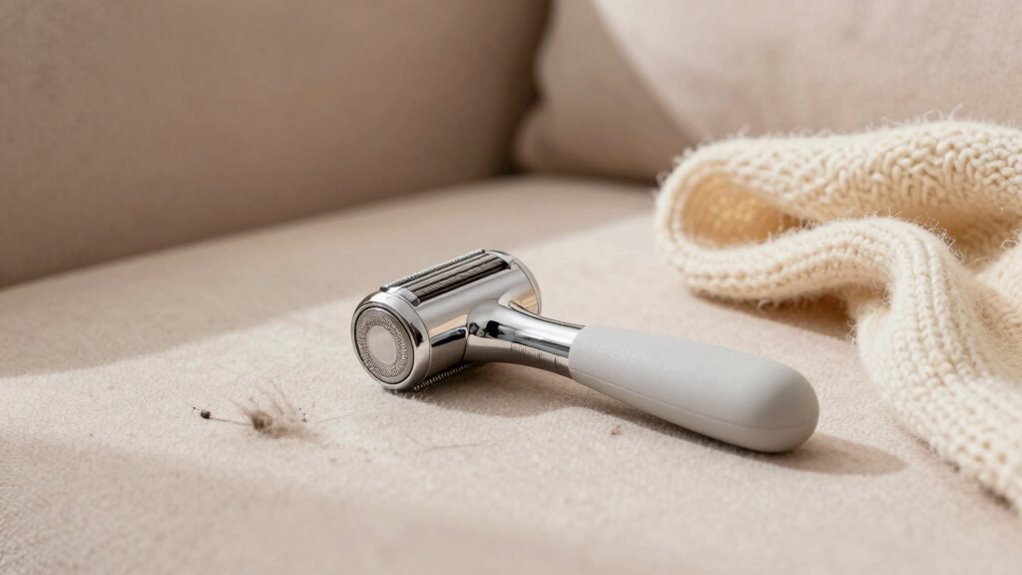
Fabric shavers are ideal for smoother, more delicate fabrics such as cashmere, wool, and fine knits. They gently trim away pills and fuzz without damaging the fibers, making them perfect for sweaters, scarves, and soft-textured clothing. If you notice a fuzzy layer forming on your favorite sweater, a fabric shaver can quickly smooth it out, saving you from replacing costly items prematurely. They’re also useful for maintaining upholstery fabrics and curtains, which often gather dust and fuzz over time. Proper fabric care with these tools prevents pills from building up and keeps your textiles looking their best. Regular use of the right tools can also contribute to sustainable living by extending the lifespan of your garments and household textiles. Using the appropriate tools for different fabric types can help prevent accidental damage, ensuring your textiles stay in top condition.
Depillers, on the other hand, are better suited for thicker, more durable fabrics like fleece, denim, and upholstery. They often feature larger heads and more powerful blades designed to handle heavier fibers and remove pills more aggressively. If you have a worn-out-looking sofa or a pair of jeans with stubborn pills, a depiller can make a noticeable difference. They’re also excellent for removing lint balls from carpets and large fabric surfaces, making them versatile tools for appliance maintenance around the home. When you’re dealing with heavily pillated garments or upholstery, a depiller provides a more thorough clean, restoring the fabric’s original appearance. Using the correct tool ensures you don’t accidentally damage delicate textiles, which is why understanding their specific use cases is essential.
While both tools serve the purpose of fabric care, it’s essential to understand their best use cases to avoid damage. Fabric shavers are gentle and precise, perfect for light fuzz and delicate textiles. Depillers are more robust, suited for heavy-duty pill removal on thicker fabrics. Using each tool appropriately not only prolongs the life of your clothing but also ensures your appliances stay in good working order. Regular maintenance of your fabric tools, like cleaning the blades and storing them properly, helps maintain their effectiveness and preserves your investment in your wardrobe and home furnishings. Proper fabric maintenance can also prevent the buildup of dust and lint, keeping your textiles cleaner and longer-lasting.
Ultimately, knowing when and how to use fabric shavers and depillers makes a significant difference in your overall fabric care routine. They’re simple, effective ways to keep your clothes and furnishings looking their best, saving you money and time by avoiding premature replacement. Proper appliance maintenance and attentive fabric care go hand-in-hand, making these tools indispensable for anyone wanting to maintain a polished, well-kept wardrobe and home environment.
fabric shaver for delicate fabrics
As an affiliate, we earn on qualifying purchases.
As an affiliate, we earn on qualifying purchases.
Frequently Asked Questions
Can Fabric Shavers Remove Pilling From All Types of Fabrics?
Fabric shavers can remove pilling from many fabric types, but they aren’t suitable for all materials. You need to take into account fabric material compatibility—delicate fabrics like silk or lace might be damaged by a shaver. In contrast, a depiller is gentler and works well on thicker or more delicate fabrics. So, choose between a shaver versus depiller based on your fabric type to avoid damage and effectively remove pills.
How Often Should I Clean My Fabric Depiller?
Did you know that regular cleaning extends your fabric depiller’s lifespan? You should clean your depiller after every few uses or when you notice a decline in performance. For fabric shaver maintenance, follow depiller cleaning tips like removing lint and debris from the blades. This keeps it effective and prevents fabric damage. Consistent cleaning guarantees your depiller works smoothly, saving you money and prolonging your device’s longevity.
Are Fabric Shavers Safe for Delicate or Vintage Clothing?
Fabric shavers are generally safe for delicate or vintage clothing if you use them carefully, but be cautious as fabric care myths sometimes suggest they can damage fragile textiles. Always test on a hidden area first. If you’re worried, consider fabric shaver alternatives like gentle hand-scraping or using a lint roller. These methods help preserve delicate fabrics while effectively removing lint and fuzz without risking damage.
What’s the Best Way to Prevent Fabric Pills?
To prevent fabric pills, focus on proper fabric maintenance and pilling prevention strategies. Always wash clothes inside out, use gentle cycles, and avoid overloading your washing machine. Opt for air drying or low heat tumble drying, and store clothes carefully to reduce friction. Regularly brushing your garments with a fabric comb or lint roller can also help. These habits keep fabrics smooth and reduce the likelihood of pills forming.
Can Fabric Depillers Damage the Fabric if Used Incorrectly?
Yes, if you use a fabric depiller incorrectly, it can damage the fabric, affecting its durability. To guarantee depiller safety, follow the manufacturer’s instructions carefully, avoid pressing too hard, and test it on a small, inconspicuous area first. Proper use preserves the fabric’s integrity, preventing snags or holes, and maintains the garment’s overall longevity. Always handle with caution to protect your clothing investments.
Conclusion
So, now that you’re armed with the secrets of fabric shavers and depillers, go forth and conquer your wardrobe’s flaws. Whether you’re tackling stubborn pills or pesky lint, remember: a little tool can save your clothes—and your dignity. Because nothing says “I care” like a perfectly smooth sweater or a lint-free suit. Just don’t get carried away and turn your wardrobe into a fabric-free zone. Happy grooming!
Fall yard work Picks
leaf blowers
As an affiliate, we earn on qualifying purchases.