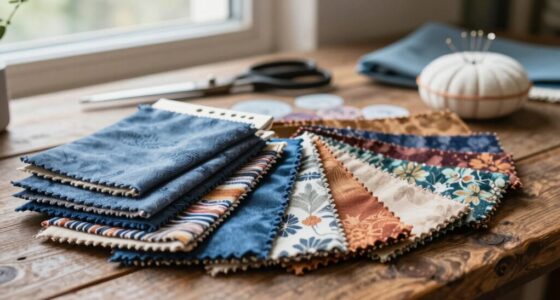
Keeping a sewing notebook helps you stay organized by recording fabric choices, pattern adjustments, and techniques. It allows you to recreate successful projects, refine your skills, and avoid repeating mistakes. With detailed notes, you can guarantee consistency and achieve more polished results. Over time, this practice boosts your confidence and sparks new ideas. Continuing to keep track will open even more ways to improve and enjoy your sewing journey.

Get business pricing on tools and workshop supplies
- Business-only prices and quantity discounts
- Tax-exempt purchasing
- Multiple users, one account, clear invoices
Key Takeaways
- Organizes detailed records of fabrics, patterns, and adjustments for quick reference and consistent results.
- Enhances skill development by tracking techniques, modifications, and successful methods.
- Facilitates accurate reproduction of designs and innovative experimentation.
- Saves time by reducing guesswork and repetitive searching for fabric or pattern information.
- Boosts confidence and project quality through improved planning, execution, and reflection.
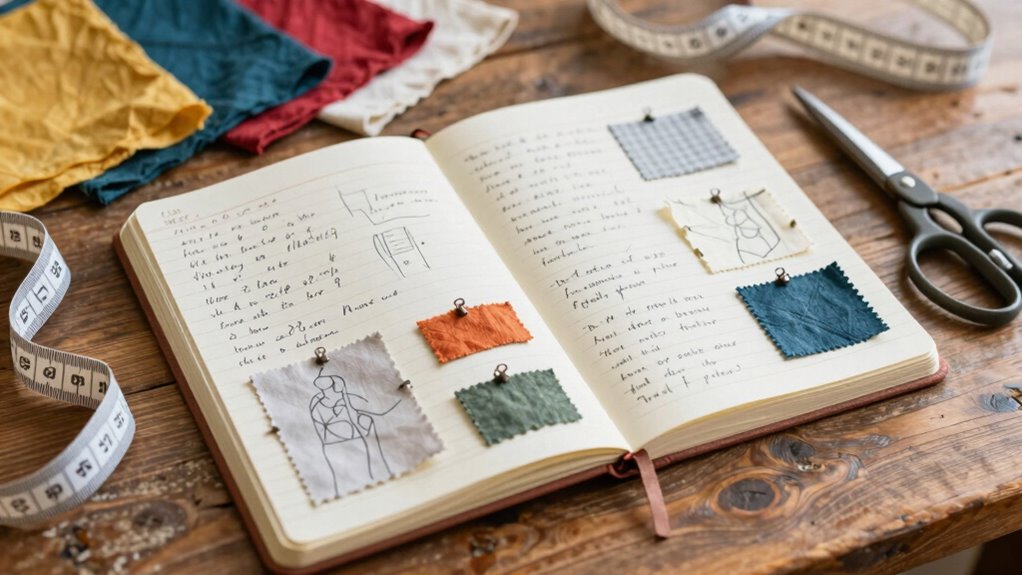
Keeping a sewing notebook might seem like a simple habit, but it can dramatically improve every project you undertake. When you record your fabric choices, you create a quick reference for future projects, helping you remember which fabrics worked best for certain styles, textures, and weights. Noting details like fabric type, supplier, and how it behaved during sewing ensures you can replicate successful combinations and avoid repeating mistakes. This habit saves you time spent searching for the same fabric or second-guessing your previous decisions. Over time, your fabric selection notes build a personalized library that guides you toward better choices, making each project more polished and satisfying.
In addition to fabric selection, your sewing notebook becomes an essential tool for tracking pattern adjustments. When you modify a pattern—whether it’s resizing, altering details, or adjusting fit—jotting down these changes helps you refine your techniques. Instead of trying to remember what you did last time, you have a clear record that you can consult before starting your next project. This is especially useful if you want to replicate a perfect fit or recreate a specific style. You might note that you added an inch to the hips or took in the waist by half an inch, along with any special seam allowances or finishing techniques you used. These details ensure consistency and help you improve your skills over time. Documenting fabric behavior and pattern modifications encourages a deeper understanding of how different materials and techniques influence the final result. Maintaining detailed notes also helps develop your sewing skills by allowing you to reflect on what worked well and what could be improved for future projects. Additionally, keeping a sewing notebook fosters continuous learning, as reviewing past notes can inspire new ideas and techniques.
Furthermore, recording your technique experiments can lead to innovative sewing approaches and expand your creative repertoire.
Popular right now

De'Longhi Stilosa Compact Manual Espresso Machine with Milk Frother

Shark Navigator Robot Vacuum with Self-Empty Base, Dark Grey (RV2120AE)

LG 85-inch QNED75B Mini LED Smart TV Bundle with HDMI and CPS Protection Plan
As an affiliate, we earn on qualifying purchases.
Frequently Asked Questions
How Often Should I Update My Sewing Notebook?
You should update your sewing notebook after every project or when you acquire new fabric or supplies. Regular updates keep your project tracking accurate and your fabric inventory current, preventing overbuying or forgetting what you have. Whether you finish a project or just add new materials, recording details immediately saves time and effort later. Consistent updates make it easier to plan future projects and keep your sewing organized and efficient.
What Should I Include in My Sewing Notebook?
You should include fabric swatches, pattern adjustments, and detailed notes on your sewing projects. Record fabric types, colors, and care instructions, along with any pattern modifications you make for a better fit or design. Add measurements, sewing techniques, and tools used. Keeping these details helps you replicate successful projects and learn from mistakes, making each sewing experience more efficient and enjoyable.
Can I Use Digital Tools Instead of a Paper Notebook?
Think of digital tools as your sewing compass—guiding you through every stitch. Yes, you can replace paper with digital organization; it’s flexible, searchable, and eco-friendly. Paper versus digital comes down to preference, but digital notebooks let you easily update patterns, track supplies, and organize ideas. Embrace this modern quilting quilt, making your sewing journey more efficient, accessible, and ready for any creative adventure ahead.
How Do I Organize My Sewing Notes Effectively?
To organize your sewing notes effectively, create sections for fabric swatches, pattern sketches, and project details. Use clear labels and maintain a consistent format for each entry. Attach fabric swatches next to related notes, and include sketches with annotations. Digital tools can help, but if you prefer paper, use folders or binders. Regularly review and update your notes to keep everything accessible, inspiring, and easy to reference.
Is a Sewing Notebook Necessary for Beginners?
A sewing journal is your compass, guiding you through the tangled forest of fabrics and stitches. It’s necessary for beginners, helping you track material swatches, techniques, and lessons learned. With a sewing journal, you create a map of your progress, making each project smoother. As you stitch along, it becomes your trusty sidekick, transforming chaos into clarity, and turning novice efforts into confident craftsmanship.
Conclusion
Keeping a sewing notebook isn’t just about organization—it boosts your skills and confidence. Did you know that crafters who track their projects improve faster than those who don’t? By jotting down notes, patterns, and lessons learned, you create a personalized roadmap for future success. So, grab your notebook today; every project becomes easier, more enjoyable, and a step closer to mastering your craft. Your sewing journey just got a whole lot better!