
If you’re working on large projects or need quick fiber preparation, a drum carder is your best choice as it blends and smooths fibers efficiently. For small, detailed work or color blending, a blending board offers more control and customization. Consider your project size and how much detail you want to achieve. Want to see how each tool can help you reach your fiber goals? Keep exploring to find the perfect fit for your needs.

Get business pricing on tools and workshop supplies
- Business-only prices and quantity discounts
- Tax-exempt purchasing
- Multiple users, one account, clear invoices
Key Takeaways
- Use a drum carder for quickly blending large quantities of fibers and achieving uniform, smooth batt results.
- Choose a blending board for detailed, small-scale fiber mixing, color blending, and precise texture control.
- Drum carders save time on bulk projects, while blending boards offer customization and tactile control for intricate work.
- Drum carders are ideal for preparing fibers for spinning or felting in large batches; blending boards suit small, detailed projects.
- Both tools enhance fiber preparation but serve different project scales and goals—select based on your specific needs.
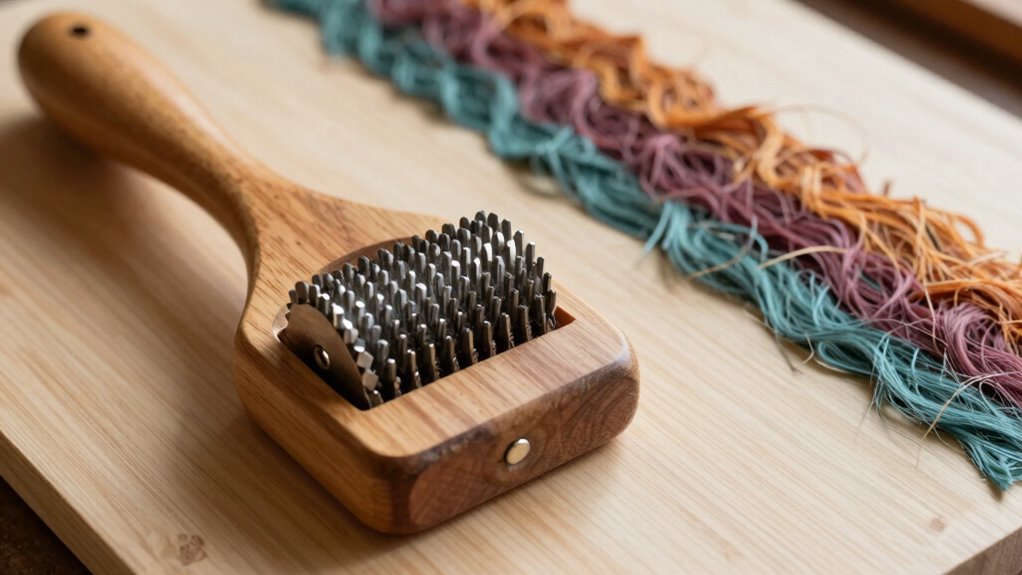
If you’re interested in preparing fibers for spinning or felting, drum carders and blending boards are essential tools that can make the process much easier. Both tools help you achieve a clean, even fiber ready for your project, but they serve different purposes and suit different fiber goals. Understanding how they work and their benefits will help you choose the right one for your needs.
Drum carders and blending boards simplify fiber preparation for spinning and felting, each suited to different project needs.
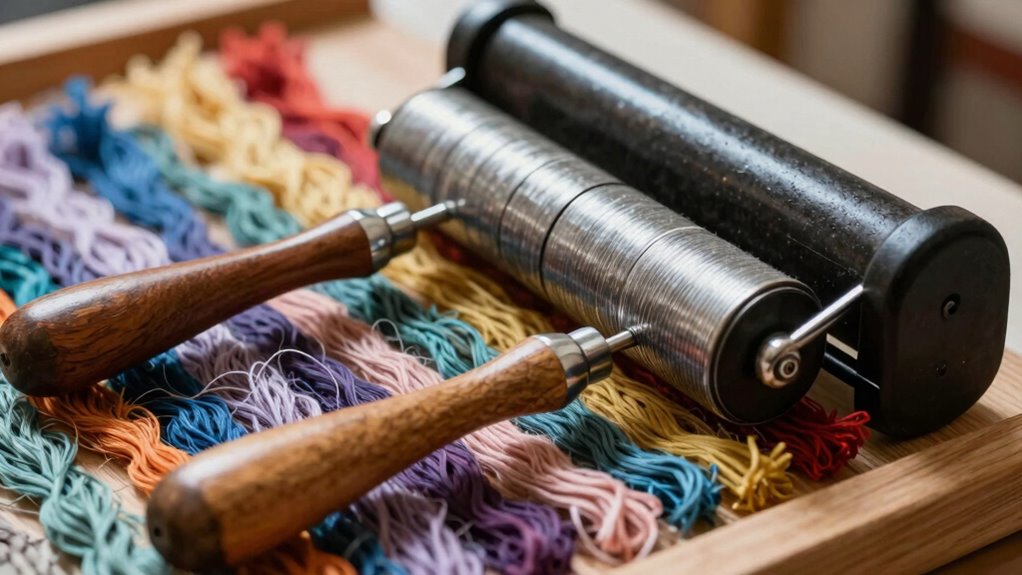
A drum carder is a machine that uses rotating drums covered with fine teeth to align and blend fibers. When you feed raw fiber into a drum carder, it performs a thorough carding process, breaking apart clumps, removing debris, and creating a smooth, uniform batt. This tool is ideal if you want to prepare a large amount of fiber quickly or if you’re aiming for a consistent, well-blended fiber. Drum carders excel at blending different fibers or colors, giving you control over the final appearance of your batt. They also help in carding fibers into roving or slivers, which can then be spun directly or used for felting. The carding techniques with a drum carder involve feeding fibers gradually, adjusting tension, and sometimes overlapping fibers to ensure even blending and alignment. It’s a straightforward process, but it requires some practice to get the most uniform results. Using a drum carder can significantly streamline your fiber prep and save time in larger projects. Additionally, a drum carder allows for efficient processing of bulk fibers, making it a valuable investment for serious fiber artists.
On the other hand, a blending board is a flat surface with pegs arranged in a grid pattern, designed for hand blending and pre-drafting fibers. It’s perfect for small quantities and detailed color work or fiber mixing. When you use a blending board, you lay out fibers in layers, then blend and manipulate them with a comb or hand tool, creating a customized fiber mix. It’s a more tactile, hands-on approach that gives you control over fiber alignment and color blending. Carding techniques on a blending board involve layering, blending by hand, and sometimes pre-drafting fibers before spinning or felting. This method is ideal if you want to create unique color blends, blend different fiber types, or prepare a small amount of fiber for your project. Additionally, a blending board offers a versatile and portable option for fiber preparation, making it suitable for on-the-go projects or small studio setups. For those seeking a more detailed control, the manual process of layering and blending on a board allows for precise customization of fiber textures and colors. The tactile nature of a blending board also encourages a more creative and intuitive approach to fiber preparation.
As an affiliate, we earn on qualifying purchases.
Frequently Asked Questions
Can Drum Carders Handle All Fiber Types Equally Well?
Drum carders can’t handle all fiber types equally well. They work best with wool and animal fibers, but may struggle with very fine or delicate fibers like silk. When using a carder for fiber color blending, you’ll achieve vibrant mixes, but always follow carder safety tips to avoid accidents. For different fiber textures, consider the specific carder design and your project needs to guarantee the best results.
What Is the Optimal Fiber Length for Blending Boards?
If you want maximum blending efficiency, aim for a fiber length around 3-4 inches. For example, when blending wool roving with silk, longer fibers help the blending board work smoothly without bunching. Shorter fibers tend to mat together, reducing effectiveness. Keeping fibers within this length ensures even mixing and easier handling, making your spinning or felting project more consistent and satisfying.
How Much Fiber Can a Typical Drum Carder Process at Once?
A typical drum carder can process about 4 to 8 ounces of fiber per batch, depending on its size and quality. You can expect good fiber quality and consistent results if you don’t overload the carder beyond its capacity. Larger, high-quality models have greater carder capacity, allowing you to work with more fiber at once. Always follow your carder’s specifications for peak performance and fiber quality.
Are Blending Boards Suitable for Large-Scale Fiber Preparation?
Like a delicate tapestry, blending boards weave fiber with finesse, but they’re not built for large-scale fiber preparation. You might find their blending efficiency and ability to maintain fiber quality better suited for small batches or artistic projects. For bulk processing, a drum carder acts as your mighty loom, handling large quantities efficiently. If your goal is large-scale fiber prep, blending boards fall short, and a drum carder becomes your powerhouse.
What Maintenance Do Drum Carders Require Over Time?
You need to regularly check your drum carder for fiber buildup and lubricate it with appropriate fiber lubrication to keep it running smoothly. Store it in a dry, dust-free environment, and cover it when not in use to prevent dust accumulation and rust. Periodic maintenance includes cleaning the rollers and ensuring the drive system remains aligned. Proper care guarantees your drum carder stays efficient and lasts longer.
Conclusion
So, whether you choose a drum carder or a blending board, remember—your fiber goals might just surprise you. Maybe you’ll end up blending colors you never thought possible, or maybe you’ll find that simplicity actually sparks your creativity. Irony’s a funny thing—sometimes the tool you least expect becomes your best friend, shaping your fiber journey in ways you never imagined. After all, who knew that picking between these two could turn into such an adventure?
Fall Picks
fall essentials
As an affiliate, we earn on qualifying purchases.