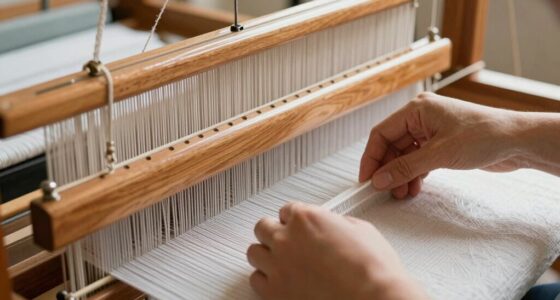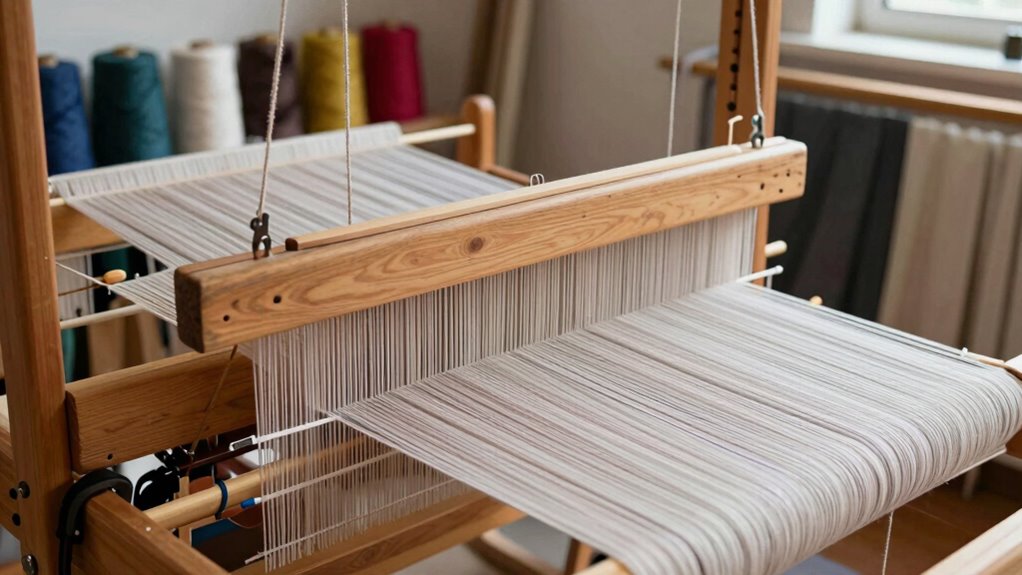

A bigger floor loom makes sense when you’re ready to expand your weaving opportunities and take on more complex projects. It offers more harnesses, wider fabrics, and the ability to explore intricate patterns like twill or satin. While it requires more setup and upkeep, it also lets you create larger textiles with cleaner edges and better tension control. If you’re considering increasing your weaving skills and projects, you’ll find plenty of benefits to a bigger loom as you explore further.

Get business pricing on tools and workshop supplies
- Business-only prices and quantity discounts
- Tax-exempt purchasing
- Multiple users, one account, clear invoices
Key Takeaways
- When planning to create larger textiles or complex patterns, a bigger loom offers necessary capacity and flexibility.
- Expanding skills and exploring advanced weaving techniques benefit from a setup with more harnesses and treadles.
- Larger looms improve efficiency for sizable projects, reducing the need for rethreading or reconfiguration.
- If you aim for professional-quality, detailed, or exhibition-ready pieces, a bigger loom provides better tension control.
- Consider upgrading when your current loom limits project size, pattern complexity, or creative growth potential.
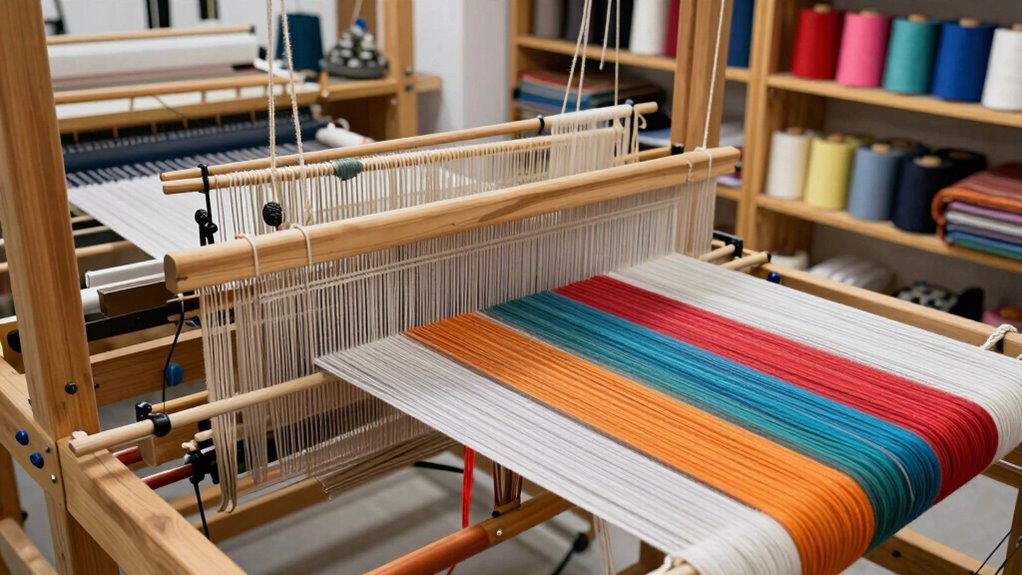
A floor loom is a versatile and essential tool for weaving, offering a sturdy frame that allows you to create complex, intricate textiles. Its size and structure give you the space and stability needed to explore a wide range of weaving techniques, from simple plain weaves to elaborate patterns. When you’re considering whether a bigger weaving setup makes sense, think about the kind of projects you want to undertake. If you aim to produce large textiles or detailed designs, a floor loom provides the capacity and control that smaller looms can’t match.
Using a larger loom means you’ll have more harnesses, shafts, and treadles at your disposal, enabling you to experiment with advanced weaving techniques such as twill, satin, or complex geometric patterns. These techniques often require multiple harnesses and intricate treadling sequences, which are easier to manage on a bigger loom. Plus, the increased width allows you to weave wider fabrics without constantly reconfiguring your setup, making the process more efficient and enjoyable. Additionally, a larger loom can support sustainable weaving practices by allowing the use of eco-friendly materials in larger projects. Properly maintaining your loom not only preserves its functionality but also ensures that the tension and alignment remain consistent, which is crucial for complex designs.
A larger loom offers more harnesses and width for complex patterns and efficient weaving.
However, with the size and complexity of a floor loom comes the need for good loom maintenance. Regular upkeep ensures your loom stays in top condition, preventing issues like broken heddles or misaligned warp threads that can disrupt your weaving. Keep the loom clean, free from dust and debris, and periodically check all moving parts, especially the harnesses and treadles. Proper maintenance not only extends the lifespan of your loom but also helps you achieve the best results in your weaving projects. Incorporating preventative maintenance routines can help you identify potential issues early and keep your loom functioning smoothly. Developing a consistent lifetime care routine ensures optimal performance and extends the longevity of your investment.
As you grow more confident with your loom, you’ll discover that mastering weaving techniques becomes easier and more satisfying on a larger setup. You can create larger pieces with cleaner selvages and more precise patterns, which is particularly important if you’re planning to sell or display your work. The bigger setup also encourages you to think more critically about warp tension and threading, making loom maintenance an integral part of your routine. This ongoing care ensures consistent tension and smooth operation, which directly impacts the quality of your textiles. Moreover, understanding how environmental factors impact your loom setup can help you adapt your maintenance routines for optimal results.
Ultimately, choosing a bigger weaving setup like a floor loom makes sense if you’re ready to expand your skills and tackle larger, more detailed projects. It demands a bit more effort in terms of setup and maintenance, but the payoff is a more versatile and powerful weaving experience. With patience and practice, you’ll harness the full potential of your loom, creating textiles that showcase your technical skills and artistic vision. Additionally, understanding the importance of biodiversity and sustainable living practices can inspire you to select eco-friendly materials and methods in your weaving, contributing to a healthier planet.
floor loom with multiple harnesses
As an affiliate, we earn on qualifying purchases.
As an affiliate, we earn on qualifying purchases.
Frequently Asked Questions
How Do I Choose the Right Size of Floor Loom?
To choose the right size of floor loom, consider your weaving projects and space. If you plan to use advanced weaving techniques or larger patterns, opt for a bigger loom with more harnesses and wider weaving width. Make certain it fits your workspace comfortably. Additionally, check compatibility with loom accessories like heddles and shuttles. A larger loom offers versatility, but ensure you’re comfortable managing its size and complexity for your weaving needs.
What Maintenance Does a Floor Loom Require?
You need to regularly clean your floor loom to keep weaving techniques smooth and consistent. Lubricate moving parts like the heddles and treadles, and check for loose or worn loom accessories. Periodically remove dust and dirt, and inspect the warp and threads for damage. Proper maintenance guarantees your loom stays in top condition, helping you produce quality weavings. Regular upkeep also extends the lifespan of your equipment.
Can Beginners Operate a Floor Loom Effectively?
They say, “You’re never too old to learn,” and that’s true for floor looms. As a beginner, you can operate a floor loom effectively by mastering basic weaving techniques and understanding loom accessories. Patience and practice are key; start simple, ask questions, and don’t rush. With time, you’ll develop confidence and skill, transforming your weaving journey into a rewarding experience.
How Long Does It Take to Set up a Loom?
Setting up a loom typically takes anywhere from 30 minutes to several hours, depending on your experience and the complexity of your project. You’ll spend time adjusting thread tension and ensuring the warp and weft are correctly aligned. As you become more familiar, your weaving speed improves, and setup time decreases. Patience is key, especially when managing multiple threads and intricate patterns, but with practice, the process becomes quicker and smoother.
Are There Safety Concerns With Larger Looms?
Larger looms can pose safety concerns, as they are heavier and more complex to operate. You should follow safety precautions like ensuring proper stable setup and using ergonomic considerations, such as adjustable heights and good posture, to prevent strain or injury. Did you know that improper handling of large equipment causes over 50% of weaving injuries? Staying cautious and ergonomic helps you weave safely and enjoy your craft longer.
Conclusion
Think of your weaving journey like tending a garden. A small pot works for seedlings, but as your plants grow, you need a bigger space to thrive. Similarly, a larger loom provides the room you need to expand your skills and creative visions. Embrace the shift when it’s time—just as a garden flourishes with space, your weaving becomes richer and more intricate with the right setup. Growth is part of the craft’s beautiful cycle.
Fall yard work Picks
leaf blowers
As an affiliate, we earn on qualifying purchases.