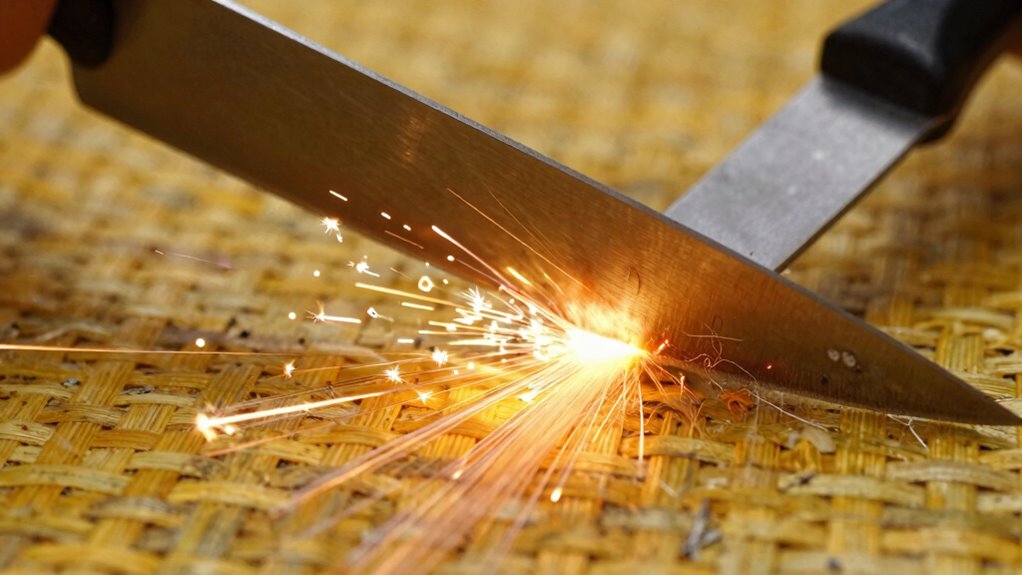

When you need clean, professional edges on webbing, a hot knife cutter outperforms scissors because it melts fibers for a smooth, sealed finish that prevents fraying. Using steady, controlled motions allows the heat to do the work, ensuring neat cuts even on thicker webbing. Proper handling and safety measures are essential, and with practice, you’ll achieve precise results every time. If you want to master this technique, there’s more to discover about making perfect cuts.

Get business pricing on tools and workshop supplies
- Business-only prices and quantity discounts
- Tax-exempt purchasing
- Multiple users, one account, clear invoices
Key Takeaways
- Hot knife cutters produce clean, sealed edges by melting webbing fibers, preventing fraying better than scissors.
- They offer precise control for smooth, professional cuts, especially on thick or tough webbing.
- Using a hot knife minimizes fiber damage, preserving material integrity and enhancing overall finish.
- Proper technique and steady movement ensure consistent, neat melting results.
- Safety precautions are essential to prevent burns or accidents during operation.
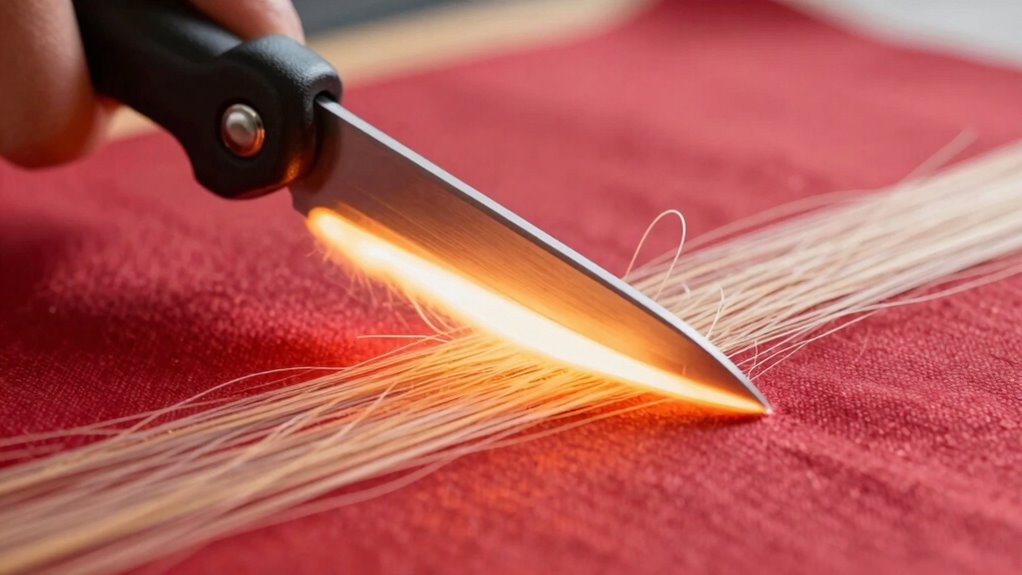
Hot knife cutters are essential tools for efficiently cutting webbing, especially when precision and clean edges matter. Unlike scissors or blades, these cutters melt through webbing fibers with controlled heat, creating a smooth, sealed edge that prevents fraying and unraveling. When you’re working on projects that require clean finishes, understanding how to use a hot knife properly makes all the difference. Proper handling not only improves your results but also ensures thermal safety, which is crucial when operating heated tools. Always keep your work area well-ventilated and wear protective gear, like gloves and safety glasses, to minimize risks associated with high temperatures.
Mastering cutting techniques with a hot knife involves more than just pressing down; it’s about control and finesse. You want to maintain a steady, even motion, letting the heat do the work rather than applying excessive downward pressure. This approach reduces the chance of jagged edges or uneven cuts. When you cut, start at one end and move smoothly across the webbing, keeping the blade at a consistent angle. For thicker or tougher webbing, slow down slightly to allow the heat to melt through evenly. If your cuts require curves or intricate shapes, practice slow, deliberate movements to maintain smooth edges. Consistent technique ensures your cuts are clean and professional without wasting material or creating a mess. Additionally, understanding the proper handling of heated tools helps in achieving optimal results and safety. Regularly practicing your cutting technique can significantly improve your efficiency and the quality of your work. Being aware of the different types of webbing and their melting points can also help tailor your approach for the best results.
Thermal safety is paramount when working with hot knives. The heating element reaches high temperatures, so never touch the blade during operation, and always switch off and unplug the tool after use. Allow it to cool completely before storing it away. Keep cords and the hot blade away from flammable materials, and avoid operating the cutter near liquids or in damp environments to prevent electrical hazards. Regularly inspect your hot knife for signs of wear or damage, such as frayed cords or loose connections, which could compromise safety. By following these precautions, you minimize risks and extend the lifespan of your tool.
As an affiliate, we earn on qualifying purchases.
Frequently Asked Questions
What Safety Precautions Should I Take When Using a Hot Knife?
When using a hot knife, you should wear protective gear like gloves and safety glasses to prevent burns and eye injuries. Guarantee proper ventilation to avoid inhaling fumes from melting materials. Keep your workspace clear and stable, and never touch the heated blade. Always follow manufacturer instructions, and turn off the hot knife when not in use. Taking these precautions helps keep you safe and ensures clean, precise cuts.
Can Hot Knife Cutters Be Used on All Types of Webbing Materials?
Hot knife cutters aren’t suitable for all webbing materials. You need to take into account webbing compatibility, as some fabrics like nylon or polyester melt cleanly with hot knives, while others, such as rubber or certain plastics, may not respond well. Material limitations mean using the right cutter for specific webbing ensures a clean cut without damage or fraying. Always test a small section first to confirm the cutter’s effectiveness on your webbing type.
How Long Does It Take for a Hot Knife to Heat Up?
You’ll find that a hot knife typically takes about 3 to 5 minutes to heat up, depending on the model and wattage. During this time, it reaches its ideal temperature for clean cuts, ensuring temperature stability for precise melting. To get the best results, wait until the hot knife maintains a consistent temperature before starting your work. This quick heat-up time helps you work efficiently without waiting too long.
What Is the Typical Lifespan of a Hot Knife Cutter?
You can expect a hot knife cutter to last around 1,000 to 2,000 hours of use. Its lifespan depends on blade replacement frequency and proper temperature calibration. Regularly checking and adjusting the temperature guarantees consistent performance, extending the tool’s life. Keep an eye on wear and tear, and replace the blade when it dulls to maintain clean cuts and prevent overheating, which can shorten your cutter’s longevity.
Are There Any Maintenance Tips for Prolonging Hot Knife Performance?
To prolong your hot knife cutter’s performance, regularly check and sharpen the blade to maintain clean cuts and prevent strain. Store it properly in a dry, cool place, ideally in a protective case, to avoid damage and oxidation. Keep the heating element clean by gently wiping it after use. These maintenance tips help guarantee your hot knife remains efficient, durable, and ready for precise webbing cuts whenever you need them.
Conclusion
When you choose a hot knife cutter for webbing, you’re wielding a tool that transforms chaos into perfection—far more powerful than scissors. It’s like having a magic wand that guarantees every cut is clean, precise, and effortless. Say goodbye to frayed edges and uneven lines; with a hot knife, you’re elevating your craft to legendary status. Trust me, once you experience the smoothness, you’ll wonder how you ever worked without it—your projects deserve nothing less.
Fall Picks
fall essentials
As an affiliate, we earn on qualifying purchases.