To make sleeve cap ease in smoothly, you need to use proper sewing techniques like easing stitches and pinning the sleeve carefully into the armhole with right sides together. Maintaining control by sewing slowly and pressing the sleeve cap with steam helps set the ease evenly. Choosing fabrics with good drape and understanding how they behave during sewing also makes a difference. If you stay attentive to these details, you’ll guarantee a clean, professional fit—there’s more to discover as you continue.

Get business pricing on tools and workshop supplies
- Business-only prices and quantity discounts
- Tax-exempt purchasing
- Multiple users, one account, clear invoices
Key Takeaways
- Use appropriate easing stitches to gently gather fabric along the sleeve cap.
- Pin the sleeve into the armhole with right sides together, distributing ease evenly.
- Sew slowly and carefully to maintain control and prevent puckering.
- Press the sleeve cap with steam after sewing to set the ease smoothly.
- Select lightweight, drapey fabrics for easier, smoother easing.
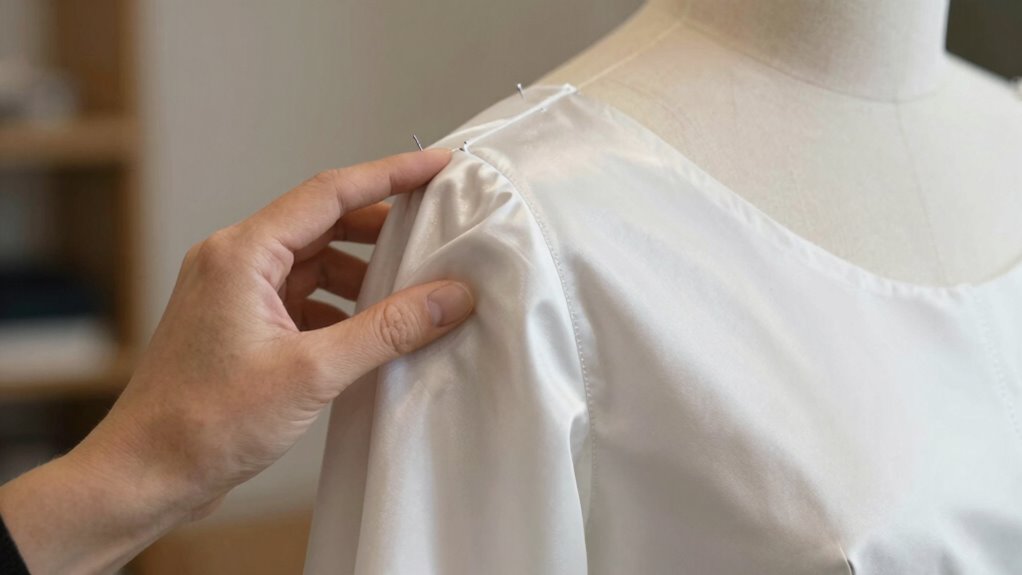
Sleeve cap ease refers to the slight amount of extra fabric built into the sleeve cap to allow for comfortable movement and a clean shoulder line. If the ease is too little, the sleeve may pull or pucker, making it stiff and uncomfortable. If it’s too much, the sleeve can look baggy or saggy. To get this right, you need to pay close attention to your sewing techniques and fabric selection. Proper sewing techniques, like easing stitches and careful pinning, help distribute the fabric evenly, preventing puckering and creating a smooth transition from the shoulder seam to the sleeve. When you sew, use a small, temporary running stitch along the sleeve cap to gather or ease the fabric gently into the armhole. This step ensures the sleeve cap curves smoothly without puckers. Additionally, understanding how fabric behaves during sewing can help you anticipate and adjust for any challenges in achieving a perfect fit. Fabric selection plays a key role. Lightweight, drapey fabrics like silk or chiffon are more forgiving and tend to ease more smoothly, while stiff fabrics like linen or heavy cotton can make achieving a smooth sleeve cap more challenging. If you choose a fabric with less drape, you might need to add a bit more ease to prevent pulling. Conversely, fabrics with more stretch or flexibility can adapt better to the armhole shape, making it easier to achieve a smooth fit. Always consider how the fabric behaves during sewing—fabric behavior can significantly influence the ease and final appearance. Using the right sewing techniques for your chosen fabric ensures the ease is distributed evenly, preventing puckers and creases. Recognizing the importance of pattern adjustments can further help in customizing the fit to your body’s unique shape. Proper pattern adjustment may involve reshaping the sleeve cap or adjusting the armhole to ensure a more tailored fit. When you cut your fabric, make sure to mark notches and ease lines carefully. During construction, pin the sleeve into the armhole with the fabric right sides together, easing the sleeve cap in gently. Take your time, and don’t rush through this step. Use your fingers to smooth out the fabric, and sew slowly to maintain control. After sewing, pressing the sleeve cap with a steam iron helps set the ease smoothly into place. Being mindful of fabric tension during sewing can also make a notable difference in achieving a neat, professional-looking finish.
As an affiliate, we earn on qualifying purchases.
Frequently Asked Questions
How Do Fabric Types Affect Sleeve Cap Ease?
Fabric types notably affect sleeve cap ease because fabrics with more stretch, like knits, allow for easier movement and a smoother fit. Conversely, woven fabrics with little to no stretch require precise ease measurement to prevent puckering or tightness. When selecting fabric, consider its stretch potential, as this impacts how comfortably the sleeve cap eases in. Proper ease measurement ensures the sleeve fits smoothly without added tension or excess fabric.
What Tools Are Best for Adjusting Sleeve Cap Ease?
You should use a tailor’s ham, sleeve board, or pressing tools for adjusting sleeve cap ease. These tools help you shape the fabric smoothly during sleeve cap drafting and pressing. Seam rippers and pins also come in handy for fine-tuning fitting adjustments. When pattern grading, make certain your pattern pieces align properly, and use these tools to achieve a smooth, professional finish that allows the sleeve to ease in seamlessly.
Can Sleeve Cap Ease Be Altered After Sewing?
Think of sleeve cap ease as a delicate dance—it can be adjusted even after sewing. You can perform sleeve cap adjustments with careful sewing techniques like easing stitches or trimming excess fabric. Using a seam ripper, you can carefully undo stitches, then re-sew for a smoother fit. With patience, you can fine-tune your sleeve cap ease, ensuring your garment fits perfectly and moves gracefully with you.
How Does Sleeve Cap Ease Impact Garment Fit?
The sleeve cap ease directly affects how well your garment fits and moves. If there’s too much ease, the sleeve may feel bulky or loose; too little, and it might restrict movement. Your sleeve cap design and sewing techniques play essential roles here. Properly adjusting ease during sewing guarantees a smooth, comfortable fit, allowing the sleeve to follow shoulder contours without puckering or sagging.
What Are Common Mistakes to Avoid With Sleeve Cap Ease?
Imagine sewing a sleeve where the fabric flows seamlessly over your arm—avoid common mistakes by not rushing the sleeve cap fitting process. You’ll want to double-check your ease measurement techniques, ensuring the ease is just enough for comfort without excess fabric causing puckers. Don’t skip pinning and fitting before sewing, and steer clear of over-pressing, which can distort the sleeve shape. These steps keep your sleeve cap smooth and perfectly fitting.
Conclusion
So, there you have it—mastering sleeve cap ease isn’t rocket science, even if it sometimes feels like it. Just remember, a little extra ease keeps your sleeve from turning into a constrictor. Ignore the rules, fudge the measurements, and watch your garment look “just right”—or at least better than a sausage casing. After all, who needs perfect fit when you can have perfect chaos? Happy sewing, and may your sleeves always hang happily!
Fall yard work Picks
leaf blowers
As an affiliate, we earn on qualifying purchases.