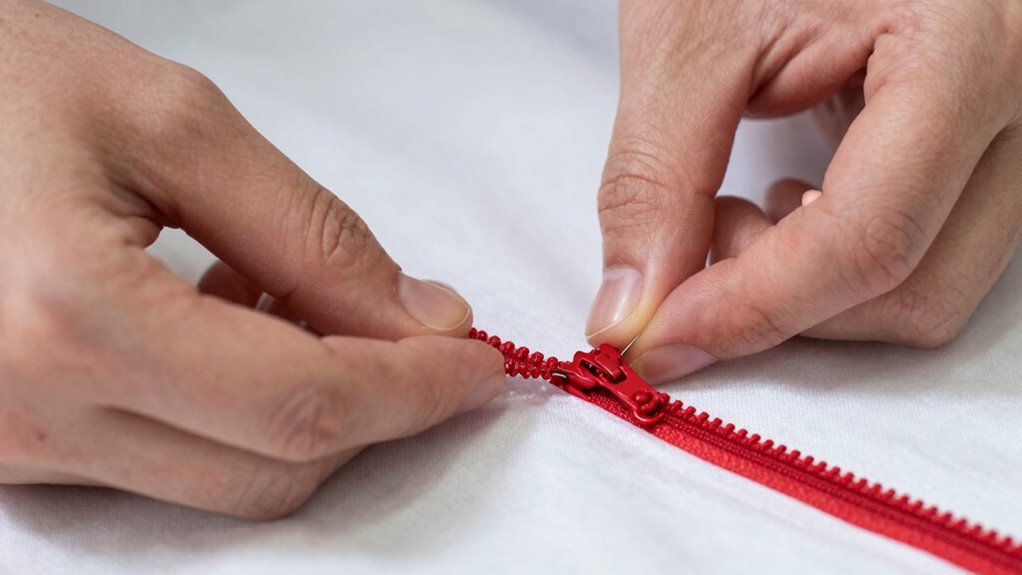

Basting zippers first helps you keep the zipper in place, making it easier to align and control the fabric. It prevents shifting, puckering, or slipping during final sewing, giving you a neater, more professional finish. Basting also acts as a quick way to check if the fabric and zipper work well together before permanent stitches go in. If you wanna improve your results and gain confidence, there’s more to discover beyond this step.

Get business pricing on tools and workshop supplies
- Business-only prices and quantity discounts
- Tax-exempt purchasing
- Multiple users, one account, clear invoices
Key Takeaways
- Basting temporarily secures the zipper for precise alignment before permanent sewing.
- It allows early detection of issues like puckering or slipping, enabling adjustments.
- Basting stabilizes tricky fabrics, preventing shifting during final stitching.
- It builds sewing confidence by practicing placement and tension without commitment.
- Overall, basting leads to a cleaner, more professional zipper finish.
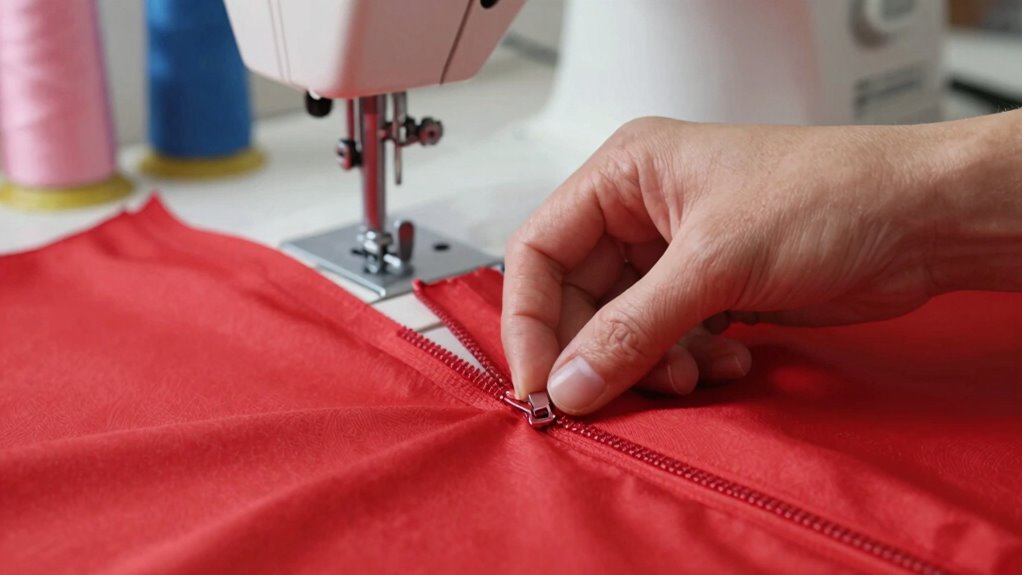
Have you ever struggled with sewing zippers neatly? If so, you’re not alone. Many sewists find that tackling zippers directly can be tricky, especially if you’re working with delicate fabrics or a less-than-ideal sewing machine. That’s why basting zippers first can make a significant difference in your final result. Basting involves temporary stitches that hold the zipper in place, giving you a chance to check alignment and make adjustments before sewing the zipper permanently. This step saves you from the frustration of fixed mistakes and ensures a cleaner, more professional finish.
One of the biggest benefits of basting zippers first is that it helps you control fabric movement. When you’re working with fabric selection that’s prone to shifting—like slippery silks or stretchy knits—basting provides stability. It allows you to see how the zipper interacts with your fabric, so you can make sure it lies flat and aligns properly. Plus, by gently securing the zipper with basting stitches, you prevent it from shifting during the final sewing, which is crucial for a neat appearance. This step becomes even more important if your sewing machine maintenance isn’t recent; older or poorly maintained machines can pull or skip stitches, making precise sewing more difficult. Basting gives you a kind of insurance, so you’re not relying solely on your machine’s performance. Additionally, fabric behavior can vary significantly depending on your material, and basting helps you adapt your approach accordingly. It also provides a visual reference that can guide your final stitching, making the process smoother. Using basting stitches also provides an opportunity to test stitch tension****, ensuring your machine is set correctly before making permanent stitches.
Basting stabilizes fabric, preventing shifting and ensuring a neat, aligned zipper even with older machines or tricky fabrics.
Another advantage is that basting gives you the opportunity to evaluate your fabric selection. Some fabrics are more forgiving and easier to work with, while others require extra care. When you baste first, you can check how the fabric behaves around the zipper area, whether it’s bunching, puckering, or slipping out of alignment. If you notice issues during basting, you can switch to a different technique or even reconsider your fabric choice before committing to permanent stitches. It’s a simple way to troubleshoot early and save time in the long run. Additionally, sewing machine maintenance can impact your stitching quality, so basting allows you to identify potential issues before making permanent stitches.
Finally, basting zippers first boosts your confidence. It’s a low-stakes way to experiment with placement and tension, especially if you’re new to sewing zippers. Once you’re satisfied with the basting stitches, you can sew the zipper permanently with assurance that everything is aligned. This method also encourages better sewing habits, like maintaining consistent stitch length and tension—skills that are essential regardless of the fabric or machine condition. Overall, taking the extra step to baste zippers first leads to a neater, more professional-looking finish and makes the entire process more manageable, no matter your fabric selection or sewing machine maintenance level.
As an affiliate, we earn on qualifying purchases.
Frequently Asked Questions
Can I Skip Basting and Sew Directly?
You can skip basting and sew directly, but it’s not recommended for zipper installation. Basting helps you position the zipper accurately, ensuring smooth sewing and professional results. Without basting, your zipper might shift or sit unevenly, making subsequent sewing techniques harder to manage. Taking a few extra minutes to baste first gives you better control and a cleaner finish, especially when working with tricky fabrics or delicate details.
What Tools Are Best for Basting Zippers?
Think of basting your zipper like a skilled artist preparing their canvas. Use a fine, sharp sewing needle or a short, delicate hand-sewing pin to guarantee precise zipper alignment. Seam rippers and tailor’s chalk help with accurate basting techniques, guiding your stitches and adjusting placement effortlessly. These tools allow you to control tension and placement, giving you the confidence to perfect your zipper installation before final sewing—making your project look professionally crafted.
How Long Should Basting Stitches Be?
You should make basting stitches about 1/4 inch long, which is ideal for temporary holds. Using the right thread selection, like a lightweight or contrasting thread, makes basting easier to remove later. Stick to consistent stitch length to keep your basting techniques neat and secure. Short stitches are easier to remove and help you accurately align your zipper, ensuring a smooth finish and professional-looking results.
Is Basting Necessary for All Zipper Types?
Basting isn’t necessary for all zipper types, but it often improves zipper alignment and basting accuracy. For invisible or metal zippers, basting helps you guarantee the teeth line up perfectly before permanent stitching. However, for simple or fabric-covered zippers, you might skip basting if you’re experienced. Ultimately, basting gives you more control, reduces mistakes, and results in a cleaner finish, especially on tricky or delicate fabrics.
Can Basting Be Done With a Machine or Only by Hand?
You can do basting with either a machine or by hand, depending on your project. Machine basting is faster and ideal for long seams or heavy fabrics, providing a secure hold before permanent stitching. Hand basting offers more control, especially for delicate fabrics or tricky zipper placements. Both methods help guarantee your zipper stays aligned and smooth, but choosing between them depends on your fabric, time, and comfort level.
Conclusion
Basting zippers first guarantees a smoother, more professional finish, saving you time and frustration later. It allows you to make precise adjustments before permanently sewing, leading to better results overall. Remember, “A stitch in time saves nine”—taking the extra step at the start prevents bigger issues down the line. So, don’t skip this step; your sewing projects will thank you with cleaner, more polished looks every time.
Halloween Picks
halloween
As an affiliate, we earn on qualifying purchases.