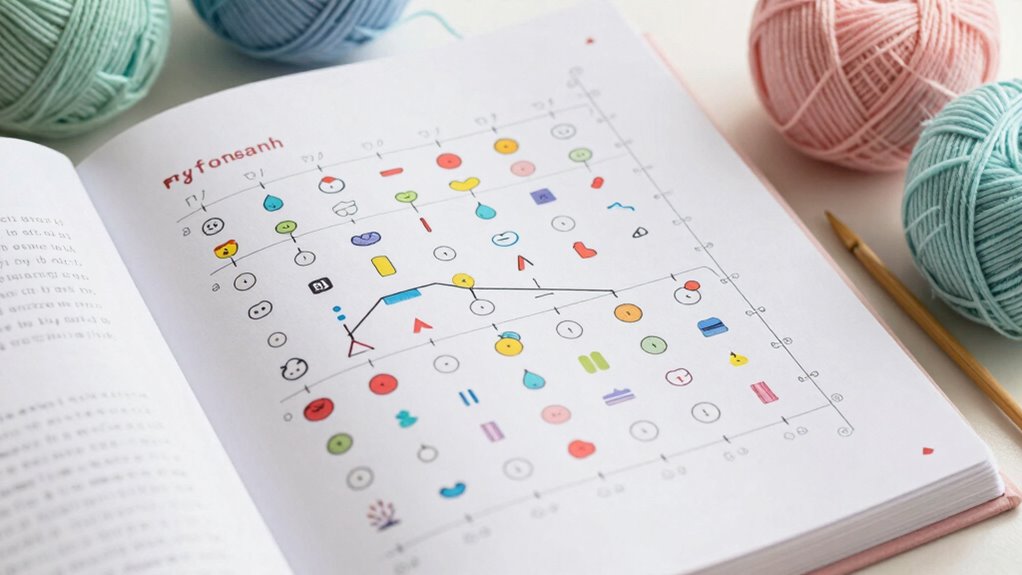

To understand schematic drawings in knitting and crochet patterns, start by checking the legend for symbols and colors that indicate specific stitches or sections. Follow the pattern’s flow by noting arrows, row numbers, and repeat markers to track your progress. Pay attention to how colors show shading or changes. Keep the legend nearby for quick reference, and with practice, you’ll find interpreting diagrams becomes quicker and easier—if you keep exploring, you’ll discover even more helpful tips.

Get business pricing on tools and workshop supplies
- Business-only prices and quantity discounts
- Tax-exempt purchasing
- Multiple users, one account, clear invoices
Key Takeaways
- Regularly consult the symbol legend to understand stitch types and techniques depicted.
- Identify pattern repeats and directional flow using arrows or numbered rows.
- Use color coding to distinguish different yarns, sections, or motifs.
- Recognize and interpret visual cues like shapes and shading for pattern details.
- Keep the schematic and legend nearby for quick reference during knitting or crochet.

Understanding schematic drawings in knitting and crochet patterns can seem intimidating at first, but once you learn to interpret their symbols and layouts, they become valuable tools for visualizing your project. These diagrams often use a combination of lines, shapes, and colors to represent stitches, rows, and pattern repeats. To make sense of them, you need to familiarize yourself with two key elements: color coding and the symbol legend. Color coding helps you quickly identify different types of stitches or sections within the pattern. For instance, you might see one color indicating knit stitches and another for purl stitches, making it easier to follow complex designs. It also guides you through colorwork patterns, where specific hues correspond to specific stitches or motifs.
The symbol legend is your primary reference guide for understanding what each symbol in the diagram means. Usually provided alongside the schematic, it translates visual symbols into actual stitches or techniques. For example, a small circle might represent a yarn over, while a zigzag line could indicate a cable stitch. By consulting the legend, you decode the pattern’s instructions at a glance instead of deciphering long written instructions. This makes the process more intuitive, especially when working with intricate or repetitive motifs. Additionally, recognizing visual cues in schematic drawings helps you quickly interpret the pattern without constantly referencing the legend.
As you examine a schematic, start by identifying the edges and the direction of the rows or rounds. Many diagrams include arrows or numbered rows, helping you track your progress. Pay attention to how colors are used in conjunction with symbols; this can reveal color changes, shading, or specific stitch patterns within a section. When working from the schematic, keep the symbol legend nearby, and don’t hesitate to refer to it often until you’re comfortable recognizing the symbols quickly. Over time, you’ll develop an eye for reading these visual cues, reducing the need to constantly check the legend.
knitting schematic pattern guide
As an affiliate, we earn on qualifying purchases.
As an affiliate, we earn on qualifying purchases.
Frequently Asked Questions
Are Schematic Symbols Standardized Across Different Pattern Designers?
Schematic symbols aren’t completely standardized across different pattern designers, so you might encounter variations. While some level of consistency exists, especially within established pattern collections, symbol variations can cause confusion. It’s crucial to always check the legend or key accompanying each pattern, as standardization isn’t universal. This way, you guarantee you’re interpreting the symbols correctly, regardless of the designer, and avoid mistakes in your knitting or crochet projects.
How Can I Convert Schematic Diagrams Into Written Instructions?
You can convert schematic diagrams into written instructions by focusing on pattern translation through symbol interpretation. Start by identifying each symbol and its corresponding stitch or action. Then, translate these symbols into clear, step-by-step instructions that match the diagram’s flow. Keep in mind that practicing this process improves accuracy and confidence, making your projects more enjoyable. This method bridges visual cues and written guidance seamlessly, turning diagrams into practical, easy-to-follow directives.
Do Schematic Drawings Indicate Stitch Tension or Gauge?
Schematic drawings typically don’t directly indicate stitch tension or gauge. However, they help you visualize pattern structure, which is essential for gauge consistency. To guarantee your project matches the intended tension, check the pattern’s recommended gauge swatch and compare it with your work. While schematics guide stitch placement, maintaining consistent stitch tension is your responsibility for achieving the proper gauge and a uniform finished piece.
Are There Tools to Help Interpret Complex Schematics?
Did you know that over 60% of knitters find complex schematics intimidating? Luckily, digital tools like pattern libraries and specialized apps make interpretation easier. These resources often include interactive diagrams, tutorials, and annotations, helping you decode intricate symbols. With just a smartphone or computer, you can quickly understand complex schematics, saving time and reducing frustration as you bring your knitting or crochet projects to life.
Can Schematic Symbols Vary Between Knitting and Crochet Patterns?
Yes, schematic symbols can vary between knitting and crochet patterns. This variation affects diagram clarity, so you need to pay close attention to each pattern’s legend. Consistent symbols within a pattern help you follow instructions easily, but differences across patterns mean you should always verify the key. Recognizing these distinctions ensures you interpret the diagrams correctly, making your crafting experience smoother and more enjoyable.
Conclusion
Mastering schematic drawings opens a world of endless creativity in your knitting and crochet projects. With a gentle touch of patience and curiosity, you’ll find these symbols becoming familiar friends, guiding your hands with quiet confidence. Over time, what once seemed intricate will feel more like a whispered conversation. Embrace the journey, and you’ll discover that every line and symbol subtly whispers stories of craftsmanship, inviting you to weave your own beautiful narrative.
Fall yard work Picks
leaf blowers
As an affiliate, we earn on qualifying purchases.