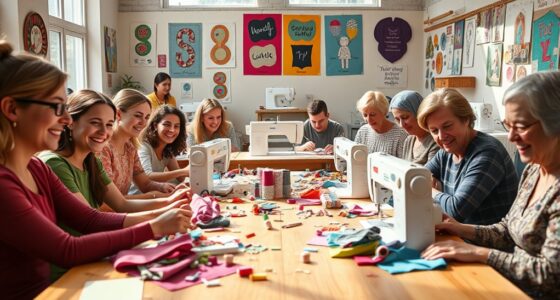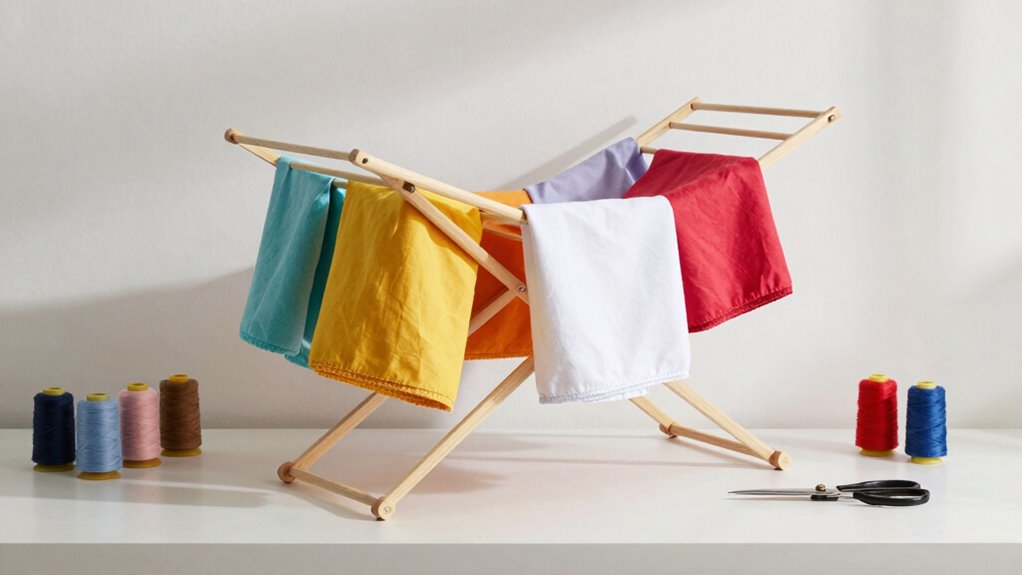

A drying rack is essential in your modern sewing space because it speeds up the drying process, keeps fabrics organized, and prevents water damage. It provides a dedicated spot for damp fabrics, avoiding clutter and wrinkles while ensuring proper airflow. This helps preserve delicate materials like linen or wool and maintains a tidy workspace. Keep going, and you’ll discover even more ways a drying rack can enhance your sewing efficiency and fabric care.

Get tools and workshop supplies delivered free — and shop member deals
- Fast, free delivery on millions of items
- Access to Prime Big Deal Days deals on October 6–7
- Prime Video, Amazon Music and more included
Key Takeaways
- It provides a dedicated spot for drying fabrics, preventing clutter and water damage in the workspace.
- Enhances fabric preservation by reducing wrinkles, mold, and maintaining material quality.
- Improves workflow efficiency by enabling faster drying and better fabric organization.
- Promotes good workspace hygiene by containing damp textiles and preventing moisture-related tool damage.
- Offers an eco-friendly, cost-effective drying solution adaptable to various project sizes.
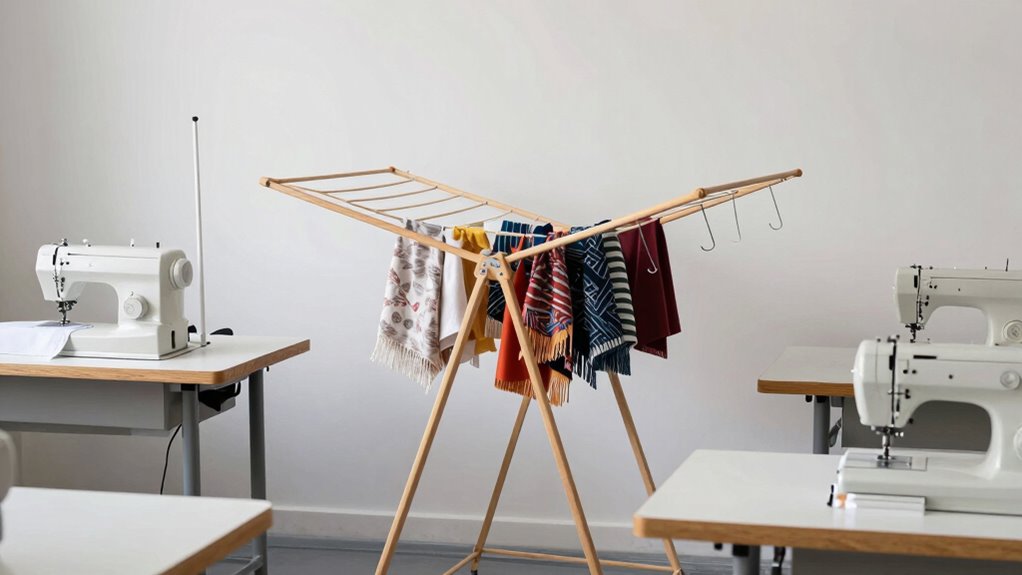
Having a drying rack in your sewing space can considerably streamline your workflow, especially when working with damp fabrics or freshly washed materials. It provides a dedicated spot for drying without cluttering your work surfaces or risking water damage to your sewing tools. When you’re handling delicate or natural fabrics like linen or wool, a drying rack keeps them laid flat and properly aerated, preventing wrinkles and mold. This not only preserves the quality of your materials but also saves you time, since you won’t need to find alternative drying spots or wait for fabrics to air dry elsewhere.
In your sewing space, fabric storage is essential for staying organized, and a drying rack complements this perfectly. Instead of piling damp cloths or letting them sit in hampers, you can hang or lay your fabrics flat on the rack. This way, you avoid unnecessary creases and facilitate faster drying. Plus, it’s easier to select and prep fabrics when they’re well-organized and visibly accessible. A drying rack also helps keep your workspace tidy, reducing the risk of water stains on your cutting tables or sewing machines. Additionally, incorporating proper ventilation can further enhance the drying process, especially in spaces with limited airflow. An adequate airflow is crucial for efficient drying and maintaining a fresh environment.
Your sewing tools benefit from this setup as well. When fabrics are drying or freshly washed, you can keep your scissors, pins, and other tools within reach without risking damage from moisture. The rack creates a designated area for damp fabrics, which helps you avoid contaminating your tools or workspace. Additionally, having a drying rack encourages better workflow habits, as you can plan your tasks around drying times—waiting for fabrics to air dry before cutting or sewing, for example, prevents rushing and mistakes.
Even in a modern sewing space filled with high-tech equipment and storage solutions, a drying rack remains relevant. It’s a simple, cost-effective addition that offers versatility. Whether you’re working on a small project or a large batch, it helps maintain fabric integrity, keeps your space organized, and ensures your sewing tools stay in top condition. Plus, it reduces the need for plastic or paper towels, making your workspace more eco-friendly. A drying rack isn’t just a nostalgic nod to traditional sewing rooms; it’s an essential tool for efficient, organized sewing in any era. Keeping one in your sewing space means you’re prepared for any fabric or project that comes your way, making your craft more manageable and enjoyable.
Furthermore, a drying rack can also serve as an air circulation tool that enhances drying efficiency, especially in spaces with limited airflow.
fabric drying rack for sewing room
As an affiliate, we earn on qualifying purchases.
As an affiliate, we earn on qualifying purchases.
Frequently Asked Questions
Can a Drying Rack Prevent Fabric Wrinkles During Sewing?
Yes, a drying rack can help prevent fabric wrinkles during sewing. By laying fabric flat on a drying rack, you minimize fabric stretching and reduce the risk of creases caused by hanging or folding. It also speeds up drying time, so your fabric stays smooth and ready to work with. Using a drying rack keeps your fabric in good condition, making your sewing projects neater and more professional.
Are Drying Racks Suitable for All Types of Fabric?
Are drying racks suitable for all types of fabric? Absolutely! Just like a fashionista’s ego, some fabrics breathe easier than others. You’ll want to match drying rack materials—metal, wood, or plastic—to your fabric’s breathability. Delicate silk? Go for a gentle air-dry on a soft rack. Heavy denim? A sturdy rack will do. Remember, not all fabrics play nice with every drying method.
How Do Drying Racks Compare to Hangers for Drying Fabric?
Drying racks generally offer better fabric care and space efficiency compared to hangers. They provide a flat surface that prevents stretching or distortion, especially for delicate fabrics. Plus, they hold multiple pieces without cluttering your space. Hangers are more suitable for lightweight or specific garments, but drying racks are versatile, making them ideal for larger projects or bulk drying in a sewing space.
Can a Drying Rack Be Used for Other Sewing-Related Storage?
Yes, a drying rack can be great for fabric organization beyond drying. You can use it to store fabric rolls, cut pieces, or partially assembled projects, helping you keep your sewing space tidy. It also offers space optimization by providing vertical storage, freeing up your work surface. This makes it easier to access different fabrics and projects quickly, keeping your sewing area organized and efficient.
What Are the Best Placement Tips for Drying Racks in a Sewing Space?
You should place your drying rack near a window or well-ventilated corner to maximize air circulation, ironically turning laundry chores into a space-saving feature. Position it where it won’t disrupt your workflow, ensuring it complements your aesthetic and doesn’t clutter your space. Use wall-mounted racks or fold-away designs for better space optimization. Keep it accessible yet unobtrusive, blending function with style in your sewing sanctuary.
Conclusion
Even in a modern sewing space, a drying rack proves its worth. Imagine finishing a delicate project and needing to air-dry a special fabric; a drying rack makes this quick and convenient. Take Sarah, a hobbyist who struggled with waiting for her fabric to dry before sewing. Once she added a drying rack, she saved time and kept her workspace organized. Don’t underestimate this simple tool—it’s a timeless, practical addition to elevate your sewing experience.
Fall yard work Picks
leaf blowers
As an affiliate, we earn on qualifying purchases.