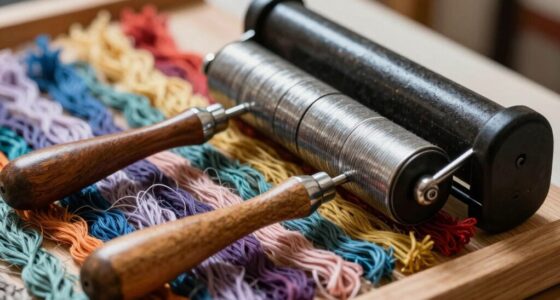
Understanding needle material helps you choose the right tools for your yarn and project. Metal needles glide easily with smooth or slippery yarns, offering durability and quick work, while wooden or bamboo options provide better grip for fuzzy or loosely spun yarns, enhancing control and comfort. Each material impacts how you handle your craft and its longevity. Knowing these differences allows you to pick the best needle for your needs, and there’s more to discover if you keep exploring.

Get tools and workshop supplies delivered free — and shop member deals
- Fast, free delivery on millions of items
- Access to Prime Big Deal Days deals on October 6–7
- Prime Video, Amazon Music and more included
Key Takeaways
- Different materials affect the needle’s glide, grip, and suitability for various yarn types.
- Metal needles offer smoothness and durability, ideal for slippery or tightly spun yarns.
- Wooden and bamboo needles provide better grip, suitable for fuzzy or loosely spun yarns.
- Material choices influence comfort, hand fatigue, and overall crafting experience.
- Eco-friendly options like bamboo are sustainable, and durability varies between materials.

Have you ever wondered how the material of your knitting or crochet needles affects your craft? The type of needle material you choose impacts not just how smoothly your project progresses but also the overall quality of your finished piece. When selecting needles, understanding how their material influences yarn compatibility and needle durability can help you make better decisions tailored to your needs.
Different needle materials have unique properties that influence how well they work with various yarns. For example, metal needles tend to glide effortlessly through most yarns, making them excellent for smooth, fast knitting or crochet. They’re especially compatible with tightly spun or slippery yarns, as their slick surface reduces resistance. On the other hand, wooden or bamboo needles offer more grip, which can be beneficial when working with fuzzy or loosely spun yarns that might slip off slicker needles. This increased grip helps prevent stitches from slipping, giving you more control. Your choice of needle material, thus, directly affects yarn compatibility, influencing how comfortable and efficient your craft feels. Additionally, the surface texture of different materials can impact how comfortable your hands feel during extended crafting sessions.
Needle durability is another vital factor shaped by material choice. Metal needles are generally very durable; they resist breaking and can withstand frequent use. However, they can also be prone to bending or developing burrs over time if handled roughly. Wooden and bamboo needles, while slightly more fragile, tend to be more resilient to bending and are less likely to splinter or crack. They also tend to age gracefully, often developing a smooth patina that enhances their feel and usability. The durability of your needles not only determines their lifespan but also affects your confidence while working on intricate or lengthy projects. Investing in sturdy materials can save you money in the long run, as you won’t need to replace your needles as often. Furthermore, considering the environmental impact of your tools can help promote more sustainable crafting practices.
Ultimately, understanding how needle materials influence yarn compatibility and needle durability helps you craft with greater ease and confidence. If you work with delicate, slippery yarns, metal needles might be your best option. If you prefer more grip and a warm feel, wooden or bamboo needles could be better suited. Plus, considering durability guarantees you choose tools that will stand up to your crafting style and frequency. Knowing these nuances allows you to select the right needles for each project, making your knitting or crochet experience more enjoyable and efficient. Recognizing the material properties of your tools can greatly enhance your overall crafting experience.
As an affiliate, we earn on qualifying purchases.
Frequently Asked Questions
How Does Needle Material Affect Project Durability?
The needle material directly impacts your project’s durability, as it influences material flexibility and needle corrosion resistance. Flexible materials like bamboo or plastic reduce breakage and make your work easier, while metal needles offer strength but can be prone to corrosion over time. Choosing the right material guarantees your needles last longer, resist wear, and maintain smooth stitches, ultimately enhancing your crafting experience and the longevity of your finished project.
Are Certain Materials Better for Beginner Knitters?
Like a smooth river flowing, certain needle materials make learning easier for beginners. Bamboo and plastic needles are ideal because they’re lightweight, gentle on fibers, and reduce slipping, making it easier to control stitches. Fiber types like acrylic or wood come in vibrant color choices that boost confidence and make the process more enjoyable. These materials are forgiving, helping you develop skills without frustration, and encouraging you to keep practicing.
Can Needle Material Influence Stitch Tension?
Yes, needle material can influence your stitch tension. For example, flexible needles like bamboo or plastic allow better thread compatibility and easier handling, helping you maintain consistent tension. Harder materials like metal might be less forgiving and cause uneven stitches if you’re not careful. Choosing the right material based on your project helps you control tension more effectively, ensuring smooth, even stitches throughout your knitting or crochet work.
How Do Different Materials Impact Needle Weight?
Imagine a world where your tools feel just right—different materials impact needle weight, influencing your comfort and control. Lightweight bamboo feels delicate yet flexible, offering a gentle glide, while sturdy metal adds substantiality, giving you more needle flexibility for intricate stitches. Your choice affects how the material aesthetic complements your craft, allowing you to select needles that balance weight and flexibility perfectly, making your knitting or crochet experience more enjoyable and effortless.
Are There Eco-Friendly Needle Material Options?
Yes, eco-friendly needle options exist. You can choose needles made from recycled plastics, which reduce waste and carbon footprint. Bamboo alternatives are also popular because bamboo is a sustainable, renewable resource that’s lightweight and durable. These materials help you craft with a greener mindset, minimizing environmental impact. By selecting recycled plastics or bamboo alternatives, you support eco-conscious practices while enjoying high-quality knitting and crochet tools.
Conclusion
Now that you know how needle materials can dramatically affect your knitting and crochet experience, imagine what you might discover next. Will switching to a different material reveal new creativity or ease your projects? The choice of needle isn’t just about comfort—it’s about unlocking hidden potential in every stitch. Stay curious, experiment boldly, and watch your skills grow in ways you never expected. The next project could be your most exciting one yet—are you ready?
Halloween Picks
halloween
As an affiliate, we earn on qualifying purchases.