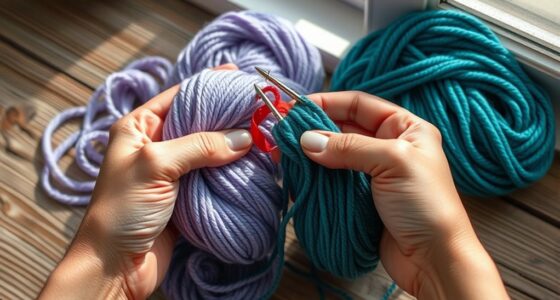

To substitute yarns without ruining your gauge, focus on matching fiber types and weight as closely as possible. Knit a gauge swatch with the new yarn to compare with your pattern’s specifications. Adjust needle size or tension if needed to match the original gauge. Keep in mind that fiber properties can affect drape, elasticity, and color, so choosing similar fibers helps maintain the pattern’s look and feel. If you keep these tips in mind, you’ll master yarn substitution easily.

Get business pricing on tools and workshop supplies
- Business-only prices and quantity discounts
- Tax-exempt purchasing
- Multiple users, one account, clear invoices
Key Takeaways
- Always knit a gauge swatch with the substitute yarn to compare with pattern specifications.
- Adjust needle size or tension to match the original gauge if there’s a discrepancy.
- Choose yarns with similar fiber types and thickness for consistent drape and elasticity.
- Consider color and fiber property differences, and swatch to assess their impact on your project.
- Make small modifications based on swatch results to maintain pattern integrity and fit.
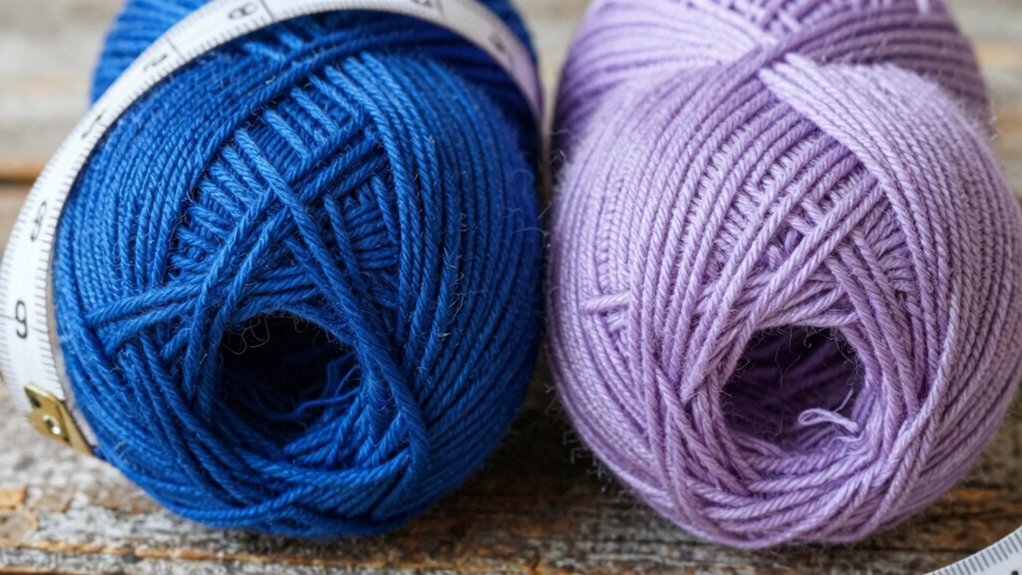
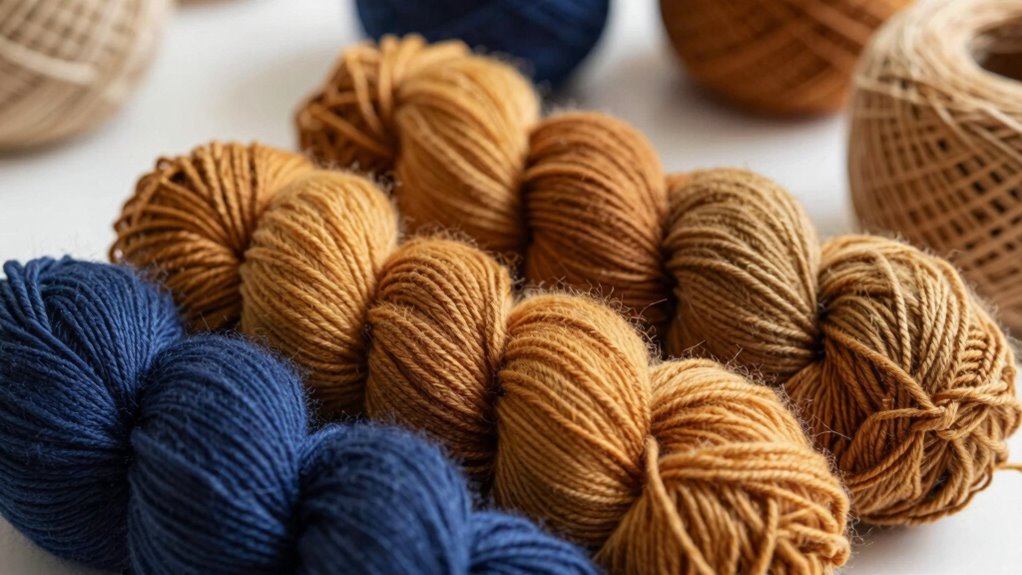
Have you ever wondered how to substitute yarns in a project without compromising the final result? It’s a common concern, especially when you’re enthusiastic to use what you have on hand or want to match a specific color. The key lies in understanding fiber types and color matching. Different fiber types—like wool, cotton, acrylic, or silk—have unique properties that affect gauge, drape, and how they feel against your skin. When substituting yarns, it’s essential to choose a fiber type similar to the original pattern’s recommendation. For example, if your pattern calls for wool, swapping it for acrylic might work, but it won’t have the same elasticity or warmth. Similarly, substituting cotton for silk will change the drape and sheen of your finished piece. To avoid disrupting your gauge, try to match the fiber type as closely as possible, or be aware that you might need to adjust your needle size or tension to compensate. Recognizing fiber properties can help you make more informed substitutions and achieve the best results. Additionally, considering fiber durability can guide you in selecting yarns that will withstand the conditions of your project. Being familiar with fiber characteristics allows you to select the most suitable yarns for your specific project needs. Color matching is equally important. When replacing yarns, aim for a similar hue, saturation, and tone. If you’re replacing a deep navy, avoid choosing a bright royal blue; instead, look for a yarn that closely resembles the original color. Keep in mind that different fibers can affect how color appears, so a color that looks perfect in one fiber might look slightly different in another. Swatching your substitute yarn before starting the project helps you see how the color and fiber interact, giving you a better idea of whether it’ll blend seamlessly with the rest of your work. Additionally, understanding how fiber types respond to different environments can help you select the most durable and suitable yarn for your project’s intended use. Gauge consistency is another vital factor. Even if you match fiber types and colors, your substitute yarn might have a different thickness or ply count, which impacts your gauge. Always knit a gauge swatch with the new yarn, and compare it to the pattern’s specifications. If your swatch’s gauge is off, adjust your needle size accordingly or modify your tension until it matches. This step prevents your finished piece from ending up too small, too large, or misshapen.
As an affiliate, we earn on qualifying purchases.
Frequently Asked Questions
How Do I Choose the Right Yarn Substitute for My Project?
To choose the right yarn substitute, first compare fiber blends to match the feel and durability of your original yarn. Look for similar fiber compositions, like wool or cotton, to keep the texture consistent. Next, focus on color matching by selecting a shade that closely resembles your project’s original. Always check the yarn label for weight and gauge to verify your substitute will work without altering the finished size or look.
Will Changing Yarns Affect the Durability of My Finished Item?
Changing yarns can affect your item’s durability, especially if the new yarn has a different fiber blending. For example, switching from a sturdy wool blend to a delicate silk might reduce longevity. Also, consider color matching to guarantee your finished piece looks cohesive. Choosing a yarn with similar fiber content and durability properties helps maintain your project’s strength. Always test small areas first to see how the new yarn responds.
Can I Substitute Yarns With Different Textures or Fibers?
Yes, you can substitute yarns with different textures or fibers, but beware—texture compatibility is essential. If the fibers have vastly different characteristics, your finished piece might not drape or feel as expected. Imagine the surprise when you realize that rough wool clashes with silky threads or that a fuzzy yarn alters your design’s pattern. Always consider fiber characteristics and how they’ll interact to guarantee your project turns out beautifully.
How Do I Adjust My Pattern for Different Yarn Weights?
To adjust your pattern for different yarn weights, start by checking fiber compatibility to guarantee the new yarn works well with your project’s fibers. Then, modify your needle size or hook to match the new yarn’s gauge, and consider color coordination if changing shades. Swatch first to see how the new weight affects your tension, and adjust your pattern accordingly to maintain the desired fit and appearance.
What Tools Can Help Me Compare Yarn Substitutions Accurately?
Imagine holding two yarns side by side, feeling their weight and texture—that’s fiber comparison in action. To compare yarn substitutions accurately, you can use tools like a yarn weight calculator, a gauge ruler, or digital apps designed for fiber comparison. These tools help you see differences in fiber content, thickness, and yardage, ensuring your substitution matches the original yarn’s properties and keeps your project on track.
Conclusion
When you substitute yarns, think of it like swapping ingredients in a recipe—you want the texture and weight to match so your project turns out just right. Keep your gauge in check, and don’t be afraid to do a quick swatch first. With a little attention, yarn substitution becomes as smooth as silk, letting you enjoy your knitting or crocheting without worry. Happy creating!
Fall yard work Picks
leaf blowers
As an affiliate, we earn on qualifying purchases.