
TL;DR

Get business pricing on tools and workshop supplies
- Business-only prices and quantity discounts
- Tax-exempt purchasing
- Multiple users, one account, clear invoices
A previously unknown collection of sketches by an Englishwoman offers a rare visual record of India before the advent of photography. The sketches provide insight into colonial-era perceptions and artistic approaches. Researchers believe the drawings date from the early 19th century and are significant for understanding historical representations of India.
An early 19th-century collection of sketches by an Englishwoman depicting India has been uncovered, providing a rare visual record from a period before photography became widespread. The drawings, believed to date from the 1820s or 1830s, offer new insights into colonial-era perceptions and artistic representations of India. The discovery is significant for historians, art scholars, and those interested in colonial history.
The sketches were found in a private collection in the United Kingdom and are believed to have been created by Elizabeth Turner, an Englishwoman who traveled to India during the early 19th century. Experts suggest her drawings capture landscapes, architecture, and daily life in India before the widespread use of photography, which began in the mid-19th century.
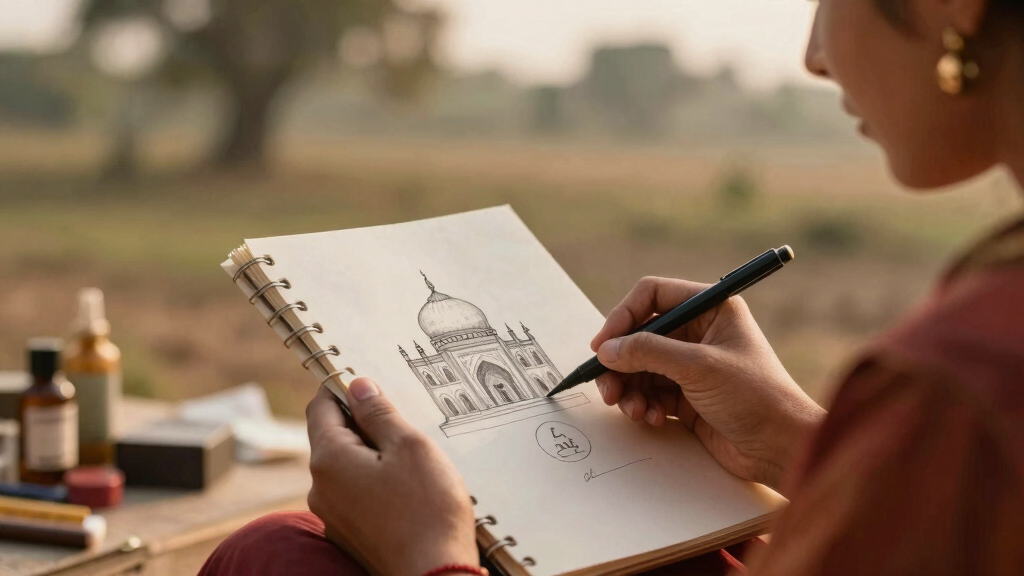
Researchers from the British Museum and the Victoria and Albert Museum have authenticated the sketches, confirming their age and origin through stylistic analysis and archival research. The collection contains over 50 drawings, some of which depict iconic landmarks like the Taj Mahal and the Red Fort, alongside scenes of local markets and rural life.
Historians note that the sketches reflect the colonial perspective of the period, blending artistic interpretation with limited firsthand observation. The sketches are notable for their detailed rendering and the unique perspective of a European woman observing Indian life during the colonial era.
Why the Sketches Offer Unique Historical Perspectives
This discovery matters because it provides a visual record of India before the advent of photography, offering insights into how colonial Europeans perceived and represented Indian landscapes and culture. The sketches also challenge or complement existing written accounts from the period, adding depth to understanding colonial interactions and perceptions.
Furthermore, the collection highlights the role of women artists in colonial contexts, a relatively underrepresented perspective in historical art collections. It offers a rare glimpse into the artistic practices and viewpoints of a colonial-era woman traveler, contributing to broader discussions on gender and colonial history.
As an affiliate, we earn on qualifying purchases.
Historical Context of Colonial India and Artistic Documentation
During the early 19th century, India was under British colonial rule, and many Europeans traveled there for administration, trade, or personal exploration. Artistic documentation of India during this period was often limited to commissioned works, official records, or later photographs. Photography was still in its infancy, with the first photographic processes emerging in the 1830s and 1840s.
Women travelers were less documented, and their artistic outputs are rarely preserved or studied. Most visual records from the period are either official sketches or engravings, making this collection particularly significant as a personal, non-official perspective.
The sketches align with a broader colonial fascination with India, but also reveal individual artistic interpretations that differ from official representations. They offer a unique window into the daily life and environment of colonial India before the technological shift towards photography.
“These sketches are a remarkable window into a colonial world that we only partially understand through written records. The fact that they were created by a woman adds an important dimension to our understanding of personal perspectives during this period.”
— Dr. Margaret Ellis, Art Historian
Unanswered Questions About the Artist and Collection
Details about Elizabeth Turner’s life, her motivations for sketching India, and her travels remain limited. It is not yet clear how her sketches were preserved or whether she intended to publish or share them. The full extent of her travels within India and her interactions with local communities are still under investigation.
Researchers are also exploring whether additional works by Turner might exist elsewhere, and how her perspective compares with other colonial-era artists, both male and female.
Next Steps in Research and Public Display
Art historians and colonial researchers will conduct further analysis of the sketches, including stylistic comparisons and archival research to uncover more about Elizabeth Turner. The collection is expected to be exhibited at a major museum later this year, accompanied by scholarly publications.
Additionally, efforts are underway to digitize the collection and make it accessible to researchers and the public worldwide, enhancing understanding of colonial-era visual culture and women’s roles in artistic documentation.
Key Questions
Who was Elizabeth Turner?
Elizabeth Turner was an Englishwoman believed to have traveled to India in the early 19th century. Little is known about her life, but her sketches suggest she was an amateur artist with a keen interest in Indian landscapes and daily life.
How were the sketches discovered?
The collection was found in a private British collection during recent research by art historians. It was authenticated through stylistic analysis and archival research.
Why are these sketches important?
They provide a rare, personal visual record of India before photography, offering insights into colonial perceptions and artistic practices of women travelers during that era.
Will the sketches be publicly displayed?
Yes, a major museum plans to exhibit the collection later this year, along with scholarly publications and digital access for researchers and the public.
What remains unknown about the collection?
Details about Elizabeth Turner’s life, her full travels, and whether she created more works are still under investigation. Researchers are also exploring her influence and the context of her sketches within colonial art.
Source: hn
Fall Picks
fall essentials
As an affiliate, we earn on qualifying purchases.