
TL;DR

Get business pricing on tools and workshop supplies
- Business-only prices and quantity discounts
- Tax-exempt purchasing
- Multiple users, one account, clear invoices
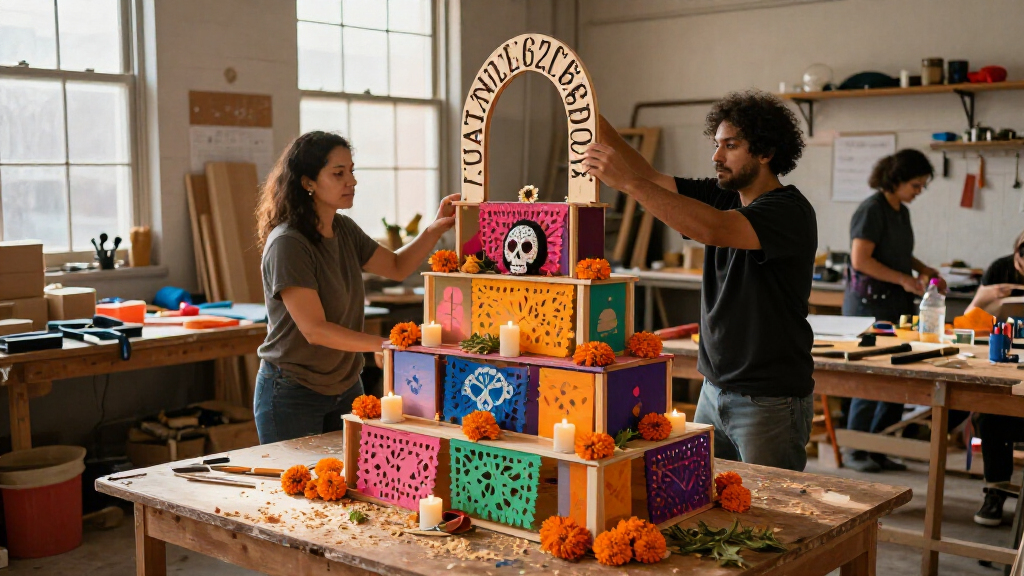
Mestiz and Brooklyn-based Powerhouse Arts have created Twenty Petal Flower, a seven-tier, handwoven altar for Día de Muertos in Manhattan’s Flatiron North Plaza. Commissioned by the Flatiron NoMad Partnership, the public installation is on view through Nov. 3, 2026, and visitors are invited to leave remembrances.
Mexico-based design studio Mestiz and Brooklyn fabrication organization Powerhouse Arts have installed Twenty Petal Flower, a seven-tier Día de Muertos altar in Flatiron North Plaza in New York City. Commissioned by the Flatiron NoMad Partnership and on view through Nov. 3, 2026, the public artwork invites visitors to pause and leave remembrances for loved ones who have died.
Artist and designer Daniel Valero, who leads Mestiz, based the work on cempasúchil, the marigold associated with Día de Muertos. The altar’s title, Twenty Petal Flower, refers to cempōhualxōchitl, a Nahuatl term meaning “20-petal flower” from which the Spanish name cempasúchil is derived. The design traces the flower’s path from fields in Michoacán, Mexico, to the people who turn it into arrangements for the holiday.
The oversized floral forms are made primarily from wicker and handwoven at Mestiz’s fiber workshop in Tequisquiapan, Mexico. Their rounded shapes fill seven tiers, with warm, candle-like lighting among the orange forms. To adapt the woven elements for an outdoor plaza, Powerhouse Arts developed a slim steel support frame, color-matched to the flowers, and secured the pieces with stainless steel ties designed to withstand wind and weather, according to the project report.
The teams also designed the structure to be disassembled, stored and reinstalled, rather than used only once. The installation’s public setting is part of its purpose: visitors can approach the altar and contribute their own remembrances. The source report does not specify what kinds of offerings are accepted or provide instructions for leaving them.
A Public Place for Remembrance
The altar brings a Día de Muertos ofrenda into a busy Manhattan plaza, making the work visible beyond a private home or a dedicated cultural venue. Its invitation to leave remembrances gives visitors a way to participate, while the floral architecture offers a public introduction to the tradition and the meanings attached to cempasúchil.
The project also foregrounds labor behind the familiar marigold imagery. Valero said he wanted to honor not only people who have died, but the people who grow the flowers and transform them into ofrendas. That focus connects the finished artwork to the craft and production work behind the celebration. The modular frame may also allow the installation to return for future events, although no later dates or locations have been announced.
Popular right now

KitchenAid 5.5-Qt Bowl-Lift Stand Mixer, Porcelain White (KSM55SXXX)

Dyson Ball Animal 3 Upright Vacuum

Ninja Foodi Air Fryer, 8 Qt DualZone, 6-in-1, Grey, DZ201
As an affiliate, we earn on qualifying purchases.
From Mexican Workshop to Flatiron
Día de Muertos is a Mexican tradition of remembering people who have died. Marigolds are used in ofrendas, or altars; their vivid color and scent are believed to help guide the spirits of loved ones home. The installation draws on that association without presenting the public artwork as a replacement for family or community observances.
Mestiz produced the woven flowers in Tequisquiapan, while Powerhouse Arts collaborated on the framework needed for installation outdoors in Manhattan. According to Design Milk’s report, the partners exchanged design and fabrication tests, including CNC-cut samples, texture trials and paint matches. The Flatiron NoMad Partnership commissioned the project for Flatiron North Plaza, a neighborhood public space.
“This time, I wanted to honor the many hands behind the cempasúchil, from the people who grow it to those who transform it into an ofrenda.”
— Daniel Valero, artist and designer
Visitor Guidance and Future Dates
The installation is listed as on view through Nov. 3, 2026, but the source report does not give daily access hours, visitor capacity, or details about how offerings will be handled or maintained. It also does not confirm whether the altar will return in a later year, despite the modular design intended to permit reinstallation. No additional locations or future presentation dates have been announced in the supplied material.
Visit Before November 3
Twenty Petal Flower is scheduled to remain in Flatiron North Plaza through Nov. 3, 2026. Visitors can approach the altar and leave remembrances, though the source does not provide specific guidance on permitted offerings. The project partners have not announced a subsequent installation or confirmed when the modular structure might be used again.
Key Questions
Where is the altar installed?
Twenty Petal Flower is in Flatiron North Plaza in New York City’s Flatiron District.
How long will the installation be on view?
The altar is scheduled to remain on view through Nov. 3, 2026.
Who created the altar?
Artist and designer Daniel Valero and his Mexico-based studio, Mestiz, created the woven floral elements with Brooklyn-based Powerhouse Arts, which developed the supporting frame. The Flatiron NoMad Partnership commissioned the work.
Can visitors leave something at the altar?
Visitors are invited to leave mementos honoring loved ones who have died. The source report does not list specific rules about what items are accepted.
What does the installation’s name mean?
Twenty Petal Flower refers to cempōhualxōchitl, a Nahuatl term meaning “20-petal flower.” The source says the Spanish name cempasúchil is derived from that term.
Source: design-milk.com