
TL;DR

Get business pricing on tools and workshop supplies
- Business-only prices and quantity discounts
- Tax-exempt purchasing
- Multiple users, one account, clear invoices
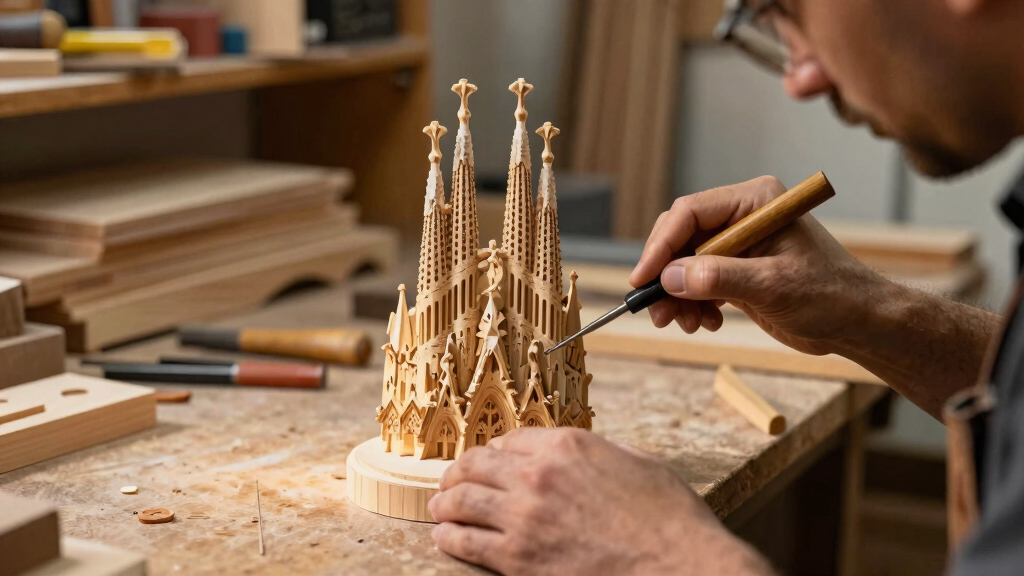
Researchers have uncovered new mathematical principles embedded in the design of Barcelona’s Sagrada Familia, shedding light on Antoni Gaudí’s innovative use of geometry. The findings enhance understanding of the basilica’s complex structure and artistic vision.
Researchers have revealed that the Sagrada Familia incorporates complex mathematical principles, including specific geometric patterns and ratios, which contributed to its unique structural integrity and aesthetic harmony. This discovery sheds new light on Antoni Gaudí’s innovative architectural approach and highlights the basilica’s status as a masterpiece of mathematical artistry.
The study, conducted by a team of mathematicians and architects from the University of Barcelona, analyzed detailed measurements and design sketches of the basilica. They identified recurring geometric motifs, such as pentagons, hyperbolas, and the use of the Fibonacci sequence, which Gaudí employed intentionally to balance form and stability.
According to lead researcher Dr. María López, “Gaudí’s use of mathematical ratios was not merely decorative; it was fundamental to the structural design, ensuring both aesthetic harmony and resilience.” The team used computer modeling to confirm that these geometric principles contributed to the basilica’s ability to withstand environmental stresses over time.
Mathematical Insights Deepen Understanding of Gaudí’s Architecture
The discovery of these mathematical secrets enhances appreciation for Gaudí’s genius, positioning the Sagrada Familia not only as an artistic marvel but also as an engineering feat rooted in advanced geometry. It underscores the importance of mathematics in architectural innovation and could influence future design approaches.
This insight may also increase interest among mathematicians, architects, and historians in exploring the basilica’s design, potentially leading to new preservation techniques and educational opportunities.
geometric design tools for architects
As an affiliate, we earn on qualifying purchases.
As an affiliate, we earn on qualifying purchases.
Historical and Architectural Context of Gaudí’s Geometric Approach
Antoni Gaudí began working on the Sagrada Familia in 1882, and it remains unfinished. Known for his organic shapes and complex structures, Gaudí integrated natural forms and mathematical ratios into his designs, inspired by his fascination with geometry and nature. Previous studies have noted the basilica’s unconventional shapes, but recent research uncovers specific mathematical patterns that underlie its design.
This latest research builds on earlier theories about Gaudí’s use of the Fibonacci sequence and hyperbolic paraboloids, providing concrete evidence of deliberate mathematical planning in the basilica’s architecture.
“Gaudí’s use of geometric ratios was not merely decorative; it was fundamental to the structural design, ensuring both aesthetic harmony and resilience.”
— Dr. María López, lead researcher
Uncertainties About the Extent of Gaudí’s Mathematical Planning
While the recent study confirms the presence of specific geometric patterns, it remains unclear how extensively Gaudí intentionally integrated complex mathematics into all aspects of the basilica’s design. Some experts suggest that certain patterns may have been more intuitive than deliberate, and further analysis is needed to determine the full scope of Gaudí’s mathematical planning.
Additionally, because the basilica was built over many decades with multiple architects, questions remain about how much of the original mathematical intent has been preserved or altered over time.
Future Research and Preservation Efforts Focused on Mathematical Design
Researchers plan to continue analyzing the basilica’s structure using advanced modeling techniques to map out additional mathematical features. Preservation specialists may also incorporate these insights to guide restoration efforts, ensuring that Gaudí’s original geometric principles are maintained.
Furthermore, the findings are expected to inspire new educational initiatives and exhibitions that showcase the mathematical artistry behind the basilica, fostering greater public appreciation.
Key Questions
What specific mathematical patterns are found in the Sagrada Familia?
Researchers identified geometric motifs such as pentagons, hyperbolas, and ratios related to the Fibonacci sequence, which Gaudí used intentionally in his design.
How do these mathematical principles affect the basilica’s stability?
The study suggests that Gaudí’s geometric choices contributed to the basilica’s structural resilience, helping it withstand environmental stresses over time.
Did Gaudí plan all these mathematical features from the start?
While evidence indicates deliberate use of certain ratios and patterns, the extent of Gaudí’s comprehensive mathematical planning remains under investigation.
Will this discovery influence future restoration of the basilica?
Yes, understanding Gaudí’s mathematical design could guide preservation efforts to more accurately restore and maintain the basilica’s structural and aesthetic integrity.
Source: hn
Fall Picks
fall essentials
As an affiliate, we earn on qualifying purchases.