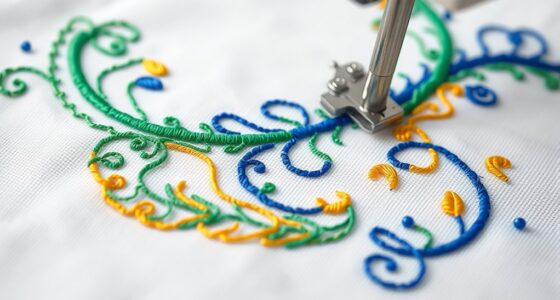
To choose the right embroidery hoop size, consider your design’s dimensions and complexity. Use a smaller hoop for detailed, intricate patterns and fine threads, while larger hoops suit bigger projects with more fabric or thicker threads. Guarantee the hoop supports fabric tautness without causing puckering or distortion. Proper hooping techniques and tension ensure professional results. If you continue exploring, you’ll discover how selecting the perfect size enhances your embroidery quality and workflow.

Get business pricing on tools and workshop supplies
- Business-only prices and quantity discounts
- Tax-exempt purchasing
- Multiple users, one account, clear invoices
Key Takeaways
- Match the hoop size to the design dimensions and complexity for optimal fabric tension.
- Use smaller hoops for intricate, detailed motifs and larger hoops for bigger projects.
- Ensure the hoop securely holds the fabric without overstretching or puckering.
- Consider fabric type and thread thickness; thicker threads need a larger, stable hoop.
- Practice proper hooping techniques to maintain fabric stability and achieve professional results.

Selecting the right embroidery hoop size is essential for achieving neat, professional-looking stitches and ensuring your project stays secure. The size you choose directly impacts your stitch tension and how well your fabric remains taut, which are critical for a clean finish. When selecting a hoop, consider the dimensions of your design. Smaller hoops are perfect for intricate, detailed work or small motifs, while larger hoops accommodate bigger patterns or projects that require more fabric. Using a hoop that’s too small for your design can cause puckering and uneven tension, making stitches look uneven and potentially damaging the fabric. Conversely, a hoop that’s too large might make maintaining consistent stitch tension more difficult, especially in the center of the design. Proper fabric tension is vital for achieving a smooth embroidery surface and preventing distortion of your design. Thread selection plays a significant role in how well your stitches turn out, especially when paired with the right hoop size. Thicker or textured threads require a stable, taut fabric surface to prevent tangling or uneven stitches. When you opt for a larger hoop, you give yourself more room for complex designs and thicker threads, which can help maintain consistent stitch tension throughout your project. Smaller hoops, on the other hand, work best with finer threads and simpler designs, where keeping the fabric tension tight is easier and helps achieve precise stitches. Always match your thread type and weight to the scale of your design and the hoop size to avoid issues like thread breakage or uneven tension. The key to a good embroidery project lies in balancing your hoop size with stitch tension. A properly fitted hoop keeps the fabric tight and smooth, reducing puckering and helping your stitches stay even. Additionally, proper hooping techniques can significantly improve the overall quality of your embroidery work. Properly hooping fabric ensures consistent tension across the entire surface, which is essential for professional results. Remember that fabric stability during hooping is crucial for preventing shifting or slack that can compromise your stitches. Selecting the appropriate hoop size also involves considering the ease of use and maneuverability, especially when working on detailed or intricate designs. Make sure your fabric is pulled taut but not stretched too tightly, as excessive tension can distort your design or cause fabric damage. Practice adjusting your stitch tension as you go, especially if you’re using different thread types or working with various fabric textures.
As an affiliate, we earn on qualifying purchases.
Frequently Asked Questions
Can I Use a Larger Hoop for Small Projects?
Yes, you can use a larger hoop for small projects, but it’s not always ideal. Larger hoops can cause loose fabric and uneven tension, which affect embroidery techniques. Opt for hoops made from lightweight, durable materials like plastic or wood to guarantee smooth stitching. Using a bigger hoop might seem easier, but it can lead to less control and uneven stitches, so choose a size that matches your project for the best results.
How Do I Prevent Hoop Marks on Delicate Fabrics?
Think of your fabric as a delicate butterfly needing gentle handling. To prevent hoop marks on delicate fabrics, you must maintain proper fabric tension and use hoop padding. Keep the tension snug but not tight, like a gentle breeze, and add a layer of padding between the hoop and fabric. This soft cushion prevents the metal from pressing directly into the fabric, preserving its beauty and preventing unsightly marks.
Are Adjustable Hoops Better Than Fixed Sizes?
Adjustable hoops are often better than fixed sizes because they offer greater versatility and accommodate different fabric thicknesses. With material options like lightweight plastic or sturdy metal, you can find an ergonomic design that reduces hand strain during extended use. They allow precise tension control, which helps prevent hoop marks on delicate fabrics. Overall, adjustable hoops adapt to your project needs, making them a practical choice for varying embroidery tasks.
What’s the Best Hoop for Embroidery on Stretch Fabrics?
If you’re embroidering on stretch fabrics, the best hoop is one that minimizes fabric tension and offers excellent hoop compatibility. You want a hoop that holds the fabric taut without overstretching, so your stitches stay even. Look for adjustable hoops with smooth, flexible edges, which help prevent puckering. This guarantees your embroidery remains flawless, and your fabric stays in perfect shape—making your project look professional and polished.
How Do I Store Embroidery Hoops to Prevent Damage?
To prevent damage, you should store your embroidery hoops properly. Use storage solutions like pegboards or dedicated containers to keep hoops flat and avoid bending. Regularly clean your hoops with gentle hoop cleaning methods to remove dust and residue, which helps maintain their integrity. Store them in a dry, cool place away from direct sunlight, moisture, or extreme temperatures, ensuring your hoops stay in good shape and ready for your next project.
Conclusion
Remember, choosing the right embroidery hoop size is key to achieving beautiful results. Think of it like fitting a puzzle piece—you want it snug but not too tight, ensuring your fabric stays smooth and your stitches stay perfect. When you match the hoop to your project, you’ll find embroidery becomes easier and more enjoyable. As the saying goes, “A chain is only as strong as its weakest link,” so invest in the right hoop for a flawless finish every time.
Halloween Picks
halloween
As an affiliate, we earn on qualifying purchases.