To pre-shrink linen like a pro, start by choosing high-quality, tightly woven fabrics that respond well to heat. Use hot water and a heavy-duty cycle to encourage shrinkage evenly, but avoid overloading the washer. Dry on low heat or air-dry to prevent damage. Test small sections first to avoid over-shrinking, and remove linen while slightly damp. Follow these tips, and you’ll master a routine that keeps your linen fitting perfectly over time.
Key Takeaways
- Pre-shrink linen by washing in hot water on a heavy-duty cycle to relax fibers and encourage uniform shrinkage.
- Choose high-quality, tightly woven linen fabrics with stable dyes for predictable shrinking results.
- Dry linen on low heat or air-dry to prevent over-drying and maintain fabric integrity.
- Test small fabric sections first to monitor shrinkage and avoid over-shrinking or damage.
- Properly care for linen by washing cold, avoiding over-drying, and ironing while slightly damp to sustain fit and softness.
Why Pre-Shrinking Linen Ensures a Perfect Fit
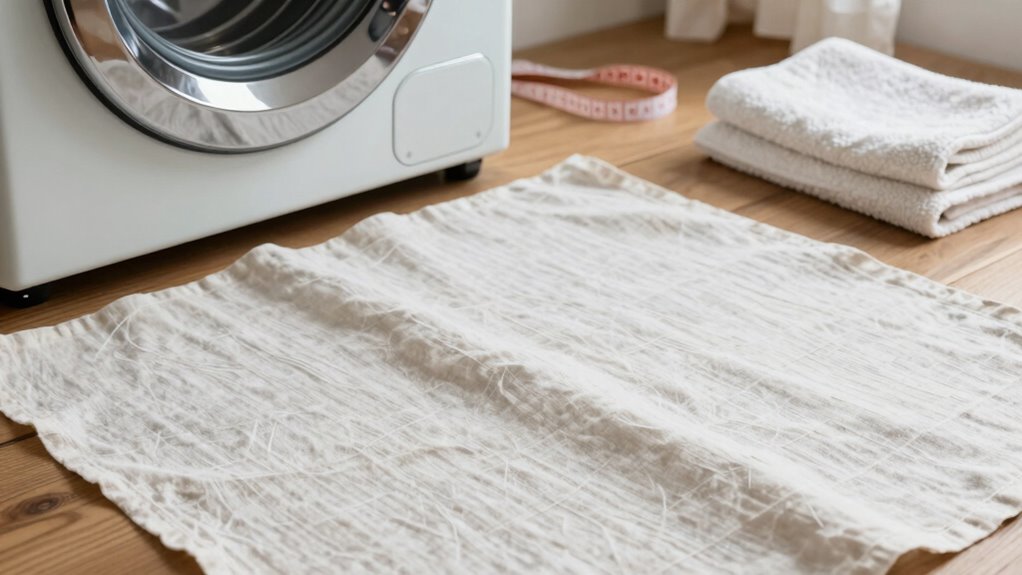
Pre-shrinking linen is essential because it helps guarantee your garment fits perfectly right from the start. When you pre-shrink, you prevent unexpected size changes after washing, ensuring a consistent fit. It also preserves fabric softness, making your linen more comfortable over time. By shrinking the fabric beforehand, you reduce the risk of it becoming too loose or misshapen, maintaining the garment’s intended silhouette. Additionally, pre-shrinking helps with color retention, so your linen stays vibrant and looks new longer. Without this step, washing could lead to uneven shrinking and fading, compromising both appearance and fit. Taking the time to pre-shrink your linen guarantees durability, keeping it looking and fitting as fresh as the day you bought it. Incorporating load‑planning tools can help you better estimate the amount of shrinkage to expect and plan accordingly, especially considering fabric behavior during laundering. Understanding fabric care guidelines can further optimize your pre-shrinking process. To achieve the best results, it’s also helpful to consult professional laundering advice to ensure your linen maintains its quality over time.
How to Choose Linen That Responds Well to Pre-Shrinking
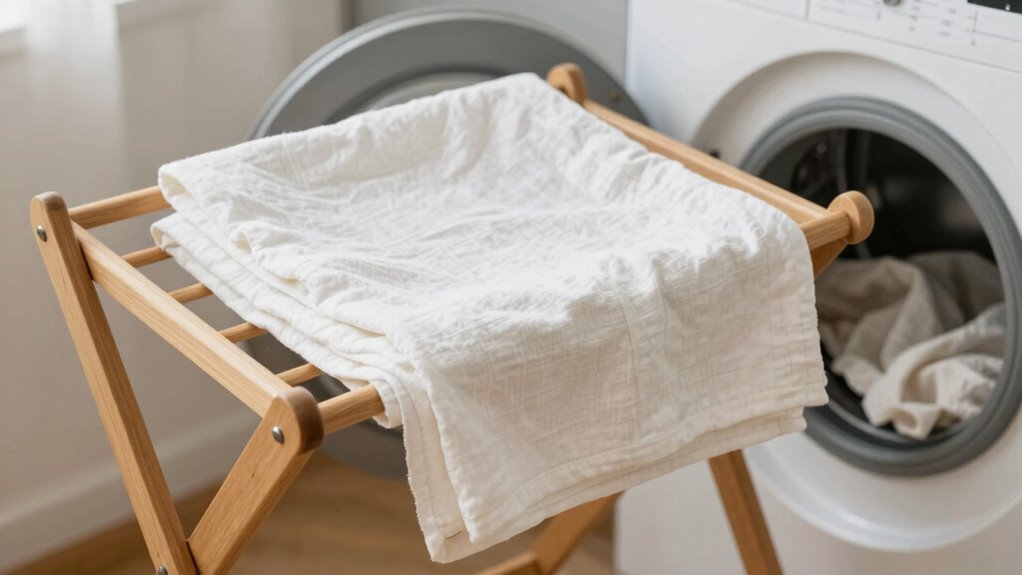
When selecting linen for pre-shrinking, it’s important to look for fabrics made from high-quality, tightly woven fibers, as these tend to respond more predictably to shrinking processes. Focus on fabric textures that feel durable yet soft, ensuring the linen holds its shape after the wash. Check the dye fastness to ensure colors won’t fade or bleed during pre-shrinking, saving you frustration later. Here are key factors to consider:
- Tight weave—less likely to fray or distort.
- Smooth texture—easier to handle and pre-shrink evenly.
- High dye fastness—maintains vibrant colors through washing.
A higher-quality linen made with luxurious fabrics and intricate craftsmanship will typically yield more consistent and desirable shrinkage results. Choosing the right linen ensures a reliable shrinkage process, giving you perfect results every time.
How to Wash Linen for Shrinking
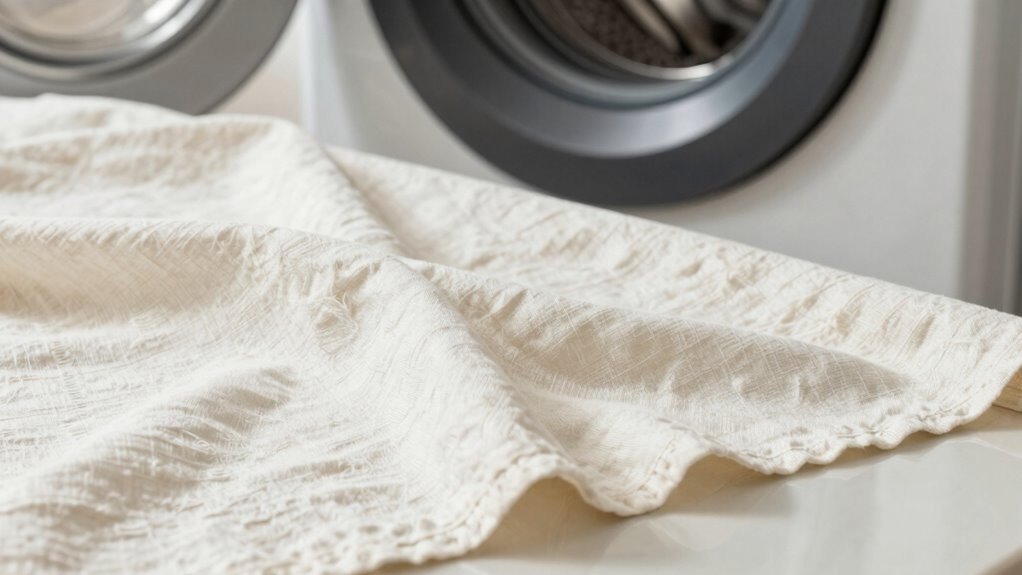
To intentionally shrink linen, start by setting your washer to hot water and using the heavy-duty cycle. Make sure not to overload the machine, as this can prevent even shrinking. Proper load size ensures your linen shrinks evenly and effectively. For best results, select a high-heat setting to maximize shrinkage. Additionally, monitoring the process through visual and auditory cues can help you determine when the linen has reached your desired size. Keeping an eye on the fabric’s response during the process can also prevent over-shrinking and fabric damage.
Select Hot Water Settings
Have you considered how hot your water setting can influence linen shrinking? Using hot water can effectively encourage shrinkage, but it also impacts fabric softness and dye retention. To get the best results, keep these points in mind:
- Maximize fabric softness by washing in hot water, which relaxes fibers and makes linen feel smoother.
- Preserve dye retention by choosing the right temperature, as excessively hot water can cause colors to fade.
- Control shrinkage precisely by setting your washer to the highest temperature, ensuring your linen shrinks evenly without damaging the fabric. Additionally, understanding your fabric care options can help prevent over-shrinking.
- Always verify your washer’s temperature settings to ensure optimal hot water use and prevent over-shrinking. Incorporating fabric composition knowledge can also guide your temperature choices for best results.
Always test a small section first to avoid over-shrinking. Selecting the right hot water setting helps you achieve a snug fit while maintaining the linen’s quality.
Use Heavy-Duty Cycle
Ever wondered how to guarantee your linen shrinks evenly and effectively? Using the heavy-duty cycle is key. It applies more agitation and heat, which helps with fabric textures and encourages uniform shrinkage. This cycle is especially useful for linen with tight weaves or dense textures, ensuring consistent results. Plus, it minimizes color loss by reducing the need for multiple washes. Incorporating proper fabric care techniques such as gentle drying and avoiding over-washing can further enhance the effectiveness of your linen shrinking routine. Additionally, understanding fabric properties helps in choosing the right settings for optimal results. Keep in mind, though, that excessive heat can sometimes affect color retention if not monitored carefully. Here’s a quick guide:
| Feature | Benefit |
|---|---|
| Longer wash cycle | Better fabric texture shrinkage |
| Higher agitation | Even shrinking without uneven spots |
| Controlled heat | Maintains color retention |
Avoid Overloading Washer
Overloading your washer can hinder the even shrinkage and fabric care you’re aiming for. When you pack too much in, linen fabrics won’t move freely, leading to uneven shrinking and stubborn washer odours. Plus, excess fabric prevents proper rinsing, making fabric softeners less effective and leaving residues behind. To get the best results, keep these tips in mind:
- Leave space for water circulation—don’t cram the washer full.
- Use less fabric softener—overuse can trap odours and reduce linen’s natural breathability.
- Run a cleaning cycle regularly to prevent washer odours and ensure linen gets cleaned thoroughly.
- Be mindful of washer maintenance to keep your machine functioning optimally and avoid residual odours that can affect your linen.
- Paying attention to proper washing techniques can further improve your linen’s shrinkage and overall condition.
- Additionally, understanding fabric care principles can help preserve the quality of your linen during the shrinking process.
- Regularly inspecting your washer’s drainage system ensures proper water flow and prevents build-up of residues that could interfere with linen care.
- Incorporating aquatic exercise principles, such as gentle washing cycles, can help protect delicate linen fibers during the shrinking process.
The Best Way to Dry Linen Without Damaging It
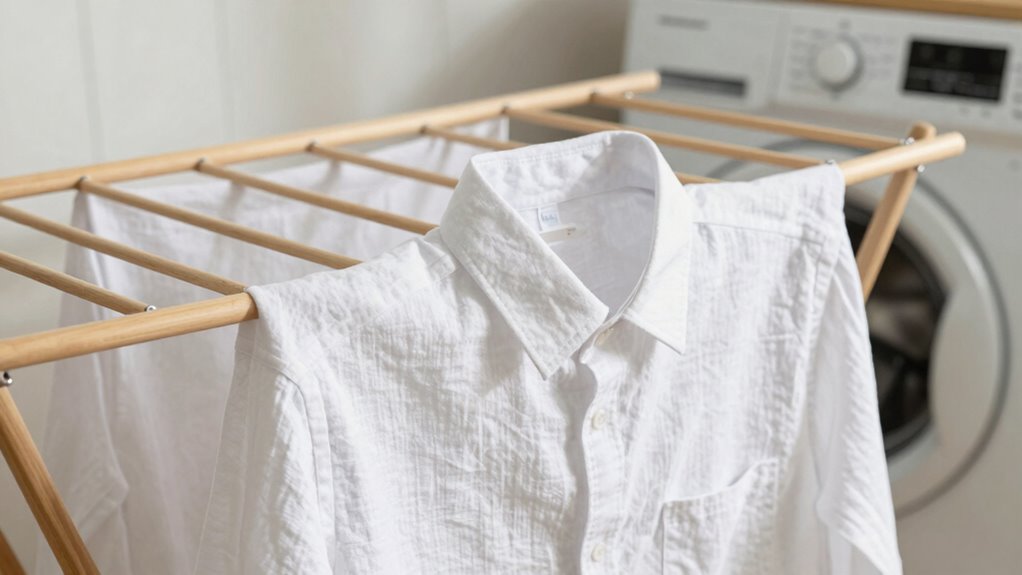
To dry linen without damaging it, use a low heat setting on your dryer. This helps prevent shrinkage and preserves the fabric’s quality. Be sure not to over-dry, as it can weaken the linen and cause unnecessary wear. Additionally, personalized in-home care can include guidance on proper laundry routines that extend the life of delicate fabrics like linen. Incorporating smart appliance features such as moisture sensors can further optimize drying and protect your linen from heat damage. Using an appropriate drying cycle designed for delicate fabrics can also minimize the risk of damage while ensuring your linens come out fresh and well-maintained. Employing smart drying technology can help automatically adjust settings to prevent over-drying and prolong the fabric’s lifespan.
Use Low Heat Settings
Using low heat settings on your dryer is essential for preserving the quality of linen. High heat can weaken linen fibers, leading to unwanted shrinkage and damage. To guarantee ideal linen fiber care and shrinkage prevention, follow these steps:
- Set your dryer to a gentle, low heat cycle — this reduces stress on the fabric.
- Limit drying time — over-drying can cause the fibers to weaken and shrink.
- Remove linen promptly — this minimizes wrinkles and maintains its shape.
Avoid Over-Drying
Since over-drying can weaken linen fibers and cause unwanted shrinkage, it’s important to monitor your drying process carefully. Over-drying not only risks shrinking your linen but also damages the fabric’s integrity, leading to a dull appearance. To prevent this, remove linen from the dryer while it’s still slightly damp, as this helps maintain its shape and softness. Avoid excessive heat, which can cause color fading and diminish fabric softening benefits. Using a gentle cycle or low heat setting reduces the risk of over-drying. Additionally, consider air-drying linen when possible, as it preserves color vibrancy and keeps the fabric soft. Properly drying linen ensures it stays pre-shrunk, durable, and looking fresh longer.
How to Test Your Linen Before and After Shrinking

Before shrinking your linen, testing a small, hidden area to see how it reacts to water and heat is vital. This simple step helps you avoid surprises and guarantees proper fabric care. To do this effectively, follow these steps:
- Dampen a discreet corner and observe if it shrinks or distorts.
- Use a low heat setting on your dryer to test how the fabric responds.
- Check for color bleeding or texture changes after washing.
Common Mistakes to Avoid When Pre-Shrinking Linen
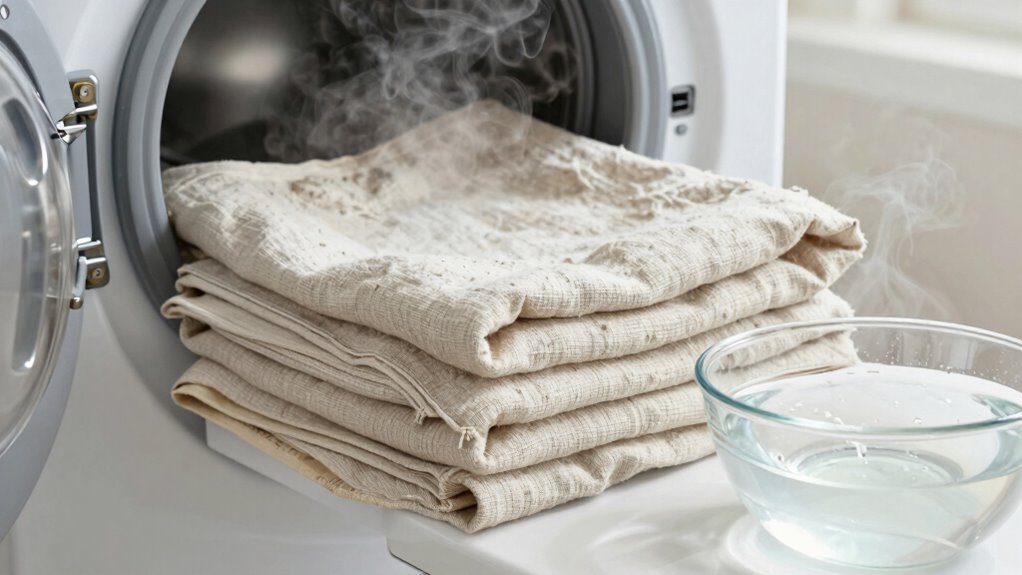
One common mistake in pre-shrinking linen is rushing the process without properly testing the fabric first. Different fabric blends respond differently to heat and moisture, so skipping this step can lead to unexpected shrinkage or damage. It’s essential to check dye stability because some dyes may fade or run when exposed to hot water and high heat in the dryer. Failing to do a test patch can result in color loss or uneven shrinkage, ruining your linen. Avoid using excessive heat or over-wetting the fabric, which can weaken fibers and cause distortion. Take your time to follow the recommended pre-shrinking methods for your specific linen, ensuring consistent results and preserving the fabric’s quality. Proper preparation prevents costly mistakes and guarantees a perfect fit.
Tips to Keep Your Linen Fitting Well Over Time
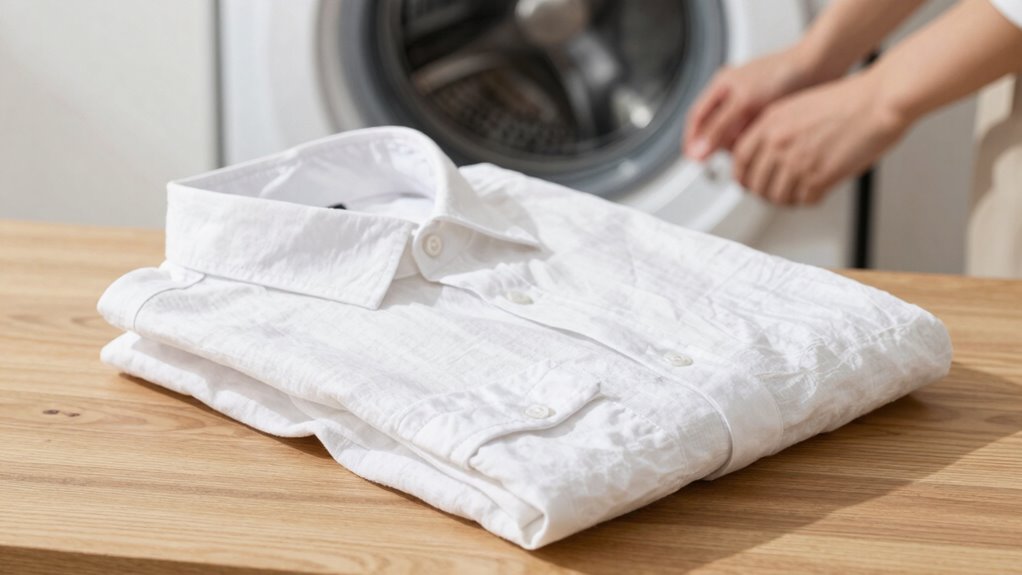
To keep your linen fitting well over time, it’s important to practice proper care and maintenance. Your linen fiber responds best to gentle fabric care, helping it stay soft and true to size. Here are three key tips:
- Wash with care: Use cold water and mild detergent to preserve the linen fiber’s integrity and prevent unnecessary shrinkage.
- Avoid over-drying: Tumble dry on low heat or hang to dry. Excessive heat can cause linen to lose its shape and fit.
- Iron promptly: Iron while slightly damp to smooth out wrinkles and maintain a crisp, well-fitted appearance.
Do Different Types of Linen Need Different Pre-Shrinking Methods?
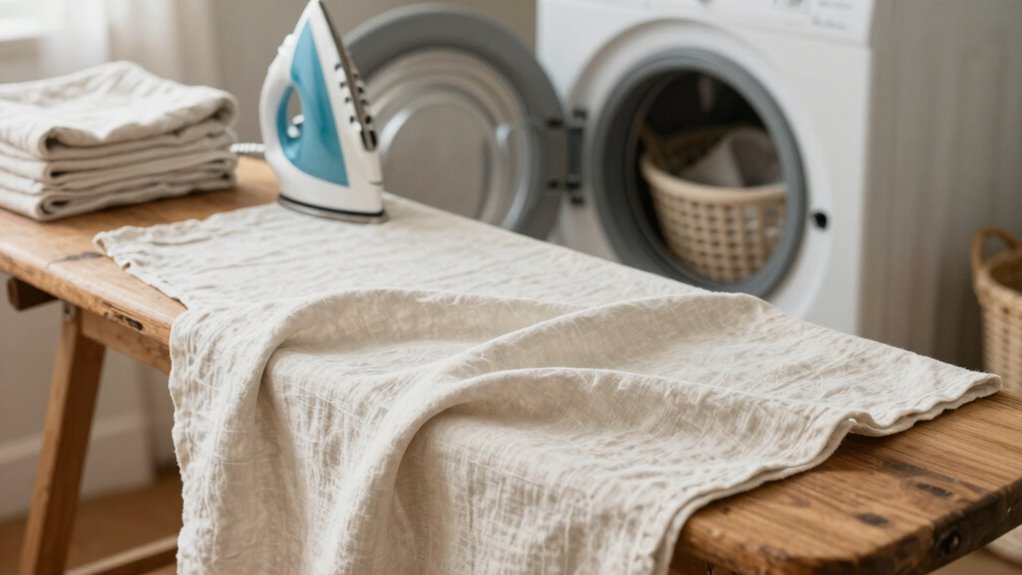
Different types of linen may require distinct pre-shrinking methods to achieve the best fit and durability. For example, smooth, tightly woven fabrics often respond well to a hot wash and high heat drying, ensuring shrinkage without damaging the material. On the other hand, linen with a coarser texture or looser weave might need gentler treatment to prevent distortion. Considering dye stability is vital—some linens are more prone to color fading or bleeding when exposed to high heat. To protect the fabric’s color and texture, test a small area first or opt for cooler water cycles. Adjust your routine based on the fabric’s texture and dye characteristics, ensuring you pre-shrink linen effectively without compromising its look or longevity.
Troubleshooting Over-Shrunk or Uneven Linen
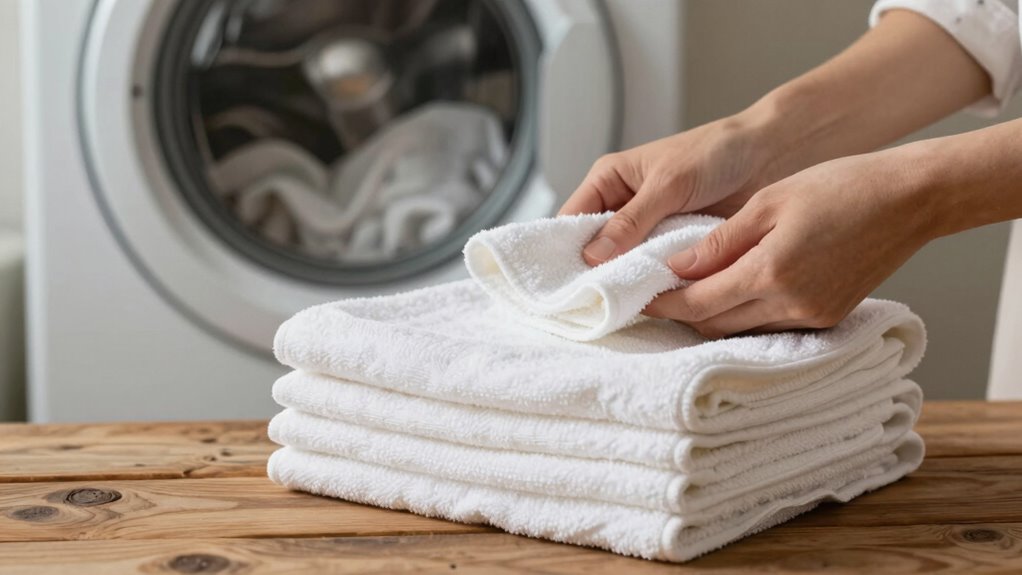
If your linen has become over-shrunk or uneven after pre-shrinking, it’s important to act quickly to minimize further damage. First, gently wash the linen in lukewarm water to help restore some fabric softness and reduce stiffness. Second, avoid high heat in drying; instead, air-dry flat to prevent further uneven shrinkage and color fading. Third, consider stretching the linen carefully while damp to even out the fabric and regain some of its original shape. Remember, over-shrunk linen risks losing its fabric softness and vibrant color. Taking these steps promptly can help salvage your linen, making it more comfortable and visually appealing. Patience and gentle handling are key to restoring balance and preserving quality.
Frequently Asked Questions
Can Pre-Shrunk Linen Be Washed Repeatedly Without Losing Size?
Yes, pre-shrunk linen can be washed repeatedly without losing size if you follow proper linen care and fabric maintenance. Use gentle cycles and cold water to preserve the fabric’s integrity. Avoid over-drying, as high heat can cause shrinkage. By treating your pre-shrunk linen with care, you guarantee it maintains its size and quality over time, making it a durable and reliable choice for your wardrobe.
How Often Should I Pre-Shrink Linen for Best Results?
When it comes to linen care, you don’t want to wear out your welcome with shrinking techniques. Shrink pre-shrunk linen once or twice a year, or whenever you notice it’s stretching out. This keeps your linen looking sharp without losing its size. Regular washing can cause some shrinkage, but not too often. Think of it as giving your linen a little TLC to keep it in top shape.
Does Pre-Shrinking Affect Linen’s Color or Texture?
Pre-shrinking linen generally doesn’t affect its color preservation or texture durability if you follow proper techniques. When you pre-shrink correctly, it helps maintain the fabric’s original look and feel over time. Be sure to wash in cold water and avoid harsh detergents to protect vibrant colors. Proper pre-shrinking guarantees your linen stays soft and retains its texture, making it look great and last longer.
Can Pre-Shrinking Be Done at Home or Only Professionally?
You can definitely pre-shrink linen at home using simple remedies like soaking in hot water or machine washing on a high heat setting. These home remedies are effective and save you money. However, for more consistent results or delicate linens, professional services offer controlled pre-shrinking that guarantees your linen maintains its quality. Choose based on your linen’s type and your comfort with DIY methods.
What Tools or Materials Are Essential for Pre-Shrinking Linen Effectively?
You can pre-shrink linen at home with a few essentials. Grab fabric scissors to trim any frayed edges and a measuring tape to verify consistent sizing. Wash the linen in hot water and dry on high heat for effective shrinking. These tools help you handle the linen precisely, ensuring it shrinks evenly without damage. Always double-check measurements to maintain the desired size and fit.
Conclusion
Pre-shrinking linen might take a bit of effort, but it’s worth it for that perfect fit. By choosing the right linen, washing carefully, and drying properly, you’ll keep your pieces looking great for years. Remember, a stitch in time saves nine—taking these steps now prevents future mishaps. With patience and attention, you’ll master the routine and enjoy beautifully fitted linen every time. Keep at it, and your linen will thank you for it.