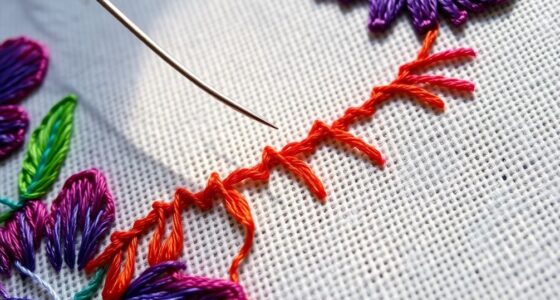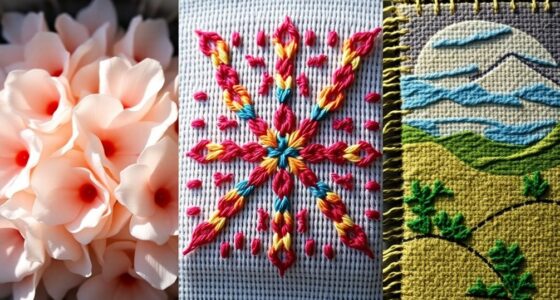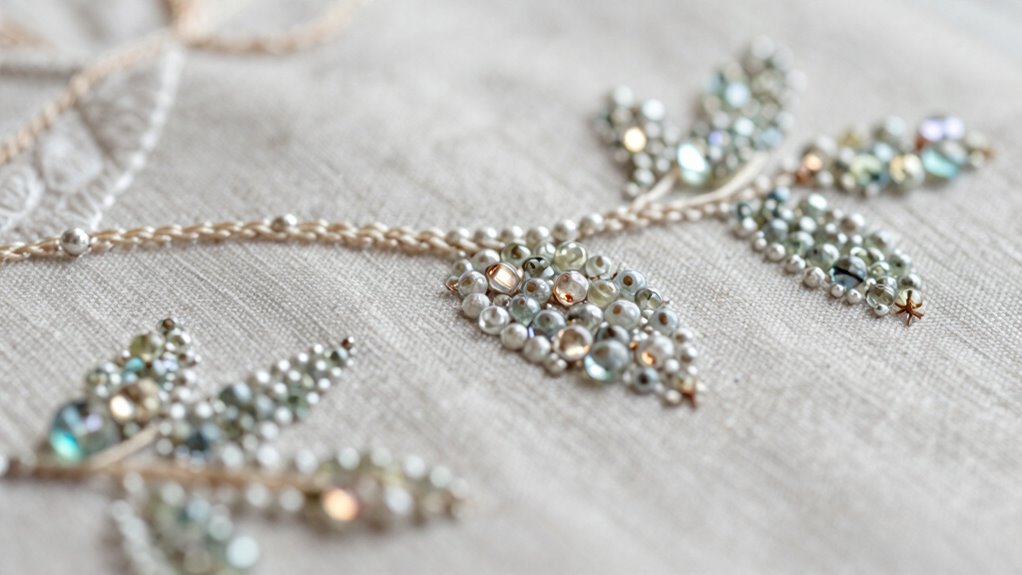

To mix beads with embroidery without adding bulk, carefully plan your bead placement and choose lightweight beads like seed or tiny glass beads. Use shorter stitches and keep tension tight enough to secure beads without causing puckering. Align beads with stitches to keep the surface smooth and avoid unnecessary fabric buildup. Opt for thin, lightweight threads, and test your technique on scrap fabric first. For more tips on creating a sleek embroidered bead design, keep exploring the details.

Get business pricing on tools and workshop supplies
- Business-only prices and quantity discounts
- Tax-exempt purchasing
- Multiple users, one account, clear invoices
Key Takeaways
- Use small beads like seed beads to minimize added volume and maintain a flat surface.
- Select short, tight stitches to secure beads while preventing fabric puckering.
- Align beads with stitches and plan placement to avoid unnecessary fabric buildup.
- Choose lightweight embroidery threads such as size 8 or 12 perle cotton for a sleek finish.
- Test tension and bead placement on scrap fabric to achieve a balanced, non-bulky design.
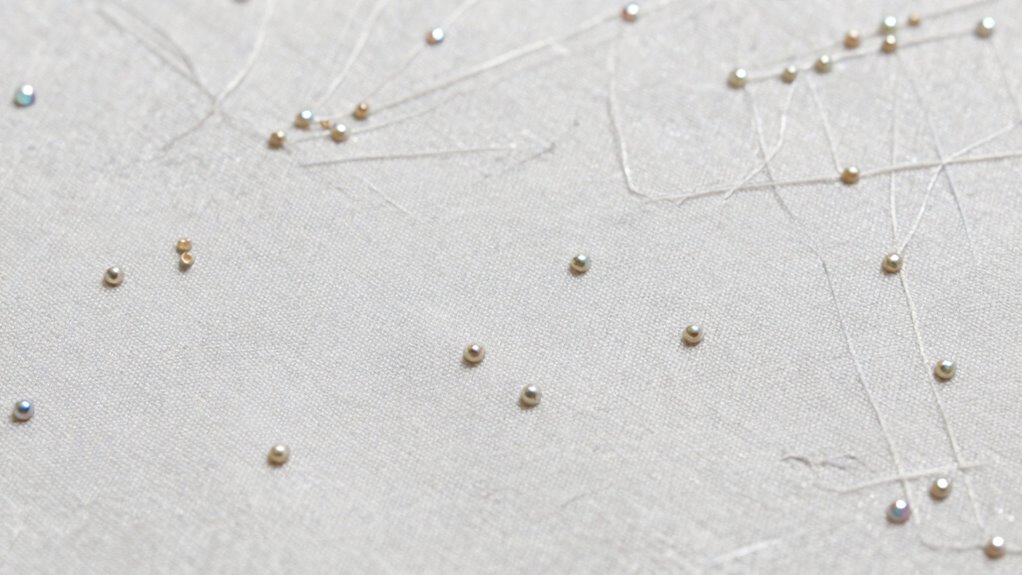
Mixing beads with embroidery can add stunning texture and color to your projects, but it requires some planning to guarantee everything works harmoniously. To keep the design sleek and avoid adding bulk, you need to pay attention to bead placement. Think about where the beads will go in relation to your stitches; placing beads carefully ensures they enhance your design rather than overwhelm it. For example, threading beads onto your embroidery thread before stitching can help you control their position precisely. By aligning beads with your stitches, you prevent unnecessary build-up of fabric thickness.
Carefully plan bead placement to add texture without bulk, enhancing your embroidery’s elegance and precision.
Embroidery thread tension plays a vital role here. When you sew beads onto your fabric, you want your stitches to be tight enough to hold the beads securely but not so tight that they bunch or distort the fabric. If your thread tension is too loose, beads might shift or fall out over time. Conversely, overly tight stitches can flatten the beads or cause the fabric to pucker, creating unwanted bulk. Adjust your tension carefully as you work, testing on a scrap piece first to find that perfect balance. Consistent tension ensures beads sit flush against the fabric, giving your piece a smooth, professional look.
Another technique to avoid bulk is to choose smaller beads, such as seed beads or tiny glass beads, which naturally sit closer to the fabric and don’t add unnecessary thickness. When you incorporate beads into your embroidery, opt for shorter stitches that anchor the beads securely without looping excessively around them. This minimizes extra thread and reduces the risk of creating raised areas that could make your project stiff or bulky. Also, consider the stitch type: backstitch or running stitch can be effective for bead placement because they keep the beads flat and aligned.
Furthermore, use thin embroidery threads like size 8 or 12 perle cotton, which are strong yet lightweight. Thicker threads tend to create more bulk, especially when combined with beads. Be mindful of the thread’s path—avoid crossing over the same spot repeatedly, as this can thicken the fabric and make your work stiff.
lightweight seed beads for embroidery
As an affiliate, we earn on qualifying purchases.
As an affiliate, we earn on qualifying purchases.
Frequently Asked Questions
What Types of Beads Work Best for Delicate Embroidery?
For delicate embroidery, you should choose small, lightweight bead types like seed beads, bugle beads, or delica beads. These beads work best because they add sparkle without creating bulk. Use fine embroidery threads, such as nylon or silk, to secure the beads gently. This combination guarantees your embroidery remains delicate and refined. Keep the bead sizes consistent to maintain a smooth, elegant appearance.
How Do I Prevent Beads From Tangling During Sewing?
Your beads are about to turn into a chaotic mess—don’t let that happen! To prevent tangling during sewing, master bead threading by using a fine, sturdy needle and secure knots. Maintain tension control by pulling gently but firmly on your thread, keeping beads aligned and smooth. Regularly check for twists or knots, and work patiently. With these tricks, your beads will stay perfectly in place, ready to dazzle.
Can I Mix Different Bead Sizes Without Adding Bulk?
Yes, you can mix different bead sizes without adding bulk by paying attention to bead compatibility and using size variation techniques. Choose beads with similar hole sizes for smooth sewing and avoid overly large beads that can make your embroidery bulky. Incorporate smaller beads around larger ones to create a balanced, textured look without extra bulk. This approach maintains a sleek, professional finish while adding visual interest through intentional size variation.
What Needle Size Is Ideal for Bead Embroidery?
For bead embroidery, you should use a fine needle, typically size 10 to 12, to guarantee smooth bead threading and precision. A thinner needle allows you to navigate tight spaces and work with delicate embroidery techniques without damaging the fabric. This size is perfect for securing beads securely while maintaining flexibility in your design. Always choose a needle that comfortably fits your thread and beads for the best results in your bead embroidery projects.
How Do I Secure Beads Firmly Without Extra Bulk?
Securing beads firmly is like anchoring a ship—tight and steady. You should focus on precise bead placement and maintain consistent thread tension, ensuring each bead sits snugly without shifting or adding bulk. Use small stitches, like tiny hugs around each bead, to keep them secure. Avoid pulling too tight, which can cause puckering, but don’t leave slack, so your beads stay in place and your embroidery remains smooth and flat.
Conclusion
Just as a master painter balances hues to create harmony, blending beads with embroidery requires finesse and patience. When you skillfully combine these elements without adding bulk, you craft a delicate masterpiece that whispers elegance. Remember, it’s not just about embellishing fabric, but about leaving a subtle impression—like a quiet echo of artistry. So, embrace the process with care, and let your craftsmanship speak softly yet profoundly, echoing the timeless beauty of subtlety.
Fall yard work Picks
leaf blowers
As an affiliate, we earn on qualifying purchases.