
To avoid common sewing mistakes, start by choosing easy-to-handle fabrics like cotton and always pre-wash to prevent surprises later. Follow pattern instructions carefully, especially regarding seam allowances, and use rulers or guides to keep them consistent. Pay attention to details, double-check measurements, and stay precise throughout. These steps help guarantee your project turns out professional-looking. Keep going, and you’ll discover more expert tips to improve every stitch.

Get business pricing on tools and workshop supplies
- Business-only prices and quantity discounts
- Tax-exempt purchasing
- Multiple users, one account, clear invoices
Key Takeaways
- Choose beginner-friendly fabrics like cotton or fleece and pre-wash to prevent shrinkage and fabric distortion.
- Maintain consistent seam allowances using rulers or guides to ensure even seams and proper fit.
- Always follow pattern instructions carefully, especially regarding seam allowances, to avoid misalignments.
- Double-check measurements and pattern markings before cutting and sewing for better accuracy.
- Practice patience and precision to improve overall project quality and avoid common sewing mistakes.
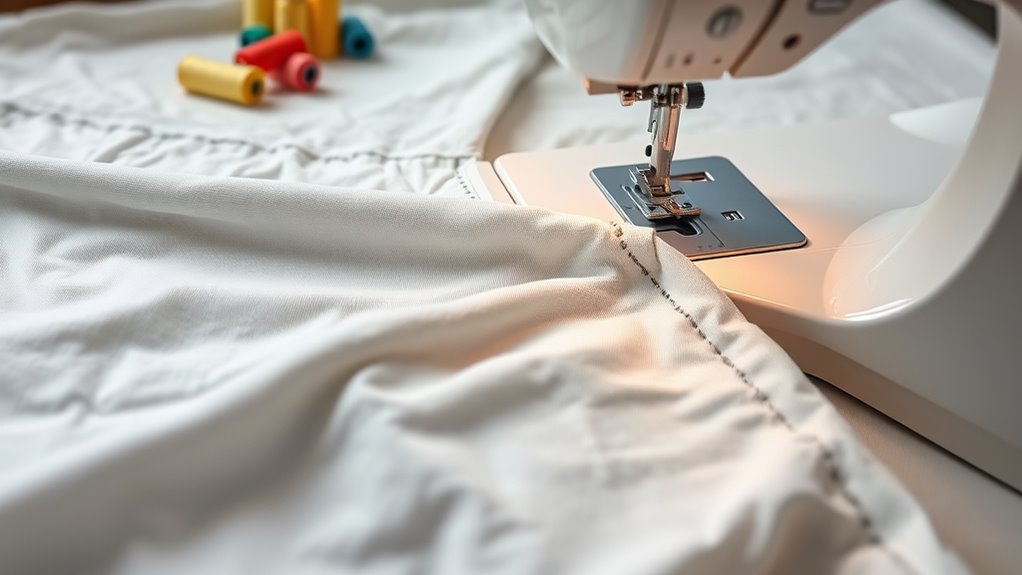
Starting your sewing projects with awareness of common mistakes can save you time and frustration. One of the most vital areas to pay attention to is fabric selection. Choosing the right fabric can make or break your project, so take the time to understand the properties of different materials. For beginners, it’s best to start with fabrics that are easy to handle, like cotton or fleece, rather than slippery silks or delicate chiffons. When selecting fabric, consider the project’s purpose, durability, and ease of care. Using the wrong fabric can lead to issues like stretching, puckering, or a finished product that doesn’t hold its shape. Additionally, always pre-wash your fabric before cutting to account for shrinkage and to remove any chemicals or finishes that might interfere with sewing. This step not only helps in achieving accurate sizing but also prevents surprises after your project is complete.
Another common mistake relates to seam allowances. Seam allowances are the margins of fabric that you stitch within to join pieces together and are essential for ensuring your finished item holds together properly. Many beginners overlook the importance of consistent seam allowances, which can lead to uneven seams, puckering, or a final product that doesn’t fit as intended. To avoid this, always check the pattern instructions for the recommended seam allowance, typically ranging from 1/4 inch to 5/8 inch. Use a ruler or a seam guide on your sewing machine to maintain a uniform allowance across all seams. When you’re new, it’s better to stick to the pattern’s specified allowance rather than improvising, as inconsistency can cause misalignments and structural issues. Remember that even small deviations can add up, especially in fitted garments, so precision counts.
Popular right now

Sony WH-1000XM6 Wireless Noise-Canceling Over-Ear Headphones, Blue, Bundle

De'Longhi Linea Classic Espresso Machine with Adjustable Milk Frother

Ninja CREAMi 7-in-1 Ice Cream Maker, NC301
As an affiliate, we earn on qualifying purchases.
Frequently Asked Questions
How Do I Choose the Right Fabric for My Project?
To select the right fabric for your project, consider its purpose and how it feels. If you’re making clothing, pick a fabric that matches your fabric patterns and sewing machine types. For instance, lightweight cotton works well for shirts, while heavier denim suits bags. Check the fabric’s weight, drape, and fiber content to guarantee it suits your project, making sewing smoother and results more professional.
What Tools Are Essential for Beginner Sewers?
You need a reliable sewing machine, sharp scissors, pins, and a seam ripper to get started. Make sure to do regular sewing machine maintenance to keep it in top shape. Select the right thread for your fabric to prevent puckering or breaking. A variety of needles suited for different fabrics also helps. With these tools, you’ll sew confidently and avoid common beginner mistakes.
How Can I Fix a Crooked Seam Easily?
A stitch in time saves nine, so fix that crooked seam quickly. To do this, carefully unpick the seam and realign it, paying close attention to seam alignment. Press the seam flat with an iron to set it straight, then sew again with a steady hand. Proper seam pressing helps prevent future crooked seams, making your sewing projects look professional and polished.
When Should I Use Pins Versus Clips?
You should use pins when you need precise placement, especially on curved or intricate seams, because they hold fabric securely in specific spots. Pins are ideal for thicker fabrics or layered projects. Clips, or clip alternatives, are perfect for lightweight, delicate fabrics or when you want to avoid leaving holes. Use clips for quick, easy fastening, and pins for accuracy. Both tools help guarantee your fabric stays aligned during sewing.
How Do I Properly Maintain and Store Sewing Supplies?
To properly maintain and store your sewing supplies, keep your thread tension adjusted correctly to prevent tangles and breakage. Store fabric in a cool, dry place, preferably folded or rolled to avoid wrinkles. Keep your sewing notions in labeled containers or drawers, and clean your machine regularly. Proper storage extends the life of your supplies, guarantees smooth sewing, and keeps your workspace organized and efficient.
Conclusion
By keeping these tips in mind, you’ll become a more confident sewer. For example, imagine starting a simple pillow project, but rushing the cutting and sewing steps. If you double-check measurements and sew slowly, you’ll end up with a professional-looking cushion instead of a misshapen one. Remember, patience and attention to detail make all the difference. With practice, you’ll avoid common mistakes and enjoy creating beautiful, satisfying projects every time.