To elevate your sewing projects, master couture techniques like embroidery, beadwork, appliqué, and lace insertion to add luxurious details. Use fabric manipulation methods such as pleating, ruching, draping, folding, and twisting to create striking shapes and textures. Personalize your designs with precise craftsmanship, transforming simple pieces into one-of-a-kind garments. Understanding these high-end techniques enhances your skill and creative potential—keep exploring to reveal even more sophisticated methods.
Key Takeaways
- Master intricate embellishment techniques like embroidery, beadwork, appliqué, and lace insertion to add luxury and detail to garments.
- Utilize fabric manipulation methods such as pleating, draping, and ruching to create unique silhouettes and dynamic textures.
- Personalize designs through meticulous craftsmanship and custom embellishments, elevating garments to haute couture standards.
- Focus on fabric quality and precise technique execution to ensure high-end, polished results in your projects.
- Combine structural and decorative methods to develop innovative, sophisticated, and visually captivating couture pieces.
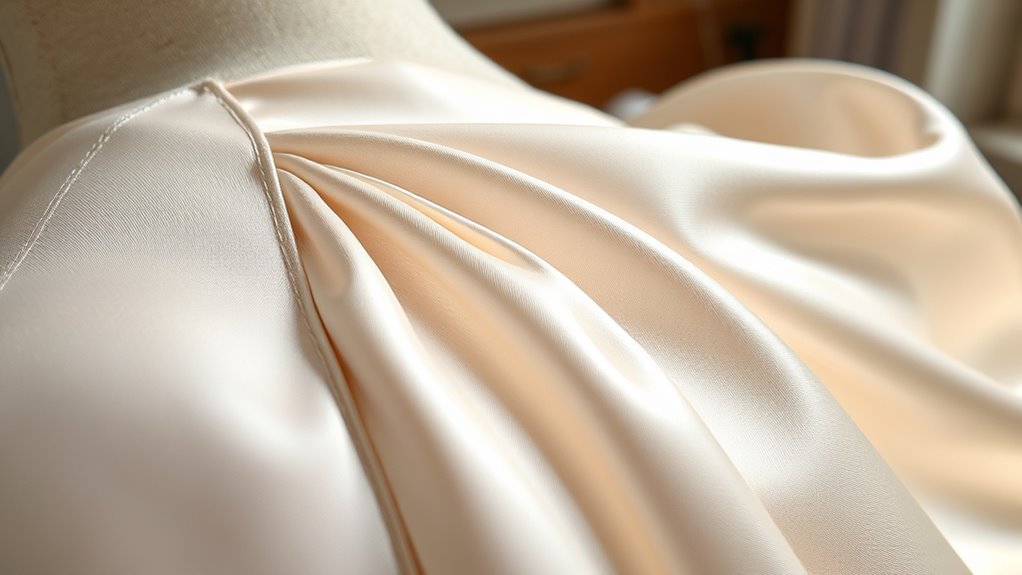
Have you ever wondered what makes haute couture garments stand out from the rest? It’s often the meticulous attention to detail and the masterful techniques used to transform simple fabrics into stunning works of art. When you dive into couture sewing, two essential elements that elevate your projects are embellishment techniques and fabric manipulation. These methods allow you to add texture, dimension, and a customized touch that instantly elevates your design from basic to extraordinary.
Embellishment techniques are at the heart of couture craftsmanship. They include a wide range of decorative methods like embroidery, beadwork, appliqué, and lace insertion. With embroidery, you can create intricate patterns and textures that catch the eye and add depth to your garment. Beadwork and sequins can bring a touch of glamour and sophistication, while appliqué allows you to layer fabrics and motifs for a textured, three-dimensional effect. Lace insertion adds delicate, romantic details that transform a simple fabric into something more refined. When you master these embellishment techniques, you gain the ability to personalize your garments, making each piece uniquely yours.
Embellishment techniques like embroidery, beadwork, appliqué, and lace insertion elevate garments with intricate, personalized details.
Fabric manipulation is another essential couture skill that can dramatically change the silhouette and visual interest of your designs. It involves techniques that alter the fabric’s shape and surface without cutting or adding new fabric. Pleating, smocking, ruching, and draping are common examples. Pleating can create structured, architectural looks, while ruching adds softness and volume. Draping allows you to work directly with fabric on a dress form, giving your design an organic, fluid appearance. Fabric manipulation also includes techniques like folding, twisting, and gathering, which can add intricate details or volumetric effects. When you incorporate fabric manipulation into your projects, you’re not just sewing; you’re shaping and transforming the fabric to craft a unique, tailored look.
Mastering fabric quality assessment is crucial for achieving the best results with couture techniques, as it guides you in selecting fabrics that behave well and enhance your design. Both embellishment techniques and fabric manipulation require patience and precision, but their impact is profound. They demand a keen eye for detail and a willingness to experiment. As you practice these couture methods, you’ll develop a deeper understanding of fabric behavior and how to enhance it creatively. The results won’t just be garments—they’ll be personalized masterpieces that showcase your craftsmanship and style. Whether you’re embellishing with beads or manipulating fabric for dramatic folds, these techniques make your sewing projects stand out, capturing the essence of haute couture in your own work.
Frequently Asked Questions
What Tools Are Essential for Couture Sewing?
You need essential tools like sharp tailor’s scissors, fine pins, and a high-quality seam ripper to execute couture sewing. A tailor’s ham and pressing tools help perfect embellishment techniques, while a dress form is vital for pattern alteration methods. Use precision rulers and marking tools to guarantee accuracy. These tools allow you to master intricate details, elevate your projects, and achieve professional results in couture sewing.
How Do I Choose the Right Fabrics for Couture Projects?
Choosing the right fabrics for couture projects is like selecting a soulmate; you need harmony and personality. Focus on fabric selection that matches your design vision, paying close attention to textile properties like drape, weight, and texture. Test swatches to feel their essence and envision how they’ll behave when sewn. Trust your instincts, and remember, the perfect fabric elevates your work from ordinary to extraordinary.
What Are Common Couture Finishing Techniques?
You’ll want to focus on couture finishing techniques like creating seamless edges and hand rolled hems. Seamless edges ensure your seams look clean and refined, while hand rolled hems give your projects a polished, professional finish. These techniques require precision and patience but elevate your work to high-end couture standards. Practice consistently to master these methods, and your garments will have a luxurious, flawless appearance that truly stands out.
How Can I Improve My Hand-Sewing Skills?
To improve your hand-sewing skills, practice regularly, focus on precision, and embrace patience. Experiment with embellishment techniques like embroidery and be meticulous with pattern fitting to achieve perfect lines. Use fine needles and quality thread, and work slowly to control your stitches. Watch tutorials, learn from experienced sewists, and challenge yourself with new projects. Consistent effort and attention to detail will elevate your hand-sewing craftsmanship over time.
What Are the Costs Involved in Couture Sewing?
When considering couture sewing, you should do a thorough cost analysis to understand expenses like premium fabrics, specialized tools, and hand-sewing time. Budget planning helps you allocate funds for high-quality materials and necessary equipment. Keep in mind, couture sewing can be costly due to intricate techniques and luxury materials, but planning ahead guarantees you stay within your budget and achieve the elevated results you desire.
Conclusion
By mastering these couture techniques, you can transform ordinary pieces into luxurious masterpieces. Imagine sewing a simple dress and adding hand-finished hems or couture pads—you’ll notice a dramatic upgrade in quality and elegance. For instance, a hobbyist turned professional used couture padding to give her evening gown a flawless silhouette, impressing clients and boosting her confidence. Incorporate these methods into your projects, and you’ll elevate your sewing from good to couture-level craftsmanship.