
TL;DR

Get tools and workshop supplies delivered free — and shop member deals
- Fast, free delivery on millions of items
- Access to Prime Big Deal Days deals on October 6–7
- Prime Video, Amazon Music and more included
A Hunker report says user-posted videos show carpenter bees dying after direct exposure to WD-40, but it finds little evidence that the spray works as a lasting repellent or pest treatment. Filling abandoned tunnels with wood filler and painting bare wood are described as longer-term deterrents.
A Hunker report says videos posted by YouTube users show carpenter bees dying after they are sprayed directly with WD-40, but the report finds little evidence the product repels bees or stops them from returning to wooden structures. The distinction matters to homeowners: a spray that kills an exposed insect may not resolve an infestation inside a tunnel.
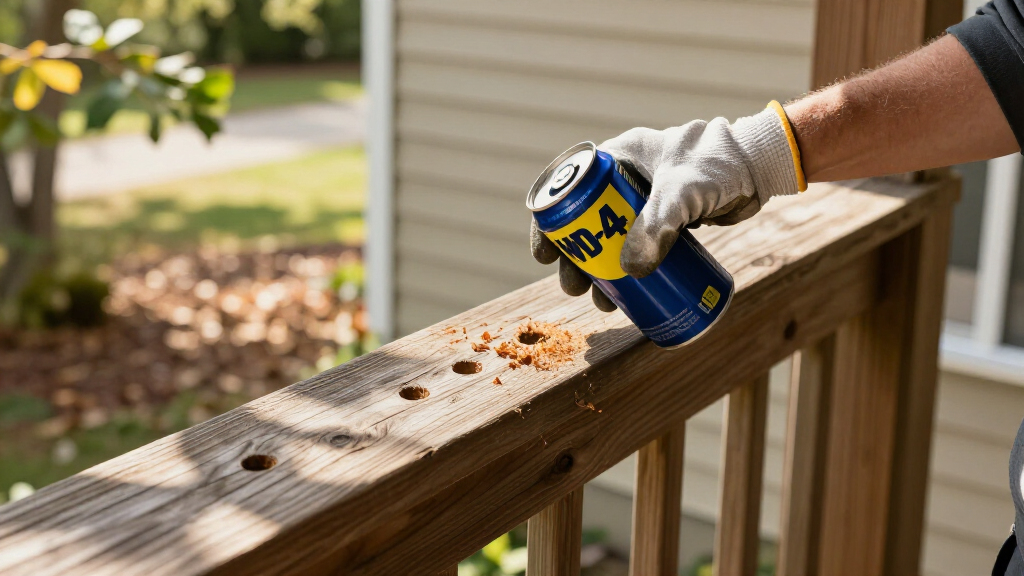
Hunker cites demonstrations from YouTube users motofun and PineyGroveHomestead. In the videos, the users spray WD-40 into holes containing live carpenter bees; the bees emerge covered in the product and die. Those clips provide anecdotal evidence of effects after direct contact, not proof that spraying a hole will reliably eliminate bees hidden inside it or prevent future activity.
The report says there is little evidence for using WD-40 as an insecticide. It notes that petroleum-based oils have been studied for their effects on insects and can cause death through cellular disruptions. That general finding does not establish WD-40 as a tested, approved or dependable carpenter-bee treatment, nor does it show that residue in a tunnel will keep bees away.
For longer-term prevention, Hunker points to filling tunnels with a hard material, such as two-part wood filler, after confirming the bees are gone. It also says painting bare wood can discourage bees from drilling. The report cautions that even effective insecticides may keep carpenter bees out of a treated hole for only three or four weeks at most.
A Quick Kill Is Not Lasting Control
The practical issue is the gap between killing an individual bee and addressing the wood tunnels where carpenter bees nest. A spray may appear effective in a video when an insect is saturated, while offering no demonstrated protection against bees returning or making new holes. Treating that demonstration as proof of lasting control could leave a homeowner with continuing damage.
Hunker’s suggested distinction is between short-term treatment and prevention: once bees are gone, closing the tunnels and coating exposed wood may reduce opportunities for new nesting. The report does not provide a controlled comparison of these methods or quantify how much damage they prevent, so readers should treat its recommendations as reported guidance rather than a guarantee.
As an affiliate, we earn on qualifying purchases.
What the Videos Actually Show
Carpenter bees bore roughly half-inch-wide holes into wood and extend tunnels in which they can rear their young. They may choose human-made wooden structures as well as trees, making the insects a concern for people trying to protect decks, trim or other woodwork. Hunker frames its WD-40 discussion around whether a readily available product can address that problem.
The evidence cited for WD-40 consists of two user-posted videos, not a controlled field trial described in the report. The bees in those demonstrations were sprayed directly and emerged visibly saturated before dying. Separately, the report refers to research on petroleum-based oils and insects, but does not identify the study or establish that its findings apply specifically to WD-40 used against carpenter bees.
“There’s little evidence that WD-40 can be used as an insecticide.”
— Hunker report
WD-40’s Repellent Effect Is Unknown
The source does not establish whether WD-40 residue deters carpenter bees, how long any effect might last, or whether bees can be killed reliably when they are deeper inside a tunnel. It also does not provide a controlled test comparing WD-40 with a labeled insecticide or with physical repairs. The cited videos show contact exposure; they cannot confirm broader effectiveness.
The report’s claim that insecticides may keep bees out for three or four weeks is not tied in the supplied material to a particular product, study or test conditions. Readers should not interpret that figure as a guaranteed duration for every treatment. The source also does not specify product-label directions or safety precautions for using WD-40 around people, pets or other insects.
Close Tunnels After Bees Leave
Hunker’s practical sequence is to confirm that the bees have left, then fill the tunnels with a hard material such as two-part wood filler and consider painting exposed wood to discourage new drilling. The report does not provide a method for confirming that a tunnel is empty, so homeowners should avoid sealing an active nest in a way that traps bees inside.
Anyone considering a pesticide should follow its label and use a product intended for the situation; the report itself says a proven insecticide is preferable to relying on WD-40 when evidence is limited. Whether WD-40 residue offers meaningful protection remains unconfirmed, and the supplied source identifies no follow-up study or scheduled test that would resolve that question.
Key Questions
Does WD-40 kill carpenter bees?
Hunker cites two YouTube videos in which bees died after being sprayed directly. That is anecdotal evidence of contact effects, not proof of reliable results in all situations.
Does WD-40 keep carpenter bees from returning?
The report says there is little evidence showing that WD-40 residue repels carpenter bees or prevents them from using a hole again.
What does Hunker suggest for longer-term prevention?
After confirming the bees are gone, Hunker recommends filling tunnels with a hard material such as two-part wood filler. It also says painting bare wood can discourage drilling.
How long might insecticides keep bees out of a hole?
The report says even powerful insecticides may provide only temporary control, at most three or four weeks. The supplied source does not identify a product or testing conditions for that estimate.
Source: rss
Fall Picks
fall essentials
As an affiliate, we earn on qualifying purchases.