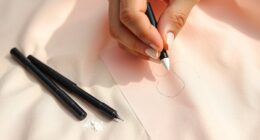
To sew activewear successfully, start by choosing the right stretch fabrics like spandex or lycra blends that match your activity needs. Always wash your fabric before cutting to remove residues, and follow manufacturer instructions for care. Use delicate stitches, avoid high heat drying, and take your time aligning pattern pieces for seamless looks. Properly handling elastic and fabric guarantees durability and perfect fit. Keep going, and you’ll discover expert tips to elevate your activewear sewing skills even more.
Key Takeaways
- Pre-wash stretch fabrics to remove residues and prevent future shrinkage or distortion.
- Use a stretch or zigzag stitch to allow flexibility and prevent seam breakage during movement.
- Match grainlines and pattern repeats carefully for consistent stretch and a professional finish.
- Handle elastic and stretch fabrics gently, avoiding high heat and aggressive tension during sewing.
- Finish seams with stretch-friendly techniques like serging or zigzag stitches to maintain elasticity.
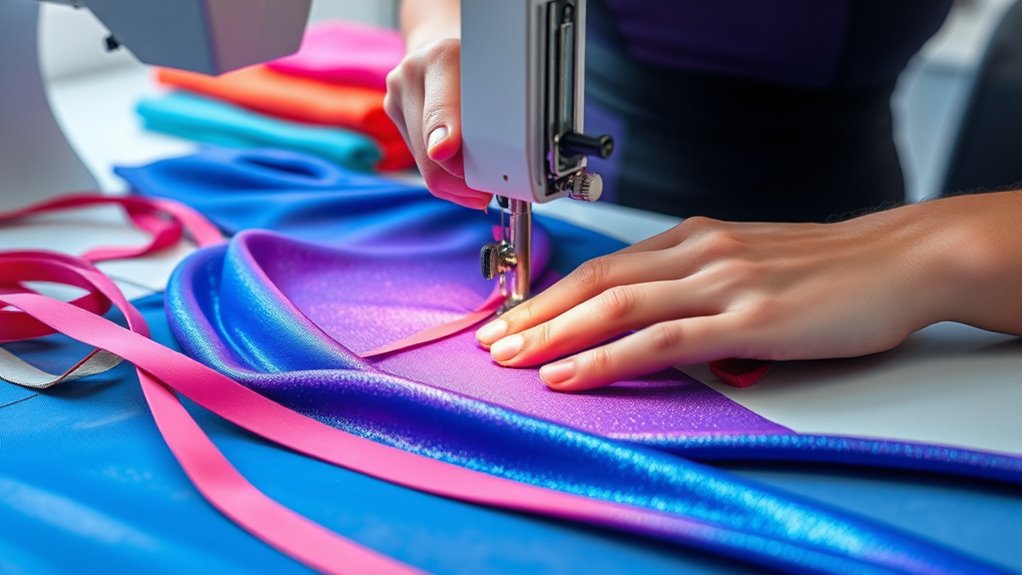
Have you ever thought about sewing your own activewear? Creating your own pieces allows you to customize fit, style, and functionality, but working with stretch fabrics and elastic requires some know-how. One of the most important aspects is understanding fabric care. Stretch fabrics, like spandex or lycra blends, often demand gentle handling to maintain their elasticity and shape. Always wash your fabric before cutting to remove any chemicals or residues from manufacturing that could interfere with sewing. When it’s time to care for your finished activewear, follow the manufacturer’s instructions carefully—usually, hand washing or delicate cycles with mild detergent is best. Avoid high heat drying, which can damage elastic fibers and cause your garments to lose their shape or become less supportive over time. Proper fabric care not only prolongs the life of your activewear but also keeps it looking vibrant and functioning *crucially* during workouts. Additionally, choosing the right fabric type can significantly influence the durability and stretch retention of your activewear. Pattern matching is another *vital* element when sewing activewear, especially if you want a polished, professional look. Stretch fabrics often have a nap or directional quality, so aligning patterns is essential for a seamless appearance. Take your time laying out your fabric before cutting; carefully match seams and patterns at the edges to ensure consistency. For symmetrical designs or panels, use pins or pattern weights to keep pieces aligned as you sew. When working with patterned fabric, pay close attention to grainlines and pattern repeats—this helps avoid mismatched seams or awkward pattern shifts. Matching patterns isn’t just about aesthetics; it also ensures that the stretch and recovery of the fabric are uniform across your garment, which is *crucial* for activewear that needs to move with you and retain its shape. If your fabric has a bold pattern or directional print, plan your pattern pieces accordingly, so the design flows naturally when assembled. Mastering fabric care and pattern matching will make sewing activewear a more satisfying experience. These details might seem small, but they *considerably* impact the durability and appearance of your finished piece. With a little patience and attention, you can create activewear that not only fits perfectly but also stands up to your toughest workouts. Remember, the key is to handle your stretch fabrics gently, keep your patterns aligned, and always follow proper sewing techniques. By doing so, you’ll end up with activewear that performs well, looks great, and lasts longer—making your sewing efforts truly worthwhile.
Frequently Asked Questions
How Do I Prevent Fabric From Curling During Sewing?
To prevent fabric from curling during sewing, start with fabric stabilization by applying interfacing or stabilizer to keep edges flat. Use clips instead of pins for better control. Incorporate seam finishing techniques like serging or zigzag stitches to secure raw edges and reduce curling. Also, sew with the fabric’s stretch side facing up to maintain stability. These steps help keep your fabric smooth and flat throughout the sewing process.
What Stitches Are Best for Stretch Fabrics?
You should use stretch stitches like a zigzag or a stretch stitch on your sewing machine for stretch fabrics. These stitches provide flexibility and maintain fabric stability during movement. Avoid regular straight stitches, as they can break when stretched. Adjust your stitch length to be slightly longer to prevent puckering. This way, your seams stay strong and elastic, ensuring your activewear stays comfortable and durable through every workout.
How Can I Reinforce Seams Without Restricting Stretch?
To reinforce seams without restricting stretch, use stretch seam reinforcement techniques like flatlock stitches or zigzag stitches, which maintain flexibility. You can also add a line of serging or overlocking to strengthen the seam edges. Incorporate stretch fabric durability by using elastic thread or stretchy interfacing in critical areas. These methods guarantee your activewear remains durable and comfortable, without sacrificing the garment’s natural stretch and movement.
Which Needles Are Ideal for Sewing Activewear?
Think of your sewing machine as a skilled musician, and the needles as the instruments. For activewear, use ballpoint needles or stretch needles—they’re like gentle brushes that glide smoothly through stretchy fabric without snagging. These needles prevent runs and puckering, ensuring your seams stay flexible and strong. Switch to these specialized needles, and your activewear will move comfortably with you, maintaining durability and a professional finish.
How Do I Choose the Right Elastic for Different Garments?
When choosing elastic, focus on elastic selection and fabric compatibility. For sports bras or leggings, opt for wide, sturdy elastic that offers good recovery and support. For lighter activewear, like tank tops, use narrower, softer elastic. Always match the elastic’s stretch percentage to your fabric’s stretch, ensuring it maintains elasticity without causing puckering or sagging. Testing a small piece first helps confirm you’ve picked the best elastic for your garment.
Conclusion
Sewing activewear lets you craft garments that move with you, fit your body, and boost your confidence. By mastering stretch fabrics, handling elastic, and paying attention to detail, you create pieces that perform and last. Embrace patience, practice, and precision—because each stitch shapes comfort, durability, and style. With these tips, you’ll turn your sewing skills into activewear that supports, stretches, and empowers you every step of the way.