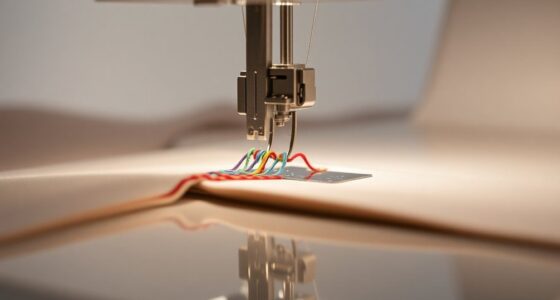

To master your serger, start by adjusting tension carefully—test on scrap fabric to find the perfect balance that creates even stitches on both sides. Choose the right stitch type for your project, whether it’s a 3-thread, 4-thread, or rolled hem, and set the differential feed to prevent puckering or stretching. Remember, small tweaks make a big difference. Keep practicing these adjustments, and you’ll quickly gain confidence in producing professional finishes with your overlocker.
Key Takeaways
- Practice adjusting tension gradually on scrap fabric to achieve balanced, even stitches for different fabrics and projects.
- Familiarize yourself with your overlocker’s stitch options and set the machine accordingly for optimal results.
- Regularly test and fine-tune differential feed and stitch width to prevent puckering and ensure smooth fabric flow.
- Troubleshoot stitch issues by observing stitch quality, making small incremental adjustments to tension and settings.
- Maintain consistent practice to develop an intuitive understanding of machine adjustments, ensuring professional-quality finishes.

If you want professional-looking seams and finishes, mastering overlocker tips is essential. One of the most important aspects is understanding how to properly adjust thread tensions and select the right stitches for your project. These fundamentals make a significant difference in the quality of your sewing and can prevent frustrating issues like puckering, skipped stitches, or uneven seams. When you start working with your overlocker, take time to familiarize yourself with the tension dials. Each machine has different settings, but generally, you want your tension to be balanced so that the stitches are even and secure on both sides of the fabric. Proper tension ensures that the threads interlock smoothly, producing a clean, professional finish. Don’t just set and forget; test your tension on scrap fabric before diving into your project. Adjust the tension gradually, making small changes, and observe how the stitches respond. This process helps you find the sweet spot for different fabrics and thicknesses. Understanding tension adjustments is crucial for troubleshooting and achieving optimal results.
In addition to tension, stitch selection plays a vital role in achieving the desired finish. Overlockers offer various stitch types, such as 3-thread overlock, 4-thread overlock, rolled hem, and flatlock stitches. Each serves a specific purpose, so choosing the correct stitch for your fabric and project is key. For example, a 3-thread overlock creates a lightweight seam ideal for knit fabrics, while a 4-thread overlock provides extra strength for woven fabrics. If you’re finishing raw edges or creating decorative effects, selecting the right stitch can make your work look more polished. Always refer to your machine’s manual or guide to understand what stitch options are available and how to set them up correctly.
Additionally, mastering stitch selection involves understanding how to adjust differential feed and stitch width. These settings influence how the fabric moves through the machine and how tight or loose the stitches are. When you change stitch types, revisit your tension and feed settings to ensure compatibility. Practice makes perfect—spend time experimenting with different stitches and tension configurations on scrap fabric. This way, you’ll develop an intuitive feel for what adjustments work best for each project, saving you time and reducing errors. Remember, patience and attention to detail in setting thread tensions and choosing the right stitch are the cornerstones of professional-quality sewing with your overlocker. With experience, these adjustments will become second nature, giving your projects a clean, durable finish every time.
As an affiliate, we earn on qualifying purchases.
Frequently Asked Questions
How Do I Troubleshoot Tension Issues on My Overlocker?
When facing tension issues on your overlocker, you should first check the thread tension settings, ensuring they match your fabric and thread type. Use troubleshooting tips like rethreading the machine, adjusting tension dials incrementally, and inspecting for tangled threads or lint buildup. Test sew on scrap fabric after each adjustment. Proper tension balance is key to neat stitches, so take your time to fine-tune each thread path for best results.
Can I Sew With Waterproof or Stretch Fabrics Using My Serger?
Is your serger a chameleon? Yes, you can sew waterproof or stretch fabrics, but proper fabric prep is key. Use a stretch needle or a needle suited for waterproof fabrics to prevent skipped stitches. Adjust your tension and stitch length accordingly. For seam finishes, consider using a differential feed to accommodate fabric stretch or waterproof layers, ensuring smooth, professional results without puckering or skipped stitches.
What Are the Best Maintenance Practices for Extending My Overlocker’s Lifespan?
You extend your overlocker’s lifespan by regularly maintaining it through proper needle maintenance and correct threading techniques. Change needles frequently to ensure clean stitches and avoid fabric damage. Keep the threading process smooth, double-checking for proper tension and alignment to prevent issues. Also, clean the serger’s lint and dust after each use, oil moving parts as recommended, and store it in a dry, safe place to maintain it running smoothly for years.
How Do I Customize Stitch Width and Length Settings?
Imagine your overlocker as a paintbrush—your stitch width and length settings are your brush strokes. To customize these, turn the dial or knobs labeled for stitch adjustment, tweaking them until the stitches match your project needs. Test on scrap fabric, adjusting gradually for perfect tension. This setting customization guarantees your seams are precisely tailored, giving your sewing a professional finish every time.
Are There Specific Techniques for Sewing Delicate or Slippery Fabrics?
When sewing delicate or slippery fabrics, you should use fabric stabilization techniques like tissue paper or stabilizer to prevent slipping. Adjust your serger’s stitch tension for better control and opt for a narrow stitch for seam finishing to minimize fabric distortion. Keep the fabric taut but gentle, and sew slowly to maintain precision. These tips help you achieve smooth seams and professional finishes on tricky fabrics.
Conclusion
Now that you’ve uncovered the secrets of your overlocker, there’s no stopping you! With these expert tips, you’re practically a sewing superhero, capable of conquering any fabric challenge that comes your way. Your stitches will be so perfect, they’ll make even professional sewers jealous. Keep practicing, stay curious, and soon, you’ll be creating masterpieces faster than you can say “overlock”! Get ready to transform your sewing game into something truly legendary.