Sewing slippery fabric can be frustrating, but you can make it smoother by using tissue paper to stabilize the material, which prevents shifting as you sew. Adjust your stitch length to be shorter for more control, and fine-tune your tension to avoid puckering or skipped stitches. Using clips instead of pins and sewing at a moderate pace also help. Keep these tips in mind—more detailed tricks await to help you sew with confidence.

Get business pricing on tools and workshop supplies
- Business-only prices and quantity discounts
- Tax-exempt purchasing
- Multiple users, one account, clear invoices
Key Takeaways
- Use tissue paper as a temporary stabilizer to prevent fabric shifting and ensure straight seams.
- Adjust stitch length to a shorter setting for better control and reduced slipping during sewing.
- Tweak tension settings by testing on scrap fabric to achieve even stitches without puckering.
- Sew with a slightly tighter tension and moderate speed to secure stitches and maintain fabric stability.
- Reinforce slippery fabrics with tissue paper, proper tension, and stitch adjustment to avoid frustration.
Popular right now

De'Longhi Stilosa Compact Manual Espresso Machine with Milk Frother

Breville Bambino Espresso Machine, Brushed Stainless Steel

Philips 4400 Series Fully Automatic Espresso Machine with LatteGo Milk System
As an affiliate, we earn on qualifying purchases.
Understanding Why Sewing Slippery Fabrics Is Tricky
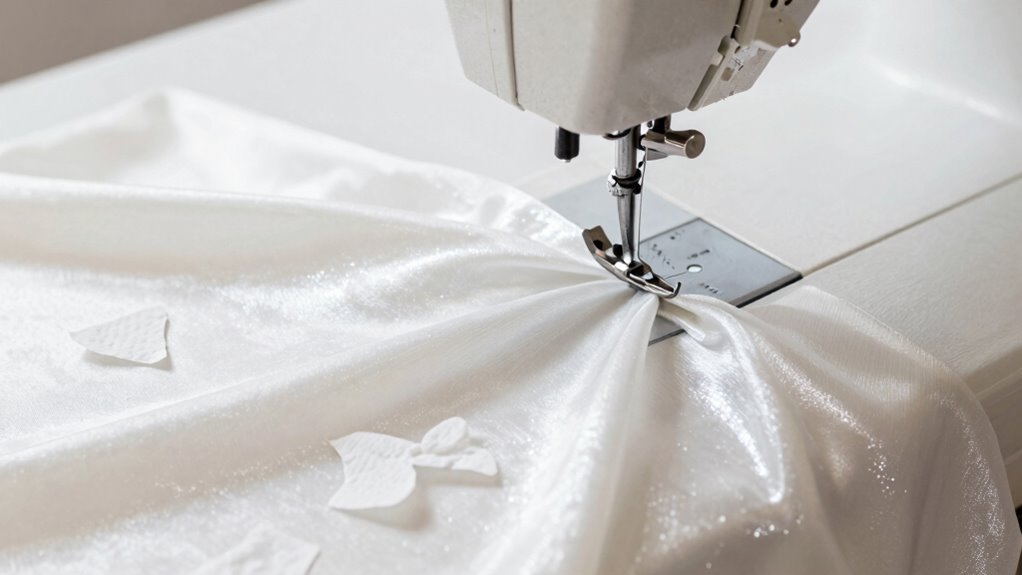
Sewing slippery fabrics can be challenging because their smooth surfaces tend to shift and slide as you sew. This makes it hard to maintain accurate seams and consistent stitching. To combat this, you need to improve fabric grip by using clips or specialized grips that hold the fabric steady. Slippery materials also require extra seam reinforcement to prevent seams from unraveling or stretching out over time. Without proper grip, your fabric moves, causing uneven stitches and frustration. Understanding these issues helps you recognize why sewing slippery fabrics demands extra care and specific techniques. By focusing on fabric grip and seam reinforcement, you can keep your fabric in place and achieve professional-looking results. Additionally, using appropriate sewing machine settings can further improve your control over slippery fabrics. Employing specialized sewing tools can also make the process easier and more precise. Being aware of fabric stabilizers can further enhance your sewing accuracy and prevent slipping during stitching. Incorporating additional grip aids can provide extra stability, making sewing smoother and more reliable. For best results, consider using the right needle type, which can significantly reduce fabric slipping and ensure cleaner stitches.
How Tissue Paper Stabilizes Slippery Fabrics During Sewing

When working with slippery fabrics, tissue paper acts as an effective stabilizer that keeps the material from shifting as you sew. It provides temporary support, preventing fabric layers from sliding out of alignment and making it easier to sew straight seams within your seam allowances. To enhance stability, you can use fabric adhesives or pins to hold the tissue paper in place, ensuring it doesn’t shift during stitching. The tissue paper glides smoothly under your presser foot, reducing puckering and skipped stitches. After sewing, simply tear away the tissue paper, leaving clean seam allowances. This technique helps you maintain precision and control, especially on delicate or slick fabrics. Using tissue paper is a simple, inexpensive way to improve your sewing results on slippery textiles.
Adjusting Stitch Length and Tension for Better Seams on Slick Textiles
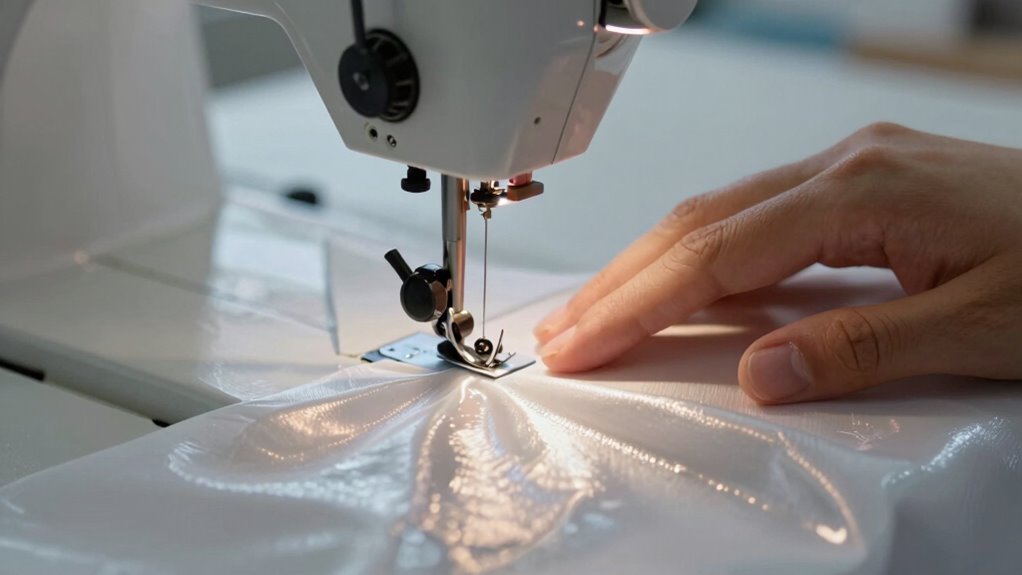
To achieve clean, professional-looking seams on slick textiles, you need to carefully adjust your sewing machine settings for stitch length and tension. Proper fabric preparation is essential before sewing. Start with a shorter stitch length to prevent slipping and puckering. Adjust the tension so the threads lock evenly without causing puckering or loose seams. Experiment with these settings on scrap fabric first. Remember these tips:
- Use a slightly tightened tension to keep stitches secure
- Shorten the stitch length for better control
- Test adjustments on scrap to find the perfect balance
- Keep fabric taut but not stretched during sewing
These small tweaks improve seam quality, reduce slipping, and ensure your seams stay crisp and durable. Proper sewing machine settings and fabric preparation are key for slick textiles.
Extra Tips for Handling Slippery Fabrics Confidently
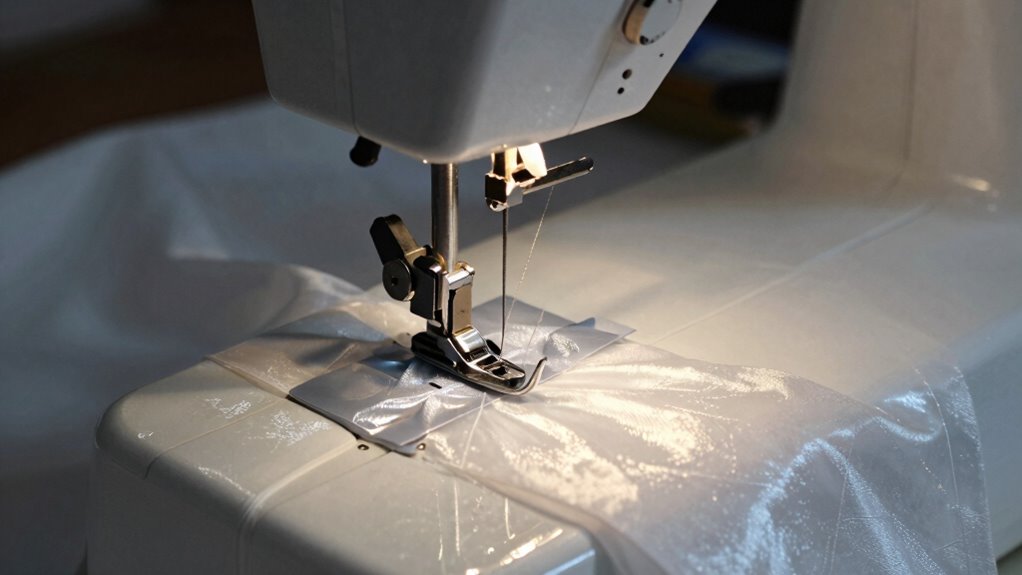
Handling slippery fabrics confidently requires more than just adjusting stitch length and tension. To improve fabric grip, use clips or pins instead of pins that might slide, ensuring your layers stay aligned. You can also apply a starch or spray adhesive lightly to the fabric surface for better control. Reinforcing seams is essential—sew with a slightly wider seam allowance, then finish edges with zigzag or serging to strengthen the seam. Using interfacing or tissue paper underneath the fabric can prevent slipping during sewing, providing extra stability. Keep your sewing speed moderate to maintain control, and always press seams carefully to set stitches and reinforce the seam structure. Additionally, employing proper technique can help you maintain consistent stitch quality on slippery fabrics. Incorporating fabric grip techniques can further enhance control and precision during sewing. Utilizing fabric stabilization methods can significantly reduce shifting and improve your sewing accuracy. Incorporating these sewing best practices will also help you handle slippery fabrics with confidence, reducing frustration and achieving professional results. For optimal results, consider selecting a stitch type suited for slippery fabrics to enhance seam durability and appearance.
Troubleshooting Common Sewing Problems With Slippery Materials
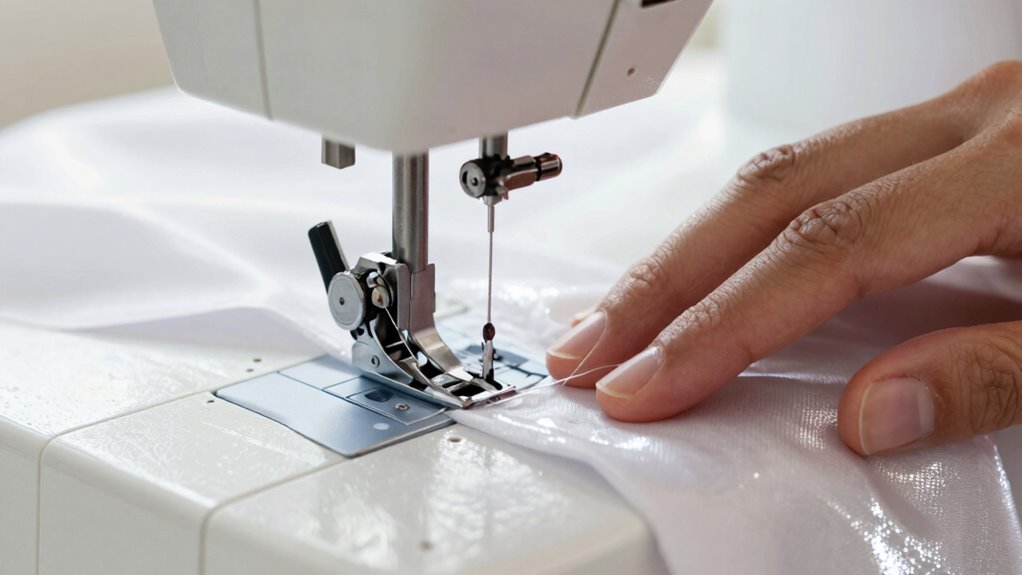
Slippery fabrics often cause sewing problems that can derail your project if you’re not prepared. To improve fabric grip, consider using starch or fabric spray to stabilize the material. Keep seams neat with proper seam finishing techniques like serging or zigzag stitching, which prevent fraying and slipping. Adjust your stitch length—longer stitches can help maintain control, while shorter stitches improve seam strength. Tension settings may need tweaking; test on scrap fabric to find the right balance. Using tissue paper can temporarily grip slippery fabric, making it easier to sew straight lines. Also, pin carefully and consider clip or binder clips for extra grip. These tips help manage common issues, ensuring smooth sewing and professional-looking results.
Frequently Asked Questions
What Types of Tissue Paper Work Best for Slippery Fabrics?
You should use lightweight, thin tissue paper like tracing or medical tissue paper, as they work best for slippery fabrics. These tissue paper types are easy to tear away after sewing without damaging your fabric. Avoid thick or textured tissue papers that can jam your machine or leave residue. Opt for smooth, non-embossed tissue paper, ensuring your fabric’s texture remains intact and your sewing process stays smooth.
Can Using Tissue Paper Affect the Fabric’s Final Appearance?
Think of tissue paper as a guiding hand for your fabric’s delicate dance. Using it can leave a subtle imprint or slight texture on the fabric, but if you choose the right tissue paper, it won’t compromise the final appearance. It helps maintain sewing precision on slippery fabrics by preventing shifting, ensuring smooth seams without altering the fabric’s natural texture. Just be gentle to keep your project looking polished and professional.
How Do I Remove Tissue Paper Residue After Sewing?
To remove tissue paper residue after sewing, you should start by gently rubbing the fabric with a soft brush or your fingers to loosen the particles. Then, use a lint roller or sticky tape to pick up stubborn bits. For stubborn residue, lightly dampen a cloth with water or a mild fabric cleaner and dab gently. Always test cleaning methods on a small area first to avoid damage.
Are There Alternative Stabilizers to Tissue Paper for Slippery Fabrics?
Yes, you can use interfacing alternatives like lightweight fusible or sew-in interfacing to stabilize slippery fabrics. Adhesive stabilizers such as spray-on or tear-away types also work well, providing extra grip without the mess tissue paper leaves. These options help keep your fabric stable during sewing, making your project easier and neater. Just choose the right stabilizer based on your fabric’s weight and the finish you want.
What Sewing Machine Settings Minimize Slipping Without Damaging Fabric?
Think of your sewing machine as a dance partner—gentle, yet precise. To minimize slipping, set your machine to a shorter stitch length and increase tension slightly, but avoid over-tightening, which can damage delicate fabrics. Use a walking foot if available, and make certain fabric preparation is thorough with stabilizers or tissue paper. These sewing techniques keep your slippery fabric steady without risking tears, making your project smooth and enjoyable.
Conclusion
Now that you’ve mastered tissue paper tricks and tension tweaks, sewing slippery fabrics might actually feel like a breeze—who knew? Irony strikes again: just when you think you’ll swear at every stitch, you’re calmly guiding silky textiles as if they’re your best friends. So go ahead, embrace the glide, and turn those tricky fabrics into your sewing triumphs—without a single curse flying through the air. Happy sewing, slick operator!