To prevent distorted seams with heavy fabrics, use strong needles like size 90/14 or 100/16 and match sturdy thread. Reinforce seams in stress areas with topstitching or stay stitching, and handle fabric gently throughout sewing and pressing. Use a walking foot for better fabric feed, and press seams properly with a hot iron and steam. Stabilizing fabric with interfacing or starch helps maintain shape. Keep these tips in mind to achieve durable, professional results and learn even more techniques to perfect your sewing.

Get business pricing on tools and workshop supplies
- Business-only prices and quantity discounts
- Tax-exempt purchasing
- Multiple users, one account, clear invoices
Key Takeaways
- Reinforce seams with stay stitching or topstitching to maintain stability during sewing and wear.
- Use a strong needle (size 90/14 or 100/16) and heavy-duty thread suitable for thick fabrics.
- Handle fabric gently, avoiding pulling or stretching during cutting, sewing, and pressing.
- Stabilize heavy fabrics with interfacing or starch to improve shape retention.
- Press seams firmly and consistently with a well-heated iron and pressing cloth to set and maintain seam integrity.

Working with heavy fabrics can be challenging, especially when it comes to maintaining smooth, undistorted seams. Heavy materials tend to shift and stretch easily, which can lead to puckering and uneven edges if you’re not careful. To keep your seams crisp and durable, focus on proper seam reinforcement techniques. Reinforcing seams with stay stitching or additional topstitching can prevent the fabric from stretching out during sewing and wear. This extra reinforcement helps maintain the integrity of your seams, especially in areas subject to stress, like armholes or side seams.
Heavy fabrics shift easily; reinforce seams with stay stitching or topstitching for durability and a professional finish.
Pressing techniques are equally important in preventing distortion. Heavy fabrics require firm, deliberate pressing to set the seams properly. Use a well-heated iron with steam to press your seams open or to one side, depending on your project. Applying consistent pressure, rather than light or uneven pressing, ensures the seams stay flat and smooth. Be sure to press rather than pull the fabric, as pulling can stretch the fibers and cause distortion. Using a pressing cloth can also help protect the fabric from scorch marks and allow for cleaner, sharper seams.
Another tip is to sew with the correct needle and thread. Heavy fabrics demand a strong needle, such as a size 90/14 or 100/16, designed for thick textiles. A sharp needle will penetrate the layers smoothly, reducing the risk of skipped stitches or fabric distortion. Match your thread to the fabric weight, opting for a sturdy polyester or heavy-duty thread that can withstand the tension of thick material without breaking.
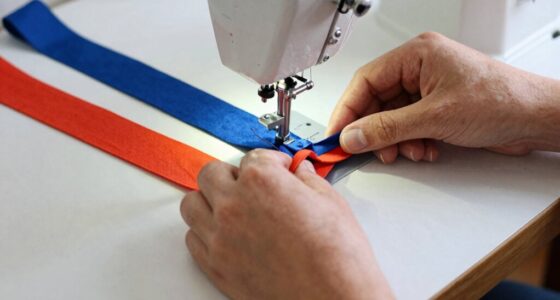
You’ll also want to adjust your sewing machine tension and stitch length. Increasing the stitch length to about 3-3.5mm helps prevent puckering in heavy fabrics. Proper tension ensures balanced stitches that hold the seam securely without gathering or distorting the fabric. Take your time sewing through thick layers, and consider using a walking foot if your machine has one. A walking foot evenly feeds the fabric, reducing slipping and bunching. Additionally, understanding how to handle seam tension can help you prevent fabric distortion and achieve professional results. Being aware of fabric handling techniques can further improve your sewing outcomes when working with heavy textiles.
Finally, handle the fabric gently during all stages—cutting, sewing, and pressing—to prevent stretching or distorting the shape. Always press after each seam and avoid pulling the fabric as you sew. A helpful tip is to stabilize the fabric with interfacing or starch when necessary, especially for very heavy or thick materials. By combining strong seam reinforcement, careful pressing techniques, and the right tools, you’ll achieve smooth, professional-looking seams even with the heaviest fabrics. Paying attention to fabric stability during your project will help maintain the shape and quality of your finished piece.
Popular right now

De'Longhi Linea Classic Espresso Machine with Adjustable Milk Frother

Breville Barista Pro Espresso Machine with Grinder, Brushed Stainless Steel

Breville Bambino Espresso Machine, Brushed Stainless Steel
As an affiliate, we earn on qualifying purchases.
Frequently Asked Questions
What Types of Needles Are Best for Heavy Fabrics?
For heavy fabrics, you should use larger needle sizes, like 90/14 or 100/16, to handle the thick material without breakage. Opt for needle types such as denim or upholstery needles, which are designed for heavy-duty fabrics. These needles have a stronger shaft and sharper point, helping you sew smoothly and prevent distortion of seams. Always match the needle size and type to your fabric to achieve the best results.
How Do I Choose the Right Sewing Machine Settings?
Think of your sewing machine as a trusted partner. To choose the right settings, start with a balanced thread tension—tight enough to hold seams but loose enough to prevent puckering. Adjust your presser foot pressure based on fabric heaviness; heavier fabrics often need a bit more pressure. Test on scrap fabric first. These steps help keep your stitches strong, even, and free from distortion.
Can Pre-Washing Fabrics Reduce Seam Distortion?
Pre-washing fabrics can definitely help reduce seam distortion by addressing fabric shrinkage early. The pre-wash benefits include removing excess dye and relaxing fibers, which minimizes future shrinking that could distort your seams after sewing. By pre-washing, you make certain your heavy fabric stays stable during construction, resulting in cleaner, more professional-looking seams. Just remember to follow fabric-specific washing instructions to avoid unexpected shrinkage and distortion down the line.
Are There Specific Seam Finishes Recommended for Heavy Fabrics?
Absolutely, heavy fabrics demand special seam finishes! You should reinforce seams with sturdy stitches like topstitching or double-stitched seams to prevent tearing. Edge finishing techniques like serging or binding help manage fraying and add durability. These methods create a resilient barrier against the fabric’s weight, ensuring your seams stay smooth and strong. Think of it as giving your project a superhero suit—ready to withstand anything!
How Does Fabric Grain Affect Seam Stability?
Fabric grain greatly impacts seam stability because it influences fabric stretch and how the fabric drapes. When you align the grain properly, especially with heavy fabrics, you reduce distortion and guarantee seams stay strong and smooth. Always check the grainlines before cutting, making sure they match pattern markings. Proper grain alignment prevents fabric stretch from distorting seams over time, giving your finished project a professional look and enhanced durability.
Conclusion
Now that you know how to prevent distorted seams with heavy fabrics, you’re ready to take on any project with confidence. Using proper techniques guarantees your seams stay strong and neat, giving your finished piece a professional look. Remember, patience and the right tools make all the difference. Don’t you want your sewing projects to turn out flawless and durable? Keep practicing, and soon, working with heavy fabrics will be second nature!