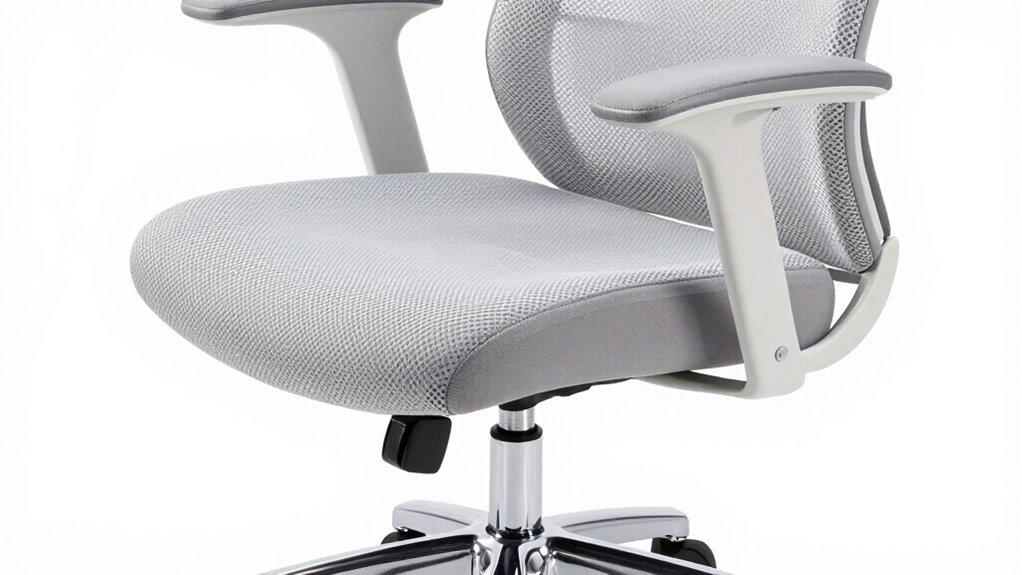

When choosing an ergonomic sewing chair, look for adjustable height and a work surface that aligns with your workspace to reduce strain. Make sure it has good foot support and a comfortable, well-padded seat with lumbar support for long sessions. Mobility features like smooth casters and a sturdy base help you navigate easily, while additional adjustable armrests and tilt functions promote better posture. If you want to discover more tips, keep exploring to make an informed choice.

Get business pricing on tools and workshop supplies
- Business-only prices and quantity discounts
- Tax-exempt purchasing
- Multiple users, one account, clear invoices
Key Takeaways
- Ensure adjustable height and work surface alignment for proper posture and comfortable reach.
- Look for a well-padded seat with lumbar support and breathable materials for long sewing sessions.
- Choose a chair with stable, smooth-rolling casters for mobility and safety.
- Prioritize ergonomic features like adjustable armrests and tilt mechanisms to support musculoskeletal health.
- Confirm the presence of foot support or footrest options to maintain proper leg and foot positioning.
If you spend hours sewing, investing in an ergonomic sewing chair can make a significant difference in your comfort and productivity. One of the first features to contemplate is foot support. Proper foot support guarantees your legs and feet are positioned correctly, reducing fatigue and preventing discomfort during long sewing sessions. Look for a chair with a footrest or the ability to add one, so your feet can rest flat and your knees stay at a comfortable angle. This not only improves your posture but also helps maintain circulation, which is vital when you’re seated for extended periods.
Adjustable height is another key factor to bear in mind. A good ergonomic sewing chair should allow you to easily modify the seat height, aligning your hips, knees, and feet into a natural, comfortable position. When your chair’s height is adjustable, you can tailor it to fit your body, ensuring your work surface is at the right level. This reduces strain on your back, neck, and shoulders, making your sewing experience more enjoyable and less tiring. It also helps you reach your sewing machine comfortably without hunching over or stretching awkwardly, which can cause long-term musculoskeletal issues.
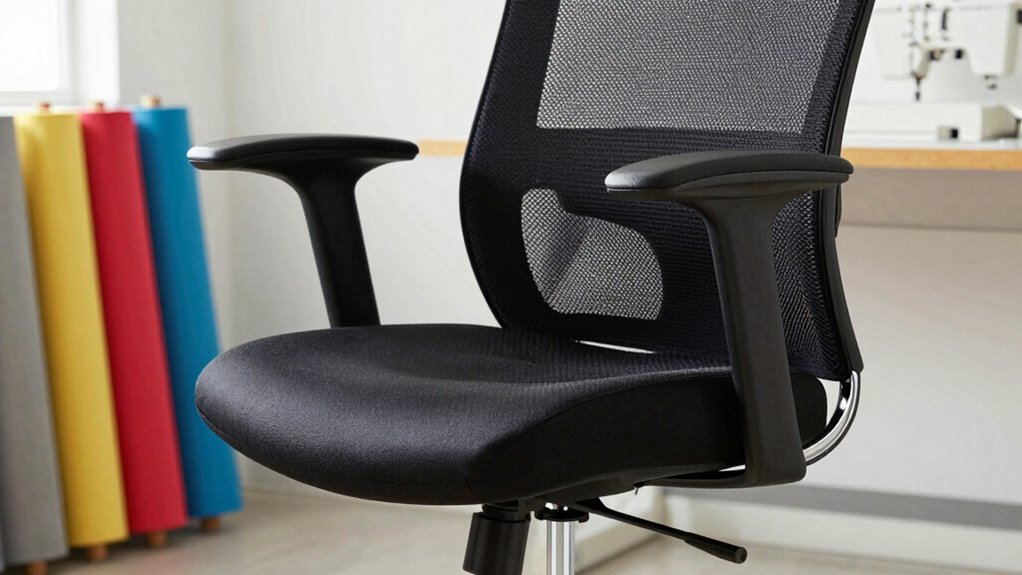
Beyond foot support and adjustable height, consider the chair’s overall design. A well-padded seat and backrest support your lumbar region, promoting good posture and reducing back pain. The backrest should be adjustable or at least contoured to fit the natural curve of your spine. Breathable materials are also beneficial, especially if you sew for hours at a time, as they help prevent overheating and sweating. Don’t forget to check the chair’s stability and mobility features—smooth-rolling casters and a sturdy base ensure you can move around your workspace easily without risking falls or tipping. Incorporating ergonomic features like adjustable armrests and tilt mechanisms can further enhance your comfort during long sewing sessions.
Ergonomic features such as adjustable armrests and tilt mechanisms add to your comfort, allowing you to customize your sitting position further. An adjustable armrest can help support your shoulders and arms, reducing tension as you handle fabric or sew intricate details. Tilt functions enable you to shift your position throughout your work session, preventing stiffness and promoting circulation. Additionally, ergonomic support plays a crucial role in maintaining proper alignment and preventing musculoskeletal issues over time. When shopping for your sewing chair, prioritize these adjustable and supportive features, as they directly impact how comfortably and efficiently you can work. Moreover, selecting a chair with adjustable lumbar support can also significantly contribute to long-term comfort and spinal health.
Popular right now

De'Longhi Linea Classic Espresso Machine with Adjustable Milk Frother

Breville Barista Pro Espresso Machine with Grinder, Brushed Stainless Steel
Dyson Car+Boat Cordless Handheld Vacuum
As an affiliate, we earn on qualifying purchases.
Frequently Asked Questions
How Adjustable Should the Chair’s Height Be?
Your sewing chair’s height should be highly adjustable to guarantee ideal stitching precision and comfortable fabric selection. Aim for a range that lets you sit with your feet flat on the floor, knees at a 90-degree angle, and your work at eye level. This way, you reduce strain, maintain focus, and improve accuracy, whether you’re working on delicate fabrics or heavy materials. A fully adjustable chair enhances your overall sewing experience.
What Lumbar Support Features Are Essential?
Your lumbar support should be a game-changer, not just a tiny bump! Look for adjustable lumbar height to perfectly match your lower back’s curve, ensuring maximum comfort. Support padding needs to be plush yet firm, providing steady support without feeling like a brick wall. When these features work together, they prevent nagging back pain, so you can sew for hours without discomfort. Your back will thank you!
Is Cushioning Important for Long Sewing Sessions?
Yes, cushioning is important for long sewing sessions. You want a chair with the right cushion density and padding material that offers comfort without sacrificing support. Too soft, and you’ll sink in, causing discomfort; too firm, and it might cause pressure points. Look for a chair with well-balanced padding that maintains its shape, providing consistent comfort and reducing fatigue during extended sewing periods.
How Do Armrests Affect Sewing Comfort?
Like a knight with his trusty shield, your armrests protect and support you during sewing. Properly padded armrests reduce strain, especially during long sessions, making your work more comfortable. Adjustable armrests allow you to customize height and angle, ensuring ideal support. This flexibility helps prevent fatigue and discomfort, so you can focus on your craft. With the right armrests, you’ll sew longer with less pain and more precision.
What Materials Are Best for Durability?
For durability, opt for a sewing chair with a sturdy frame made of metal or reinforced plastic, ensuring long-lasting support. Choose fabrics known for their durability, like heavy-duty polyester, nylon, or leather, which resist wear and tear. These materials withstand frequent use and provide comfort. Combining a strong frame with durable fabric guarantees your chair remains reliable, even during long sewing sessions, making it a smart investment.
Conclusion
Choosing the right ergonomic sewing chair can make all the difference in your comfort and productivity. Remember, sitting comfortably reduces strain and boosts your creativity. Did you know that poor posture while sewing can lead to chronic back pain, affecting up to 80% of adults at some point? Investing in a supportive chair isn’t just about comfort — it’s about safeguarding your health and enjoying your craft for years to come. So, pick wisely and sew happily!