
Before you cut fabric, experienced sewists check the grain lines to guarantee proper alignment, making sure the selvage runs straight and parallel. They also examine the fabric’s stretch and drape, addressing any distortions early on. Pattern matching is essential, especially for stripes or motifs, so they carefully position pieces to match repeats perfectly. These small steps prevent issues later, so if you want to make certain your project turns out flawless, there’s more to learn ahead.

Get business pricing on tools and workshop supplies
- Business-only prices and quantity discounts
- Tax-exempt purchasing
- Multiple users, one account, clear invoices
Key Takeaways
- They verify the fabric’s grainline to ensure proper drape and stability.
- They check fabric for distortions or biases to prevent skewed results.
- They confirm pattern placement and alignment for seamless pattern matching.
- They examine pattern repeats to optimize fabric use and maintain visual continuity.
- They straighten edges and secure pattern pieces to prevent shifting during cutting.
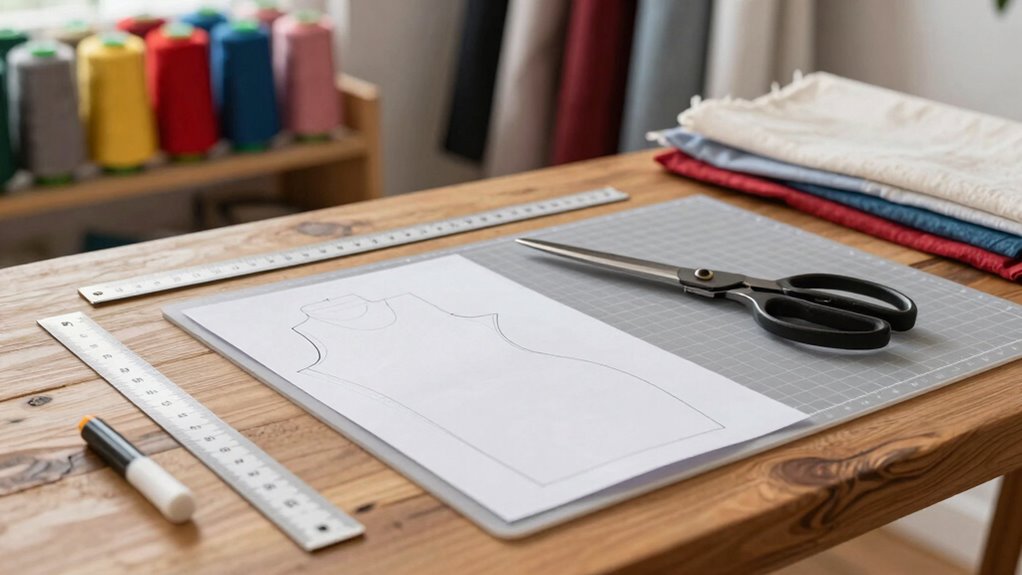
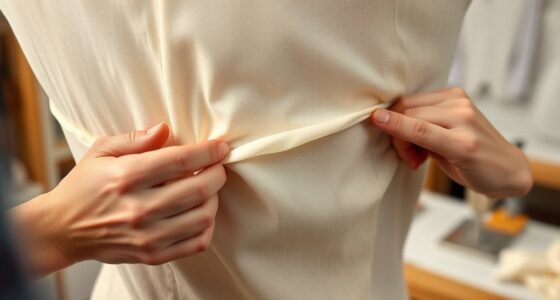
Before you cut into your fabric, experienced sewists know there are key steps to guarantee a successful project. One of the most essential is checking the fabric grain. You need to lay your fabric flat and identify the lengthwise (grain) and crosswise threads. The lengthwise graingrainruns parallel to the selvage, providing stability and drape, while the crosswise grain offers stretch and flexibility. Ensuring your fabric is properly aligned along the grain prevents distortion and uneven seams down the line. If the fabric is skewed or stretched, even slightly, your finished piece can look off or become difficult to sew smoothly. Take the time to straighten and align the fabric edges, and double-check that the grain lines are straight before proceeding. It’s a small step that saves you from headaches later. Additionally, many sewists check the fabric’s stretch and drape to understand how it will behave during construction and wear. They may also set the fabric’s grain by pressing it with an iron or steamer, which helps maintain the fabric’s alignment and stability during cutting. Recognizing distortions or biases early on helps prevent skewed patterns or uneven seams in the final product.
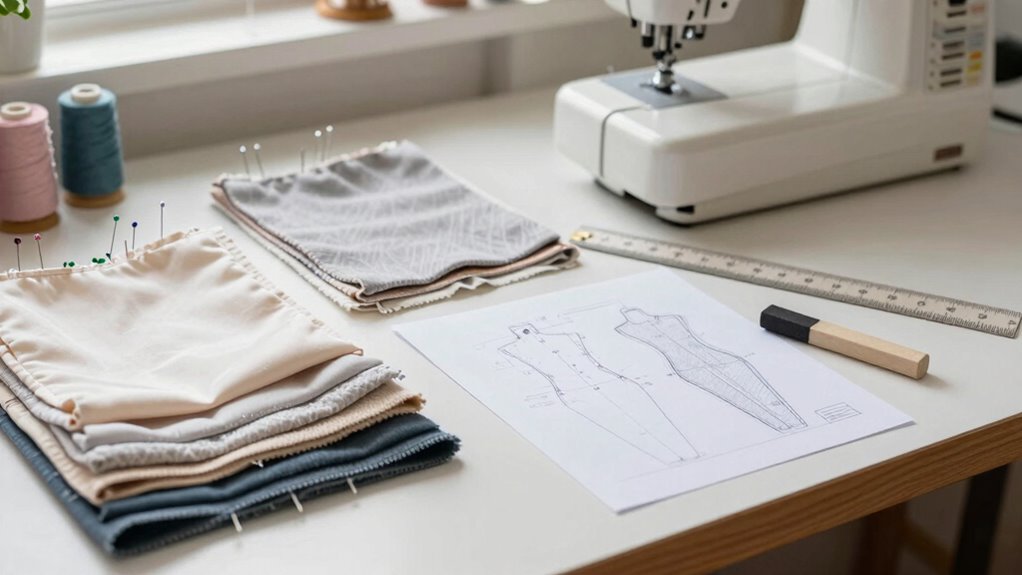
Next, pattern matching is an important detail that experienced sewists never overlook before cutting. If your fabric has a pattern—such as stripes, plaids, or motifs—you need to carefully align these pieces during cutting. This means laying out the pattern pieces so that the printed or woven designs match across seams, ensuring a professional appearance. Pattern matching can be time-consuming, but it’s worth the effort. You should pin or weigh down the pattern pieces, and double-check that the design lines up along edges and seams before cutting. This step helps prevent mismatched designs that can ruin the overall look of the finished garment. Skilled sewists also pay attention to how the pattern repeats on the fabric, so they can maximize fabric use while keeping the pattern consistent. Paying close attention to fabric’s pattern repeat is crucial for achieving a seamless, polished look in your sewing projects.
As an affiliate, we earn on qualifying purchases.
Frequently Asked Questions
How Do I Choose the Right Fabric for My Project?
To choose the right fabric for your project, start by considering the fabric pattern and color coordination to match your design vision. Think about the fabric’s weight, drape, and texture, ensuring they suit your garment or item. Visualize how the colors will blend with other fabrics or accessories. Trust your instincts, and don’t hesitate to test swatches—this helps you see how the fabric responds before you cut into it.
What Tools Should I Use to Prepare Fabric Before Cutting?
Think of preparing your fabric like tuning a guitar—you want everything just right. Use sharp scissors or rotary cutters for clean edges, and press the fabric to remove wrinkles. Check your thread tension to guarantee smooth stitches, and mark seam allowances clearly. A rotary cutter, ruler, and pattern weights are essential tools. Proper preparation helps avoid puckering and ensures your fabric stays in place, making your sewing more precise and enjoyable.
How Can I Ensure Accurate Fabric Measurement?
To guarantee accurate fabric measurement, start by aligning your fabric along the grain, which runs parallel to the selvage edge. Use a clear ruler or measuring tape to mark precise measurements, keeping the fabric flat and smooth. Always double-check your measurements before cutting, and consider pinning or basting to maintain accuracy. Properly aligning the fabric’s grain and selvage edge helps prevent distortion, ensuring your pieces fit together perfectly.
What Are Common Mistakes to Avoid Before Cutting?
Before cutting, avoid common mistakes like neglecting pattern alignment and grainline accuracy. Make certain your pattern pieces are properly aligned with the fabric’s grainline to prevent distortion and uneven hems. Double-check that patterns are correctly pinned, with edges matching precisely. Rushing can cause miscuts, so take your time. By paying attention to these details, you’ll achieve cleaner cuts and better-fitting garments, making your sewing project much more successful.
How Do I Handle Difficult or Slippery Fabrics?
To handle difficult or slippery fabrics, start with fabric stabilization by applying a stabilizer or spray adhesive to keep the fabric in place. Enhance your grip by using gloves or grip pads, which prevent slipping and provide better control. Pin or weight down the fabric edges securely before cutting, and take your time. These steps help you cut accurately and confidently, even with challenging, slippery textiles.
Conclusion
So, next time you’re about to cut into fabric, ask yourself: have you checked your pattern, measured twice, and assessed the grain? These small steps can save you time, fabric, and frustration in the long run. Experienced sewists know that preparation is everything—so why not start your project with the confidence that comes from mindful planning? After all, isn’t it better to sew with certainty than to fix mistakes later?
Fall yard work Picks
leaf blowers
As an affiliate, we earn on qualifying purchases.