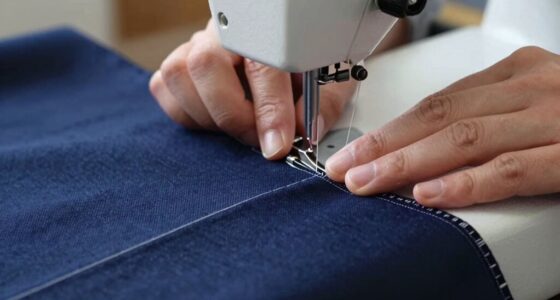
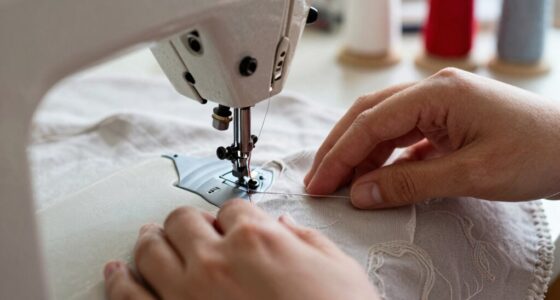
To handle fabric that slides under the needle, start by stabilizing it with pins, clips, or spray adhesives, especially on slippery or delicate materials. Adjust your machine’s tension appropriately for your fabric, and slow down your sewing speed for better control. Maintain gentle but firm guiding without forcing, ensuring your hands keep fabric steady. Using accessories like a walking foot can also help keep layers from slipping. Keep practicing these techniques, and you’ll improve your control over tricky fabrics.

Get business pricing on tools and workshop supplies
- Business-only prices and quantity discounts
- Tax-exempt purchasing
- Multiple users, one account, clear invoices
Key Takeaways
- Use pins or clips perpendicular to the seam line to secure fabric edges firmly.
- Adjust sewing machine tension appropriately for the fabric type to prevent slipping.
- Incorporate fabric stabilizers or spray adhesives on slippery or delicate fabrics.
- Sew at a slower speed for better control over fabric movement during stitching.
- Ensure proper fabric grain alignment to reduce slippage and maintain accurate seams.

Have you ever struggled with fabric slipping under the needle while sewing? It’s a common frustration, and it can throw off your stitching, making your project look uneven or sloppy. The key to preventing this is understanding how to manage sewing machine tension and fabric stabilization properly. When the tension isn’t set correctly, or if your fabric isn’t held steady, the fabric can move unexpectedly, causing skipped stitches or puckering. So, the first step is to check your sewing machine tension. Adjust it to match your fabric type—lighter fabrics often need less tension, while thicker or layered fabrics require more. Consult your machine’s manual for specific guidance, but always remember to test on scrap fabric first. Proper tension ensures that the stitches are balanced, pulling the fabric evenly and preventing slipping.
Proper tension and stabilization keep fabric from slipping, ensuring smooth, even stitches every time.
Fabric stabilization is equally important. You want to keep your fabric from shifting as you sew, which can be achieved through several methods. Using pins or clips to secure the fabric edges before sewing is one of the simplest solutions. Place them perpendicular to the seam line so they don’t interfere with your stitch. For slippery or delicate fabrics, consider using fabric stabilizers or spray adhesives designed specifically for sewing; these help keep the fabric anchored without adding bulk. Another technique is to sew with a walking foot, which feeds multiple layers of fabric evenly through the machine. This reduces the chance of the fabric sliding around under the needle, especially when working with thick or stretchy materials. Additionally, adjusting your sewing speed can make a difference. Slow down when working with tricky fabrics—this gives you better control and reduces the risk of slipping. Keep your hands guiding the fabric gently but firmly, maintaining consistent pressure without forcing it. If you notice the fabric still shifting, double-check your machine’s tension and your stabilization methods. Sometimes, simply stabilizing the edges more securely or tightening the tension slightly can make a notable difference. Using the appropriate sewing machine accessories can also help improve fabric control and prevent slipping. Being aware of different fabric types and how they respond to various stabilization techniques can further enhance your sewing results. Additionally, understanding the fabric’s grainline can help ensure your fabric is aligned properly, reducing the chances of slippage and distortion during sewing. It’s also helpful to learn about fabric grain to better manage fabric stability during sewing projects.
In essence, handling sliding fabric involves a combination of proper tension adjustments and effective fabric stabilization techniques. When these elements work together, your stitches become cleaner, and your project turns out more professional. Remember, every fabric type has its quirks, so don’t hesitate to experiment with tension settings and stabilization tools until you find what works best for your specific project. With patience and attention to detail, you’ll prevent fabric from slipping under the needle and achieve smooth, even stitches every time.
As an affiliate, we earn on qualifying purchases.
Frequently Asked Questions
Can Fabric Slip Under the Needle During Free-Motion Quilting?
Yes, fabric can slip under the needle during free-motion quilting. To prevent this, use a fabric grip or non-slip quilting gloves for better control. Also, adjust your sewing machine tension to keep the fabric steady. Maintaining consistent hand pressure and slowing down your stitching pace can help keep the fabric in place, ensuring smoother, more precise quilting.
Does Fabric Type Affect How Easily It Slides?
Yes, fabric type affects how easily it slides under the needle. Smooth, slippery fabrics like silk or satin tend to slide more, especially if their texture is slick. Adjust your sewing machine tension to hold these fabrics securely, and consider using a stabilizer or interfacing to reduce slipping. Thicker or textured fabrics, like denim or quilt cotton, generally stay in place better because their texture provides more grip.
Is Using a Walking Foot Helpful for Slippery Fabrics?
Think of your fabric as a slippery eel, trying to escape your grasp; a walking foot acts like a sturdy hand, keeping everything in line. Yes, it’s a great sewing machine tip for fabric stabilization, especially with slippery or delicate fabrics. Using a walking foot helps prevent fabric from sliding under the needle, ensuring even stitches and neat seams. It’s your secret weapon against fabric chaos, making sewing smoother and more controlled.
How Do I Prevent Multiple Layers From Shifting?
To prevent multiple layers from shifting, you should focus on fabric stabilization and proper needle techniques. Use pins or clips to secure layers, and consider a spray stabilizer for extra hold. Adjust your sewing machine tension if needed. Always sew slowly, especially when working with tricky fabrics, and use a straight stitch or a longer stitch length to minimize shifting. These methods help keep layers aligned and prevent slipping.
Can I Use Starch to Reduce Fabric Slippage?
Think of starch as your secret weapon, like the fairy godmother turning fabric into a more manageable partner. Yes, you can use starch to reduce fabric slippage, especially for slippery textiles. Apply it during fabric treatment, and it will stiffen the material slightly, making it easier to guide under your needle. Remember, choose the right needle for your fabric type, and starch will help keep everything steady, much like a well-trained team.
Conclusion
To keep your fabric from sliding under the needle, try using clips instead of pins or stabilizers like tissue paper for extra grip. Did you know that 78% of sewists report improved accuracy when using these techniques? By adjusting your grip and stabilizing your fabric, you’ll sew straighter lines and reduce frustration. With these tips, you’ll turn slipping fabric into a thing of the past, making your sewing projects smoother and more enjoyable.
Fall Picks
fall essentials
As an affiliate, we earn on qualifying purchases.