Starting a fabric swatch library is a smart habit that boosts your sewing skills and confidence. By collecting and organizing fabric samples, you improve communication with suppliers, refine color-matching abilities, and gain a deeper understanding of different textiles. This organized approach saves time and helps you make better project choices. As you expand your collection and keep it maintained, you’ll become a more confident and skilled sewist—discover how to get started and grow your library efficiently.
Key Takeaways
- Organize fabric samples by color, material, and project type to streamline selection and improve project planning.
- Regularly update and maintain your swatch collection to enhance fabric knowledge and sewing skills over time.
- Incorporate both physical and digital swatches for tactile feedback and quick access, balancing accuracy with convenience.
- Use your library to compare fabrics, match colors, and visualize combinations, reducing costly mistakes.
- Developing this habit boosts confidence, communication with suppliers, and turns sewing into a more professional craft.
Why Building a Fabric Swatch Library Boosts Your Sewing Skills
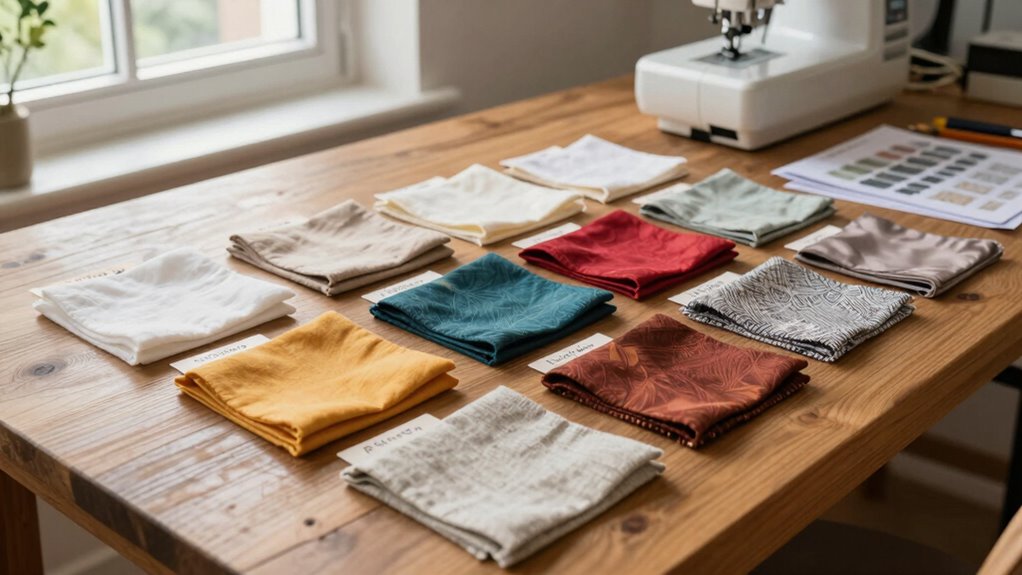
Creating a fabric swatch library is a practical step that substantially boosts your sewing skills. When you explore fabric psychology, you begin to understand how different textiles evoke emotions and influence design choices. This awareness helps you select fabrics that align with your creative goals and client needs. Studying textile history deepens your appreciation of fabric origins, weaving techniques, and cultural significance, enriching your design perspective. Building a swatch collection sharpens your ability to match textures, colors, and weights, making your projects more cohesive. It also enhances your visual memory of fabrics, enabling you to make informed decisions quickly. Incorporating knowledge of fiber composition allows you to better assess fabric durability and care requirements, elevating your craftsmanship. Additionally, understanding textile production techniques helps you recognize quality and craftsmanship in fabrics, further refining your selections. Developing an understanding of fabric maintenance ensures your projects are not only beautiful but also practical and long-lasting. Ultimately, this habit elevates your craftsmanship by merging emotional insight with historical context, making you a more intuitive and knowledgeable sewist.
How to Gather and Choose Fabrics for Your Swatch Collection

To build a valuable fabric swatch collection, start by identifying sources where you can find a diverse range of textiles. Visit local fabric stores, thrift shops, and online fabric sourcing sites to gather different textures, weights, and patterns. When selecting fabrics, consider how they’ll help you with color matching—bring your project ideas or color palettes to ensure your swatches complement your sewing goals. Look for a variety of materials, including cotton, silk, wool, and synthetics, to expand your understanding of how different fabrics behave. Be mindful of color consistency and note any variations. Focus on choosing fabrics that inspire you and will serve as useful references for future projects, making your swatch collection both versatile and practical. Additionally, understanding the logistics of hosting large-scale events like Summerfest can inspire ideas for organizing your fabric library efficiently. Incorporating digital organization tools can further streamline your collection management, helping you keep track of your swatch choices and project ideas with ease. A well-organized fabric library system can save you time and make your sewing process more enjoyable and productive. Exploring curated fabric selections can also help you discover high-quality options that elevate your work and inspire new creative directions. You might also explore cybersecurity measures to protect your digital fabric catalog from unauthorized access.
How to Organize Your Fabric Swatch Library for Easy Access
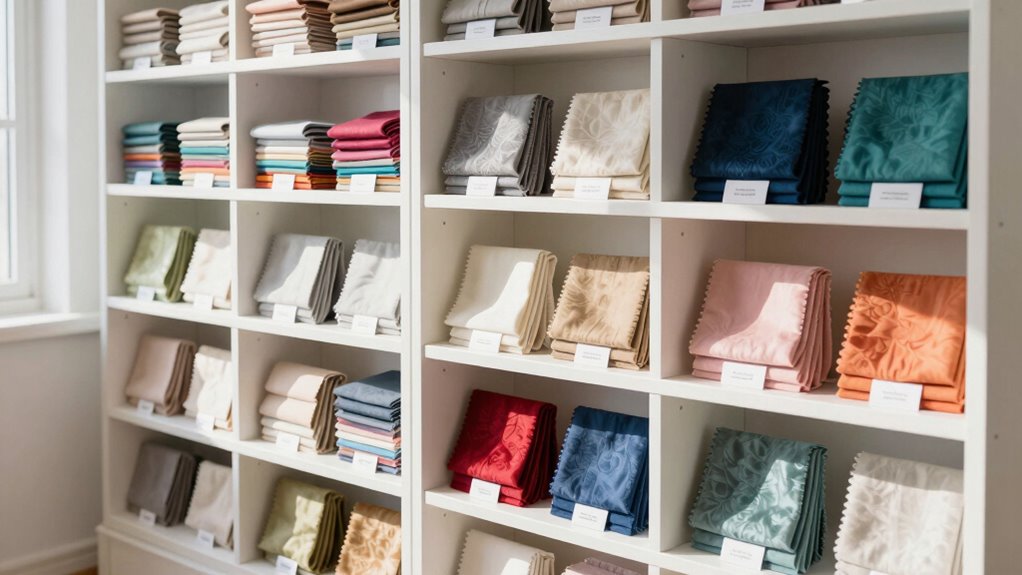
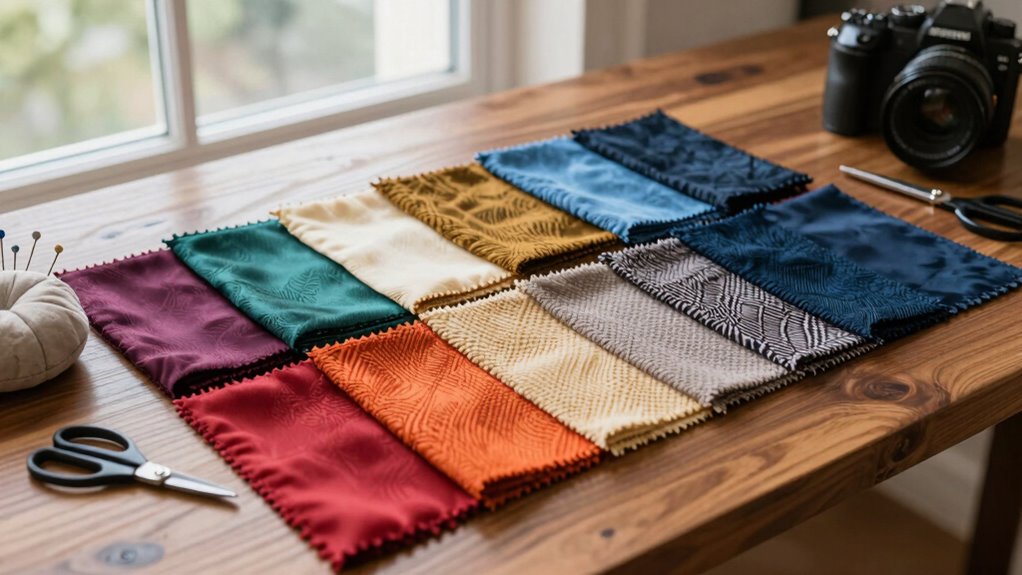
Organizing your fabric swatch library for easy access starts with establishing a logical system that suits your workflow. Group swatches by color matching to quickly find shades that coordinate, and consider sorting by fabric durability to match projects with appropriate materials. Use labeled dividers or folders for different color families, and keep fabric types separate if needed for specific techniques. Store swatches in a way that allows for easy flipping through, like a binder with clear sleeves or a dedicated drawer. Regularly update your collection, removing duplicates or unused swatches. Implementing a free floating storage method can help you adapt your organization as your collection grows. This system guarantees you can quickly identify the right fabric for your project, streamline your design process, and make informed decisions based on fabric durability and color matching.
What Are the Best Ways to Make Durable, Accurate Fabric Swatches?
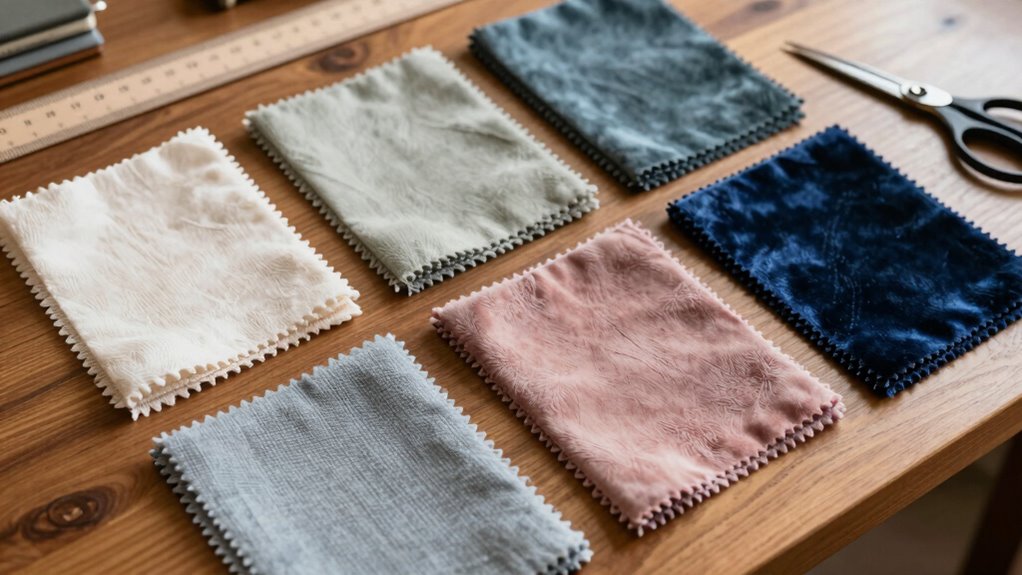
To make durable, accurate fabric swatches, start by choosing high-quality fabrics that won’t fade or tear easily. Use precise cutting techniques to guarantee each swatch matches your measurements perfectly. Store your samples properly to prevent damage and keep them true to size over time.
Selecting Quality Fabrics
Choosing high-quality fabrics is essential for creating durable and accurate swatches that represent the material effectively. To do this, start by exploring reputable fabric sources, whether local shops or trusted online suppliers. Pay attention to textile textures; different weaves and finishes can impact how well a swatch reflects the fabric’s true characteristics. When selecting fabrics, opt for materials that feel substantial and have consistent color and weave. Avoid cheap or thin fabrics that may distort or fade over time. Handling samples in person allows you to assess softness, weight, and drape, ensuring your swatches stay true to the original. Investing in quality fabrics guarantees your swatch library remains a reliable reference for future sewing projects.
Precise Cutting Techniques
Achieving durable and accurate fabric swatches starts with precise cutting techniques that guarantee clean edges and consistent sizes. First, always align your fabric so that the edges follow the fabric grain, ensuring the swatch maintains its integrity and drape. Use a clear ruler or straightedge to mark your cutting lines accurately, avoiding distortion. When cutting, carefully follow the selvage edges, which are the most stable parts of the fabric, to prevent fraying and uneven edges. A rotary cutter with a sharp blade offers clean, straight cuts, especially for multiple layers. Avoid pulling or stretching the fabric while cutting, as this can distort the shape. With attention to these details, your swatches will be precise, durable, and ready for your sewing projects.
Proper Storage Methods
Proper storage is essential to keep your fabric swatches accurate and durable over time. To protect your swatches, choose fabric storage solutions that prevent fading, stretching, or damage. Store swatch organization in labeled folders or boxes, keeping fabrics flat or rolled to avoid creases. Use acid-free pages or sleeves to prevent deterioration and maintain color integrity. Keep your swatches away from direct sunlight, humidity, and extreme temperatures. Implement a systematic approach, such as categorizing by fabric type, color, or project, to easily locate what you need. Regularly check your storage setup for signs of wear or damage. Incorporating storage maintenance routines ensures your fabric swatches stay in optimal condition. Proper storage methods ensure that your fabric swatches remain true to their original qualities, making your library a reliable resource for accurate color matching and fabric decisions.
How to Use Your Swatch Library to Match Colors and Plan Projects

Organizing your swatch samples makes it easier to compare colors and find perfect matches quickly. When you match colors confidently, you can avoid costly mistakes and guarantee your project looks cohesive. Planning your projects strategically with your swatch library helps you visualize how different fabrics work together from the start. Incorporating color matching techniques can further enhance your ability to select harmonious fabrics and create more polished designs. Utilizing visualization methods can also improve your overall fabric coordination skills, ensuring a seamless end result.
Organize Swatch Samples Effectively
To make the most of your swatch library, start by sorting samples into logical categories such as color families, material types, or project uses. This organization simplifies color matching and helps you quickly find the right fabric for any project. Grouping fabrics by color ensures you can compare shades easily, while sorting by material type highlights fabric durability and suitability for specific items. Consider using labeled folders or containers for each category to keep your collection tidy and accessible. Regularly reassess your organization system as your collection grows, so your swatches remain easy to navigate. A well-organized library saves time, improves your fabric choices, and enhances your understanding of fabric properties, making every project more efficient and successful.
Match Colors With Confidence
Having a well-curated swatch library makes matching colors across different fabrics much easier and more accurate. By comparing your fabric samples directly, you gain confidence in selecting harmonious hues for your projects. This approach minimizes the guesswork and helps you achieve a cohesive look in your finished pieces. This is especially useful when considering fabric dyeing techniques or exploring textile history, where authentic color matching is essential. Use your swatches to identify subtle differences and ensure consistency. For example, matching a deep burgundy with a similar shade can transform a garment. Keep a color reference chart nearby to note specific shades. Here’s a quick comparison:
| Fabric Swatch | Color Name | Use Case |
|---|---|---|
| Swatch 1 | Burgundy | Vintage-inspired dress |
| Swatch 2 | Crimson | Fabric dyeing projects |
| Swatch 3 | Rose | Decorative accents |
| Swatch 4 | Maroon | Historical reproductions |
Additionally, maintaining an organized color reference chart helps streamline your workflow and enhances your ability to make informed decisions in your sewing projects. Understanding fabric color matching techniques can further improve your results and expand your creative options. Incorporating proper color matching methods from textile and garment design can elevate your sewing outcomes and ensure your projects are visually harmonious. Developing a swatch organization system can save you time and make it easier to locate the perfect fabric samples for each project. Moreover, practicing consistent color documentation allows for better replication of successful color schemes in future projects.
Plan Projects Strategically
Planning your projects with your swatch library guarantees color harmony and efficiency. When fabric selection, you can quickly compare swatches to see how different textures and shades work together, streamlining your project planning. Use your swatches to visualize how fabrics will look once sewn, helping you avoid mismatched colors or unsuitable textures. By organizing your swatch library based on color families or fabric types, you can easily identify complementary options for your designs. This strategic approach minimizes guesswork, saves time during fabric shopping, and ensures your finished project looks cohesive. Incorporating your swatch library into your process makes fabric selection more intentional, boosting your confidence and creativity as you bring your sewing ideas to life. Deep product research helps you choose the best fabrics and accessories that match your style and project needs. Additionally, maintaining a well-curated swatch library encourages you to explore different fabric combinations, expanding your design versatility, and inspiring new ideas. Utilizing professional services such as consultation or project management can also help refine your fabric choices and overall project execution.
Should You Keep a Digital or Physical Fabric Swatch Library? Pros and Cons

Deciding whether to keep a digital or physical fabric swatch library depends on your workflow and preferences. Digital storage offers easy access, quick searchability, and space-saving benefits, perfect if you prefer organized, clutter-free records. Physical organization, on the other hand, provides tactile feedback, color accuracy, and a visual feel that digital images can’t replicate. Consider the table below to compare:
| Aspect | Digital Storage | Physical Organization |
|---|---|---|
| Accessibility | Instant access from devices | Requires physical handling |
| Space | Minimal storage space needed | Takes up physical space |
| Cost | Free or low-cost apps/software | Materials may cost money |
| Durability | Files may corrupt or be lost | Physical swatches last longer with care |
| Searchability | Quick keyword searches | Manual browsing |
Additionally, understanding the value of physical swatches can help you decide which method best suits your sewing habits. Recognizing the importance of accurate color representation can also influence your choice, especially when matching fabrics for projects.
How to Maintain and Expand Your Fabric Swatch Collection Over Time

To keep your fabric swatch collection organized and growing, regular maintenance is essential. Start by reviewing your collection periodically, discarding duplicates or damaged swatches. To expand, explore new fabrics through fabric dyeing experiments, which help you understand colorfastness and dyeing techniques. Incorporate these insights into your projects, adding fresh swatches that showcase different textures, weights, and finishes. Keep detailed notes on each swatch’s fabric type, dyeing process, and sewing techniques used. This helps you recognize patterns in how fabrics behave and how dyes react. Regularly updating your collection with fresh samples ensures it stays relevant and useful. Additionally, understanding fabric composition can influence your choice of dyes and finishing methods. Gaining knowledge about fabric care can also extend the longevity of your fabric samples and projects. Developing a mindful organization system can make it easier to locate and compare swatches as your collection grows. Over time, this practice deepens your fabric knowledge and hones your sewing skills, making you a more confident and versatile sewist.
How a Well-Organized Swatch Library Turns You Into a More Confident Sewist
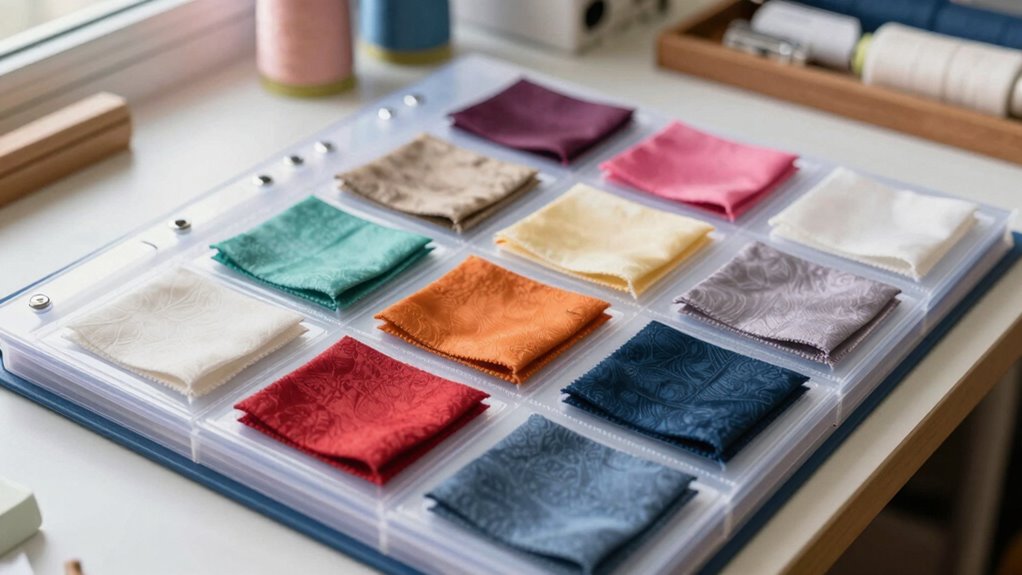
A well-organized fabric swatch library boosts your confidence by giving you immediate access to a diverse range of samples and information. When you can quickly reference fabric care instructions and sewing terminology, you make smarter choices for your projects. You’ll understand which fabrics are suitable for different garments and how to handle delicate or tricky materials. This familiarity reduces hesitation during sewing, allowing you to troubleshoot issues more effectively. Plus, having clear visual and technical references helps you communicate better with fabric suppliers or pattern makers. Over time, this organized system enhances your skills and knowledge, making you feel more empowered and confident. Ultimately, a structured swatch library transforms uncertainty into competence, turning you into a more confident sewist.
Frequently Asked Questions
How Often Should I Update or Refresh My Fabric Swatch Collection?
You should refresh your fabric swatch collection every six months to stay current with fabric trends and seasonal updates. This keeps your library relevant, inspiring your sewing projects with the latest colors, textures, and patterns. Regular updates help you make informed choices, guarantee your fabric options match seasonal themes, and keep your skills sharp. Commit to reviewing and adding new swatches periodically so your collection always reflects the freshest trends.
What Are the Best Storage Solutions for Small Fabric Swatch Collections?
For small fabric swatch collections, use clear plastic sleeves or small binders for easy fabric storage and organization tips. Label each swatch with details like fiber content and purchase date. Keep your collection in a dedicated drawer or on a compact shelf to prevent clutter. You might also consider using a photo box for quick access. This approach keeps your fabric swatches organized, protected, and easy to browse whenever you need inspiration.
How Can I Incorporate Swatch Libraries Into My Sewing Workflow Efficiently?
You can incorporate swatch libraries into your sewing workflow by organizing them with clear labels for color matching and fabric durability. Keep your swatches handy in a portable binder or digital app for quick reference during project planning. Regularly update your collection, and use the swatches to compare new fabrics, ensuring color consistency and durability. This approach streamlines decision-making and helps you choose the best fabrics efficiently.
Are There Specific Tools or Software to Help Manage Digital Swatch Collections?
You might worry digital tools are complicated, but many simplify swatch organization with user-friendly interfaces. Apps like Airtable or Notion offer digital cataloging that keeps your fabric swatches organized and accessible. These tools let you easily categorize, search, and update your collection, saving time and reducing clutter. Embracing them helps you manage your fabric library efficiently, making your sewing projects smoother and more enjoyable.
How Can I Personalize My Swatch Library to Suit My Sewing Style?
You can personalize your swatch library by categorizing fabrics based on your fabric type preferences and color palette choices. Label each swatch with details like fiber content, weight, and suitable projects. Use color coding or tags to organize by color or style, making it easier to find the perfect fabric for your sewing projects. Regularly update your library as your preferences evolve to stay inspired and organized.
Conclusion
Building a fabric swatch library might seem like a nerdy habit, but it’s a game-changer for your sewing confidence. As you gather and organize your fabrics, you’ll notice how often a perfect match or innovative idea pops up just when you need it. Soon, this quiet practice becomes your secret weapon—turning everyday moments into opportunities to improve your skills and create stunning projects. Who knew that a simple collection could release your full sewing potential?