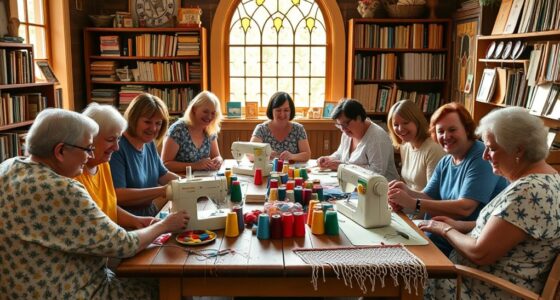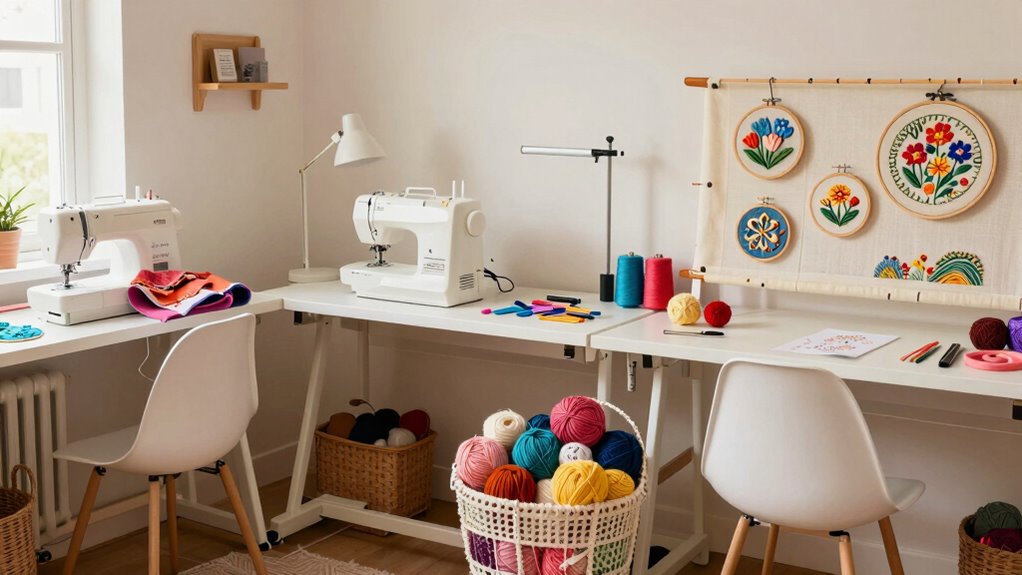

To rotate smoothly between sewing, knitting, and embroidery, stay organized by designating specific spaces and storage for each craft. Sort your supplies by type and color, and keep small tools in labeled containers to prevent clutter. Develop routines for shifting, such as winding leftover threads onto bobbins and returning tools to their designated spots. Maintaining a workflow that seamlessly moves from one craft to another helps reduce chaos and keeps your creativity flowing—there’s more to uncover if you keep exploring.

Get tools and workshop supplies delivered free — and shop member deals
- Fast, free delivery on millions of items
- Access to Prime Big Deal Days deals on October 6–7
- Prime Video, Amazon Music and more included
Key Takeaways
- Designate specific workspaces for each craft to prevent clutter and streamline transitions.
- Organize and label all supplies and tools for quick access and easy switching.
- Implement a consistent routine that includes cleaning and resetting stations between crafts.
- Use storage solutions that accommodate multiple crafts and allow effortless supply swapping.
- Manage threads by sorting, winding leftover threads, and storing them in labeled containers to minimize tangling.
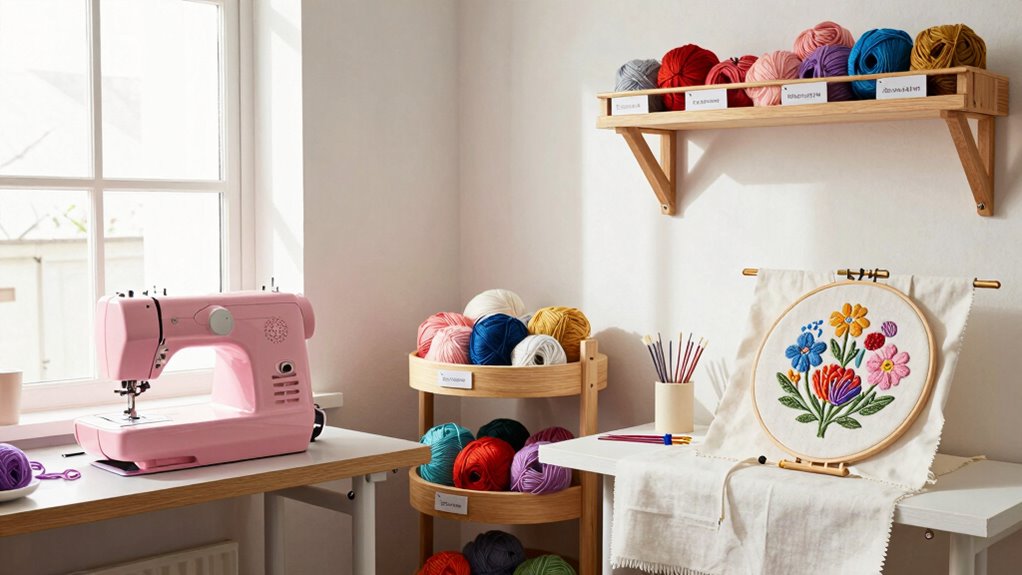
Balancing sewing, knitting, and embroidery can keep your creative skills sharp and prevent burnout. When you switch between these crafts, staying organized is key to maintaining momentum without feeling overwhelmed. One of the best ways to do this is by paying attention to thread management. Keep your threads sorted by type, color, and project. Use small containers or thread organizers to avoid tangling and make it easy to find what you need. When you finish a project or change crafts, spool or wind leftover threads neatly onto bobbins or thread cards. This not only saves time but also prevents messes. Additionally, label your threads or store them in clearly marked containers so you can quickly grab the right color for your current project, reducing frustration and keeping your workflow smooth. Proper thread organization is essential for efficient craft rotation and smooth progress. Developing a consistent workflow can further help you transition smoothly between crafts and keep your workspace organized. Creating a designated workspace for each craft can also streamline your process and prevent cross-contamination of supplies, making transitions more seamless. Incorporating proper storage solutions can enhance your ability to switch between projects effortlessly. Paying attention to craft-specific storage can help keep supplies organized and easily accessible, saving you time and effort during transitions.
As an affiliate, we earn on qualifying purchases.
Frequently Asked Questions
How Do I Organize Tools for Multiple Crafts Efficiently?
To organize tools efficiently, prioritize your craft projects to determine what tools you need most often. Create a dedicated, well-lit creative workspace setup with labeled storage for each craft—sewing, knitting, and embroidery. Use stackable bins or wall-mounted organizers to keep supplies accessible yet tidy. Regularly declutter and rotate tools based on your current projects, making your workspace adaptable and preventing chaos as you switch between crafts seamlessly.
What Are the Best Storage Solutions for Craft Supplies?
For the best storage solutions, use creative storage options like clear bins and stackable drawers for easy access. Implement labeling systems on each container to keep your supplies organized and quickly find what you need. Consider dedicating specific zones for sewing, knitting, and embroidery, so your tools stay sorted and accessible. This setup minimizes chaos, making it simple to switch between crafts without losing track of your supplies.
How Can I Prevent Fabric and Thread Mix-Ups?
To prevent fabric and thread mix-ups, imagine your workspace as a secret agent’s lair—only the coolest agents, or in this case, fabrics and threads, get their own zones. Use color-coded thread containers and label fabric types clearly. Keep similar shades and textures separate, so your red embroidery thread doesn’t sneak into your blue knitting yarn. With this, your projects stay pristine, and chaos stays out of your crafty lair.
What Safety Precautions Should I Follow When Switching Crafts?
When shifting crafts, you should wear safety gear like goggles and masks to protect your eyes and lungs from dust, fibers, or fumes. Make certain your workspace has good ventilation to prevent inhaling any airborne particles. Keep tools organized and clean, and turn off and unplug machines before switching tasks. These precautions help keep you safe and maintain a tidy, efficient environment as you move between sewing, knitting, and embroidery.
How Do I Schedule Time Effectively for Each Craft?
You should start by scheduling dedicated blocks of time for each craft, using craft project planning to allocate realistic periods. Employ time management techniques like setting timers or prioritizing tasks to stay focused. Keep your workspace organized for quick shifts. Regularly review and adjust your schedule to balance your hobbies, ensuring you enjoy each without feeling overwhelmed. This approach helps you stay productive and passionate about sewing, knitting, and embroidery.
Conclusion
As you switch smoothly between sewing, knitting, and embroidery, imagine your workspace transforming with each craft—threads weaving through fabric, needles dancing in your hands, and colorful yarns coming alive. With a little organization, your creative flow stays uninterrupted, like a gentle stream flowing through different landscapes. Embrace the rhythm of your crafts, and let your imagination bloom freely across each project, turning chaos into a harmonious symphony of stitches, textures, and vibrant designs.
Fall yard work Picks
leaf blowers
As an affiliate, we earn on qualifying purchases.