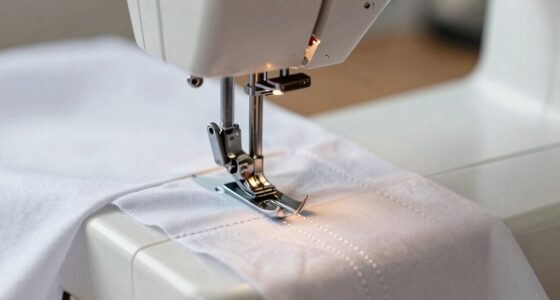
To tell if your sewing machine is set up correctly, start by checking the tension—make sure stitches are even on top and bottom, adjusting the dial gradually. Inspect the needle to verify it’s straight, centered, and tightly secured. Sew test stitches on scrap fabric, looking for consistent stitch length and no skips. Listen for smooth operation and check for loose parts or obstructions. Proper setup prevents problems and guarantees professional-looking results—learn more for perfect stitches every time.

Get business pricing on tools and workshop supplies
- Business-only prices and quantity discounts
- Tax-exempt purchasing
- Multiple users, one account, clear invoices
Key Takeaways
- Check for even, balanced stitches on test fabric, indicating proper tension and alignment.
- Ensure the needle is straight, centered, and securely fastened.
- Confirm the machine runs smoothly without unusual noises or rough operation.
- Verify presser foot pressure matches the fabric type for consistent stitching.
- Regularly clean and maintain the machine to prevent issues and ensure optimal performance.

Have you ever struggled with uneven stitches or skipped stitches while sewing? It’s frustrating when your machine isn’t working as smoothly as it should, but often, the problem comes down to simple setup issues. One of the first things to check is your thread tension. If your tension is too tight, your stitches may bunch up or break; if it’s too loose, your stitches won’t hold properly, and your seam might look uneven. To test this, sew a few straight lines on scrap fabric. If the stitches are inconsistent or loops form on the underside, adjust your tension dial gradually until the stitches appear balanced on both sides. Remember, proper thread tension is vital to a professional-looking finish.
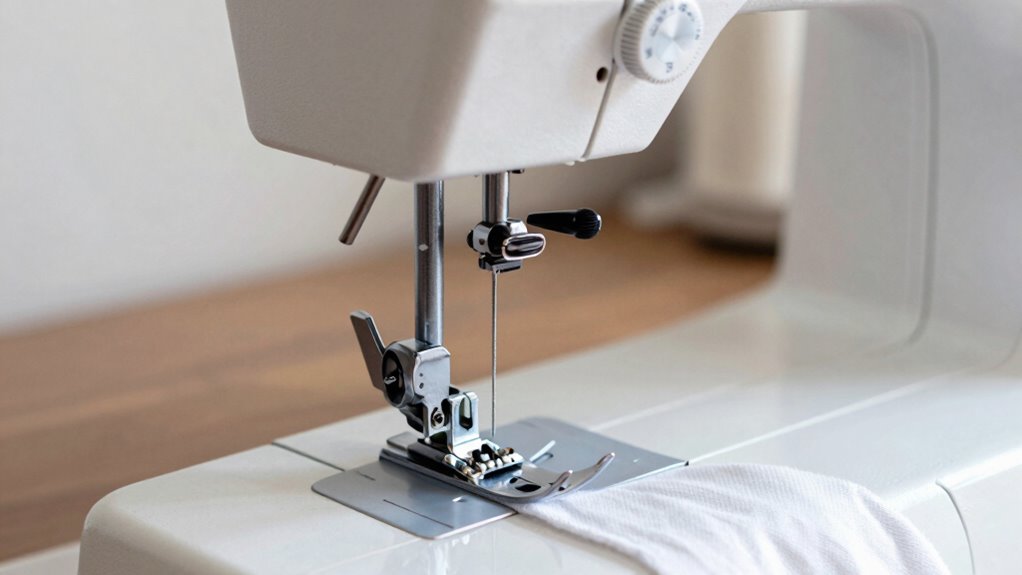
Next, focus on needle alignment. A misaligned needle can cause skipped stitches, fabric snagging, or even damage to the needle itself. To verify correct alignment, remove the needle and inspect how it sits in the needle clamp. It should be straight and centered, not tilted or off to one side. When reinserting, make sure it’s fully inserted and tightened securely. Also, ensure you’re using the right needle size and type for your fabric and thread. An improperly aligned or incompatible needle can lead to needle strikes or uneven stitching, disrupting your sewing project. Taking a moment to double-check needle alignment before you start sewing can save you time and frustration later.
Ensure your needle is straight, centered, and securely tightened for smooth, even stitches.
Another way to tell if your machine is set up correctly is to examine your stitch quality. Sew test lines on scrap fabric and look for consistent tension, even stitch length, and no skipped stitches. If your stitches are uneven or irregular, it’s time to revisit your setup. Adjust the tension and make sure your needle is properly aligned, then test again. Also, check your bobbin thread tension, as it plays an essential role alongside the upper thread tension. When everything is correctly set, your stitches will be tight, even, and durable. Regularly cleaning and maintaining your machine can also help ensure optimal performance, and understanding how to properly adjust components will help you troubleshoot issues more effectively. Additionally, following the manufacturer’s instructions for setup and maintenance can help you avoid common setup errors. Proper machine setup includes understanding how to adjust various components to match your sewing needs, which can significantly improve your results.
Finally, pay attention to the overall operation of your machine. Listen for unusual noises, and observe how smoothly it runs. If it feels rough or vibrates excessively, check for loose parts or obstructions. Confirm that the presser foot pressure is appropriate for your fabric type. These small details often indicate whether your machine is properly set up or if it needs maintenance. Regularly inspecting your machine’s internal components and understanding how they work together can help prevent issues before they arise. When all these elements—thread tension, needle alignment, stitch quality, and machine operation—are in harmony, you can be confident your machine is correctly set up and ready to produce beautiful, consistent stitches every time.
As an affiliate, we earn on qualifying purchases.
Frequently Asked Questions
Can I Use Any Type of Thread on My Sewing Machine?
You can’t use any type of thread on your sewing machine; thread compatibility is crucial. Check your machine’s manual for recommended thread types, like polyester or cotton, to avoid jams or damage. Also, consider thread color matching to guarantee your seams look neat and professional. Using the right thread for your fabric and project helps your machine run smoothly and results in a clean, durable finish.
How Often Should I Oil My Sewing Machine?
You should oil your sewing machine every 8 to 10 hours of use or when it starts to sound noisy. Regular thread maintenance and machine cleaning prevent buildup that can cause jams or uneven stitches. Even if you don’t sew daily, oil it monthly to keep it running smoothly. Proper lubrication guarantees your machine’s longevity and top performance, making your sewing projects hassle-free and enjoyable.
What Should I Do if the Machine Is Making Unusual Noises?
If your sewing machine makes unusual noises, start with machine troubleshooting by checking for loose or tangled threads, fabric jams, or debris inside. Make sure the machine is properly oiled for noise reduction, especially around moving parts. Adjust the tension settings if needed. If noise persists, consult your machine’s manual or take it to a professional. Regular maintenance helps prevent future issues and keeps your sewing experience smooth.
How Do I Adjust the Tension for Different Fabrics?
To adjust the tension for different fabrics, start by checking your thread compatibility—using the right thread guarantees smooth stitching. Then, turn the tension dial gradually to increase or decrease fabric tension, depending on whether your stitches are too loose or tight. Test on a scrap piece first, and tweak the tension until your stitches look balanced on the fabric, making sure even, professional results.
Is It Necessary to Calibrate My Sewing Machine Regularly?
Think of your sewing machine as a finely tuned instrument—regular calibration keeps it singing smoothly. Yes, it’s necessary to calibrate your machine periodically to guarantee perfect stitches. Proper tension adjustment, especially with thread compatibility, prevents puckering or skipped stitches. Over time, parts may loosen or shift, so routine checks keep your machine humming along beautifully, making your sewing projects less frustrating and more satisfying.
Conclusion
Once your sewing machine hums smoothly like a well-tuned orchestra, you know it’s set up right. Double-check your threading, tension, and stitch selection, and run a quick test fabric. If everything glides effortlessly, your machine is ready to create beautiful stitches. Think of it as planting a seed—when all the conditions are just right, your sewing project will blossom with perfection. Keep these tips in mind, and your sewing journey will always stay on the right track.
Fall yard work Picks
leaf blowers
As an affiliate, we earn on qualifying purchases.