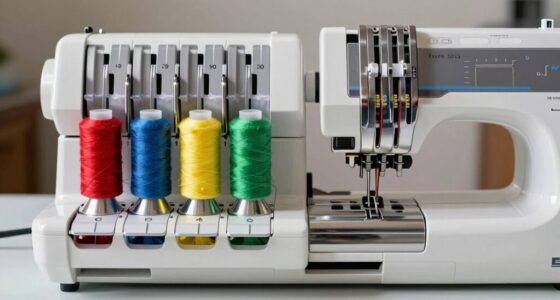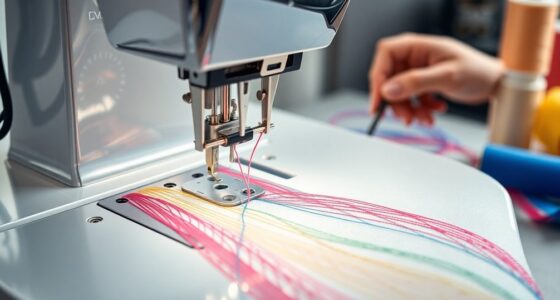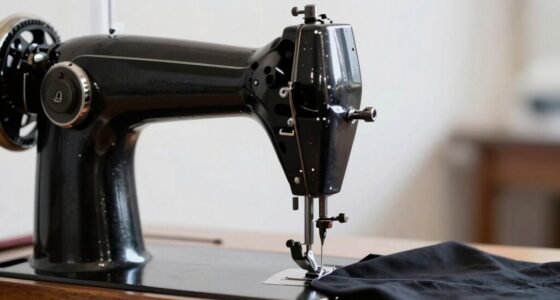
Feed dogs are essential for controlling fabric movement during sewing, affecting how well stitches turn out on different materials. They grip and pull fabric steadily, but their effectiveness varies based on fabric type—lighter fabrics may need their feed dogs lowered, while heavier fabrics require a firm grip. Proper cleaning, alignment, and adjustments keep them working properly. When you understand how to adapt your feed dogs, your sewing results become much more consistent; if you want to master this, keep exploring further.

Get business pricing on tools and workshop supplies
- Business-only prices and quantity discounts
- Tax-exempt purchasing
- Multiple users, one account, clear invoices
Key Takeaways
- Feed dogs move fabric steadily, ensuring consistent stitches across various fabric types.
- Proper feed dog grip prevents fabric slipping, puckering, or uneven stitching.
- Adjusting feed dog height or coverage helps manage different fabric weights and textures.
- Regular cleaning and maintenance keep feed dogs functioning optimally for all fabrics.
- Specialized techniques, like slower sewing speeds or stabilizers, complement feed dog control on tricky fabrics.
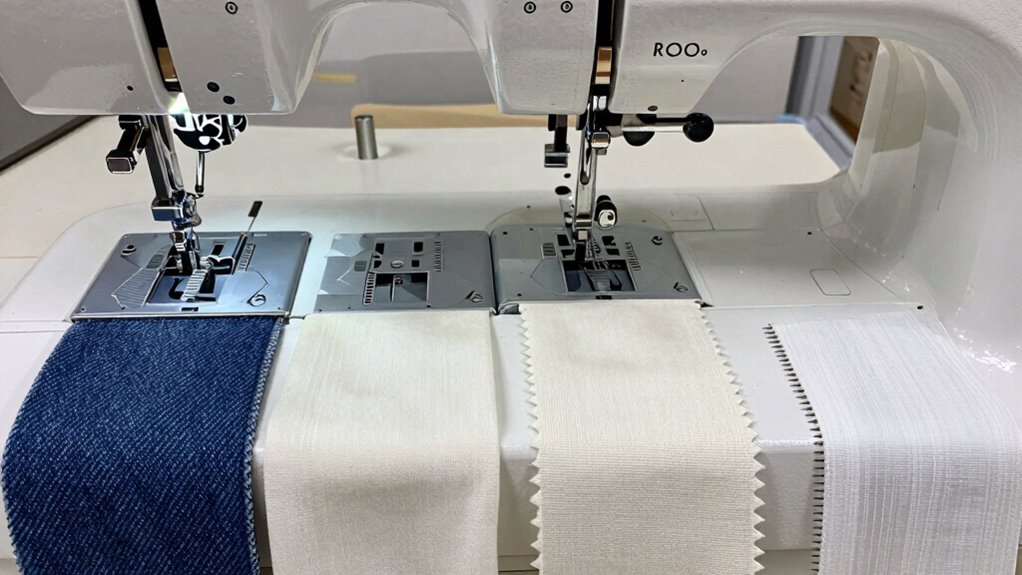
Understanding how feed dogs and fabric control work together is vital for achieving smooth, even stitches. When you’re sewing, the feed dogs are responsible for moving the fabric steadily beneath the needle, which makes fabric stretch management and sewing machine maintenance essential components of your process. If either of these elements isn’t functioning properly, your stitches can become uneven, skipped, or puckered, especially when working with different types of fabric.
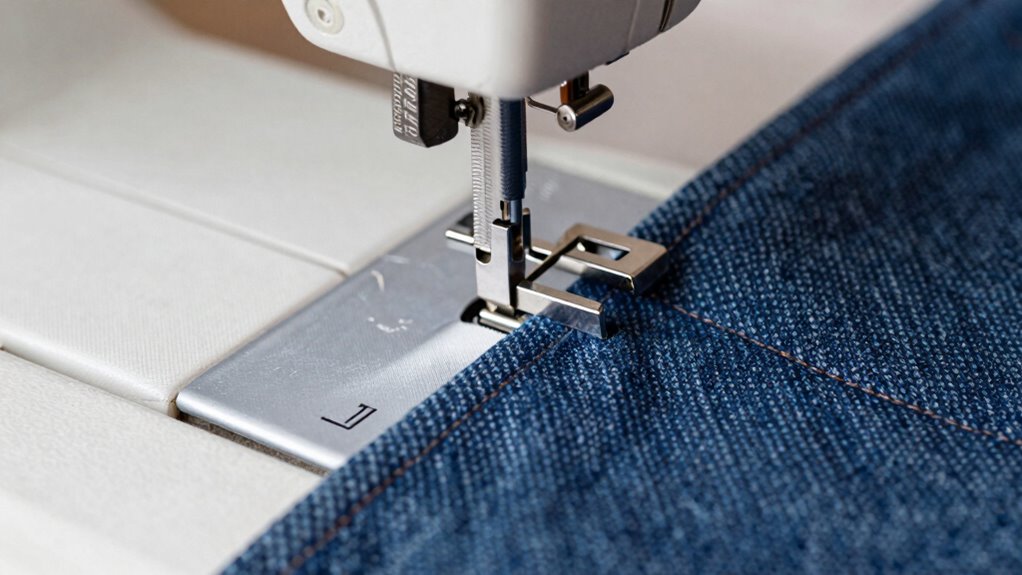
Feed dogs are designed to grip and pull fabric forward with each stitch. Their effectiveness depends on the fabric’s weight, texture, and stretch. For lightweight or delicate fabrics like chiffon or silk, the feed dogs might need to be lowered or covered to prevent the fabric from slipping or bunching. Conversely, when sewing heavier fabrics such as denim or canvas, the feed dogs must grip firmly to keep the fabric moving consistently. If the feed dogs aren’t operating correctly, you’ll notice issues like skipped stitches or uneven rows. Regular sewing machine maintenance, including cleaning lint and debris from the feed dog area, guarantees they grip fabric properly and maintain proper fabric stretch management.
Proper feed dog function ensures smooth stitching across all fabric types and prevents skipped or uneven stitches.
Different fabrics demand different handling. Stretchy fabrics require slower sewing speeds and sometimes the use of a walking foot or specialized presser foot to help the feed dogs work more effectively. When working with stretchy or knit fabrics, you need to guarantee that the feed dogs are functioning at their best to prevent stretching or puckering. Proper fabric control relies on adjusting tension settings and sometimes using stabilizers, but the primary factor remains the feed dogs’ grip. If they’re worn out or misaligned, managing fabric stretch becomes difficult, leading to inconsistent stitches and compromised seam quality. Regular machine maintenance ensures the feed dogs stay in optimal condition and function properly across various fabric types. Additionally, understanding the alignment of feed dogs can help prevent fabric slipping and improve overall sewing precision. Ensuring the proper engagement of feed dogs with different fabrics is crucial for consistent results. Familiarity with feed dog settings can further enhance your ability to adapt to different sewing projects and fabric textures.
As an affiliate, we earn on qualifying purchases.
Frequently Asked Questions
How Do Feed Dogs Impact Sewing Speed?
Feed dogs directly impact your sewing speed by controlling how quickly and smoothly fabric moves through your machine. If your machine has compatible feed dogs and effective fabric feeding mechanisms, you’ll notice faster, more consistent stitching. On the other hand, incompatible or poorly functioning feed dogs can slow you down or cause uneven stitches. Ensuring your machine’s feed dogs are well-maintained and compatible with your fabric type helps you sew efficiently and confidently.
Can Feed Dogs Be Adjusted for Uneven Fabric Thickness?
You can definitely adjust the feed dogs for uneven fabric thickness, and it’s like taming a wild beast! By tweaking the feed dog height and repositioning them, you make your sewing machine adapt to thick or layered fabrics effortlessly. This adjustment guarantees consistent stitches and prevents fabric slipping. So, don’t hesitate—fine-tune the feed dog positioning and height to conquer even the most challenging, uneven fabrics with ease and precision.
Are There Different Feed Dog Types for Specialty Fabrics?
Yes, there are different feed dog materials and specialty feed dog types designed for specific fabrics. For delicate or specialty fabrics like leather, silk, or heavy denim, you can find specialized feed dogs that provide better traction and control. These feed dogs are made from materials like metal or rubber, helping you sew smoothly without damaging the fabric. Transitioning to the right specialty feed dog type guarantees precise stitching and fabric protection.
How Do Feed Dogs Affect Seam Quality on Delicate Fabrics?
Think of feed dogs as the unsung heroes of sewing—without them, your seam quality on delicate fabrics suffers. When feed dog height is adjusted lower, it provides gentler fabric grip, preventing puckering or stretching. This delicate fabric grip helps maintain even stitches and smooth seams. Properly calibrated feed dogs guarantee you achieve flawless seams, especially on fragile materials, by offering just the right control and preventing fabric damage.
What Maintenance Is Required to Keep Feed Dogs Working Properly?
To keep feed dogs working properly, you should regularly perform lubrication maintenance and feed dog cleaning. Lubricate the moving parts with sewing machine oil, guaranteeing smooth operation. Remove lint and fabric debris from the feed dogs with a brush or soft cloth to prevent jamming. Regular cleaning and lubrication help maintain consistent fabric control, reduce wear, and confirm your sewing machine runs smoothly for all fabric types.
Conclusion
So, if you think feed dogs are just tiny metal teeth, think again! They’re the secret weapon that can make or break your fabric control, turning your sewing project from a chaotic mess into a masterpiece. Choose the wrong setting, and you might end up with fabric flying everywhere—like a sewing tornado! Master the feed dogs, and you’ll conquer any fabric with the precision of a sewing superhero. Your sewing game will never be the same!
Halloween Picks
halloween
As an affiliate, we earn on qualifying purchases.