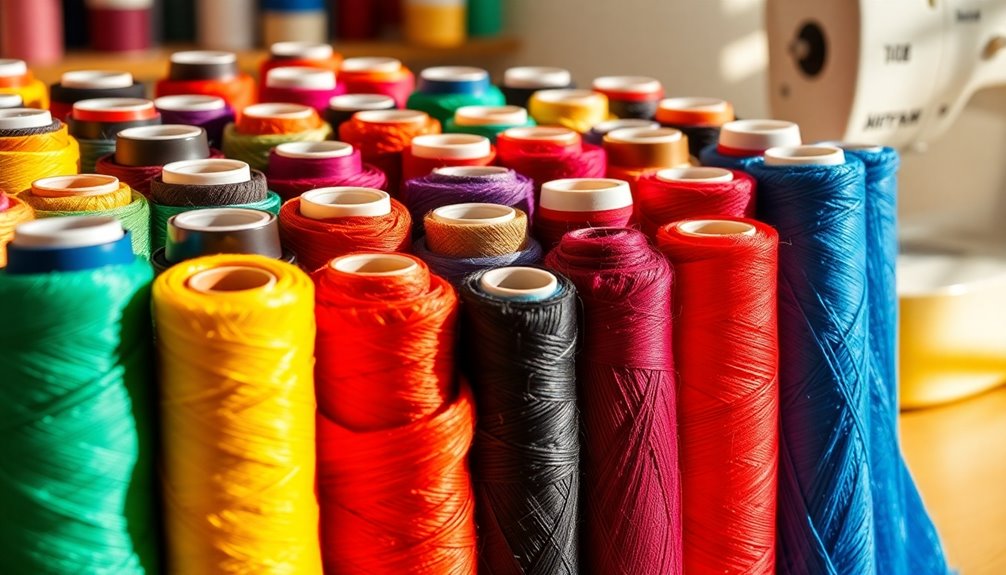
If you want to change how you read thread labels forever, try organizing your collection with a color-coded system. Assign specific colors to thread types and use symbols for quick identification. This method prevents confusion and speeds up your selection process. Plus, you'll extend the lifespan of your threads by keeping them protected from dust and moisture. Stick around to discover tips for maintaining your collection and creating the ultimate organized sewing space.

Get business pricing on tools and workshop supplies
- Business-only prices and quantity discounts
- Tax-exempt purchasing
- Multiple users, one account, clear invoices
Key Takeaways
- Implement a color-coded system to quickly identify thread types by assigning specific colors to each category, enhancing readability at a glance.
- Use recognizable symbols alongside colors on labels for instant identification of thread types and weights, streamlining your selection process.
- Create a reference chart matching colors and symbols to their corresponding thread types for easy access and improved organization.
- Regularly update your labeling system as new threads are added to maintain clarity and avoid confusion in your collection.
- Ensure labels include thread weight and fiber content for quick reference, making it easier to choose the right thread for your sewing projects.
As an affiliate, we earn on qualifying purchases.
The Importance of Thread Organization
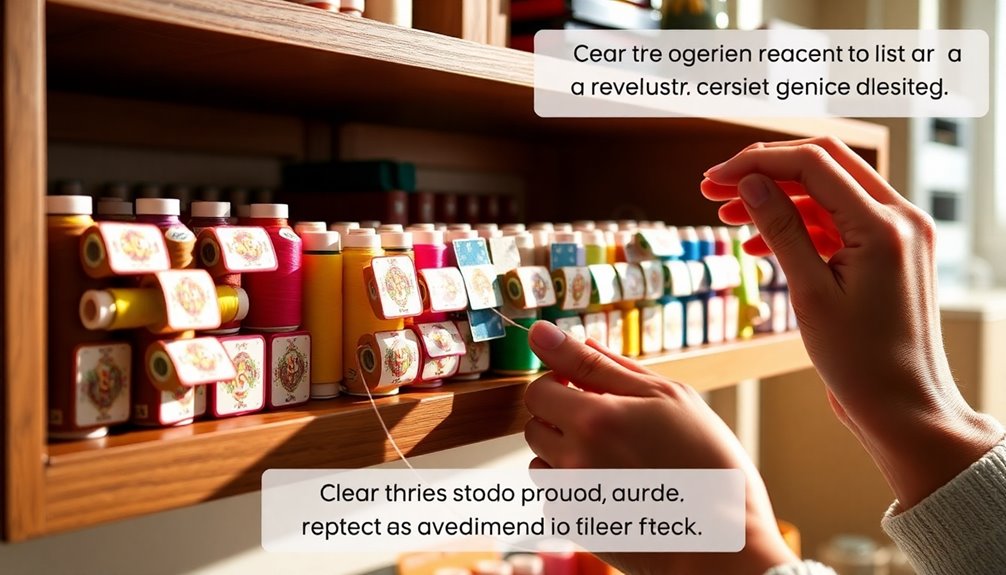
When you take the time to organize your thread collection, you not only save yourself from frustration later, but you also enhance your crafting experience. Proper thread organization prevents tangling and damage, ensuring each spool is easily accessible for your projects.
By categorizing threads by color, type, or weight, you'll speed up your selection process, especially for larger sewing tasks. Investing in clear containers or labeled organizers boosts visibility, making it simple to find specific threads without wasting time.
Furthermore, keeping your threads organized extends their lifespan by shielding them from dust, light, and moisture that could degrade quality. A well-organized collection can even spark creativity, allowing you to visualize all your options at a glance.
How to Create Your Color-Coded System

Creating a color-coded system for your thread collection simplifies the process of finding the right spool for your projects.
To get started, try using these simple things:
- Assign a specific color to each thread type: red for cotton, blue for polyester, and green for specialty threads.
- Use colored rubber bands or labels around each spool to keep your coding clear and uniform.
- Create a reference chart matching each color to its thread type, and display it near your sewing area for quick access.
As you add new threads, regularly update your system to maintain organization.
This way, you'll avoid confusion and guarantee you can always grab the right thread without searching through everything else.
Symbols That Enhance Your Thread Labels
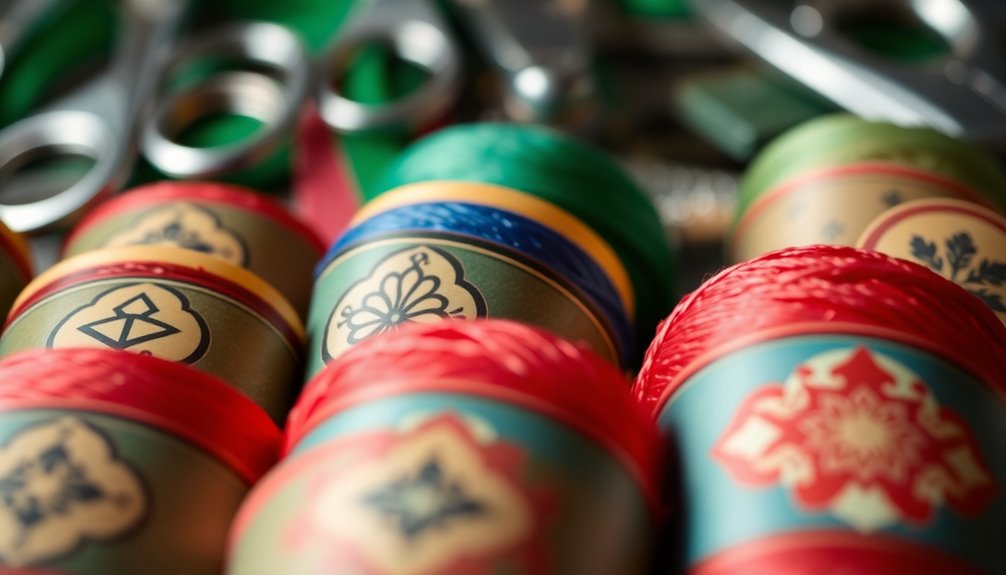
Adding symbols to your thread labels takes your color-coded system to the next level, making it even easier to find the right threads for your projects. By using recognizable symbols, you can quickly identify thread types and weights, enhancing your organization. For instance, a needle can signify sewing thread, while a spool can represent embroidery thread. Additionally, unique icons for finishes like matte or glossy streamline your choices.
Here's a simple table to illustrate:
| Symbol | Meaning | Example |
|---|---|---|
| 🧵 | Sewing Thread | 50wt Cotton |
| 🧶 | Embroidery Thread | Rayon |
| ⚡ | Strong Thread | Polyester |
| 🪶 | Lightweight Thread | Silk |
| ✨ | Glossy Finish | Metallic |
This approach guarantees clarity and ease of use!
Tips for Maintaining Your Thread Collection

To keep your thread collection in top shape, you'll want to organize it wisely from the start. Here are some quick tips:
- Organize by Color and Type: Use clear containers or a dedicated thread organizer to make identification a breeze.
- Label Everything: Mark each container or spool with thread weight and fiber content. This helps with compatibility during projects.
- Maintain an Inventory List: Keep track of your threads in your sewing area to avoid duplicates and know what needs replenishing.
Additionally, store your threads away from direct sunlight and humidity to prevent fading. Incorporating energy monitoring features in your sewing area can also help maintain optimal conditions for your thread storage.
Regularly check for frayed or damaged threads and dispose of them to maintain a tidy sewing space. A little effort goes a long way!
The Benefits of an Organized Sewing Space

When you take the time to organize your sewing space, you'll quickly notice a boost in both productivity and creativity. By reducing the time spent searching for supplies, you can dive straight into your projects.
Using clear storage bins and labeled containers not only helps you identify thread colors and types easily but also minimizes frustration. A tidy sewing area inspires new ideas, creating a visually appealing environment that sparks creativity.
In addition, keeping clutter at bay prevents stress and overwhelm, making your crafting experience much more enjoyable. Incorporating a thread rack allows you to see all your options at a glance, ensuring you're always ready to create without the hassle. Regular cleaning improves efficiency in your sewing projects just as it does in appliances.
An organized space truly transforms your sewing journey!
Frequently Asked Questions
What Materials Do I Need for Color-Coding Thread Labels?
To color-code your thread labels, you'll need a few simple materials. Grab some fabric markers or colored pens to create vibrant labels.
You'll also want sturdy label tape or card stock for durability. Scissors will help you cut the labels to size, and a ruler guarantees they're uniform.
Finally, a computer or printer can be handy if you prefer printed labels. With these supplies, you're ready to start organizing your threads!
Can I Use This System for Non-Sewing Threads?
Absolutely, you can use this color-coding system for non-sewing threads!
Whether you're organizing embroidery, craft, or even upholstery threads, the method works just as well. It helps you quickly identify colors and types, making your projects more efficient.
Just make sure to choose a color scheme that's easy for you to remember.
With a little creativity, you'll find it's a great way to keep all your threads organized and accessible!
How Do I Reset My Color-Coding System if Needed?
To reset your color-coding system, start by gathering all your threads and removing their current labels.
Decide on a new color scheme or criteria that suits your needs better. Once you've got that figured out, relabel each thread according to your new system.
Make sure to keep a reference guide handy so you can easily remember your new color assignments.
With a little organization, you'll have a fresh start in no time!
What Are the Best Storage Solutions for Organized Threads?
Thread storage solutions should be simple and stylish! You can use clear containers for visibility, or labeled bins for easy access.
Drawer organizers also work wonders, keeping your threads neat and tidy. Consider a pegboard for a creative display, showcasing your collection.
If you're short on space, try stacking boxes or using a rolling cart. With these organized options, you'll find your threads quickly, making your crafting process smooth and enjoyable!
Are There Specific Colors That Represent Certain Thread Types?
When it comes to thread types, specific colors often do represent certain categories.
For instance, cotton threads are usually found in vibrant colors, while polyester threads might lean toward more muted tones.
You'll notice that embroidery threads can range from bright shades to pastel hues.
Conclusion
By embracing this genius hack, you're not just organizing thread labels; you're weaving a tapestry of creativity and efficiency in your sewing space. Picture your threads as vibrant colors on a painter's canvas, each label guiding your hand to create masterpieces. With a color-coded system and meaningful symbols, you'll transform chaos into harmony. So grab those threads and let them sing in organized unity, making every sewing project a joyful journey. Happy stitching!
Halloween Picks
halloween
As an affiliate, we earn on qualifying purchases.