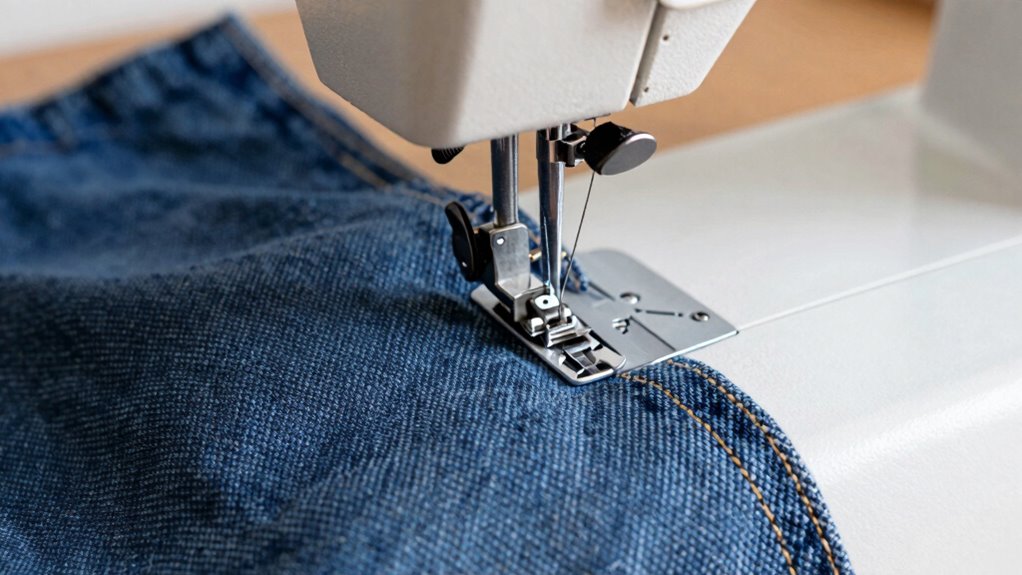

Skipped stitches over bulky seams happen when your machine isn’t set up properly or the needle isn’t right for thick fabric. Using the wrong needle size or dull needles can cause it to struggle. Additionally, if your presser foot pressure is too light or the feed dogs aren’t working well, the fabric won’t move smoothly, leading to skipped stitches. Adjusting these factors and maintaining your machine helps avoid problems—if you want to know more, keep going.
Key Takeaways
- Improper or dull needles that cannot penetrate thick fabric layers easily.
- Incorrect presser foot pressure or misaligned feed dogs causing fabric to shift or skip.
- Excessive sewing speed reducing control over bulky seam layers and leading to missed stitches.
- Poor thread tension or incompatible thread causing inconsistent stitching on heavy seams.
- Lack of machine maintenance, such as dirty feed dogs or unlubricated parts, impairing fabric feed and stitch formation.
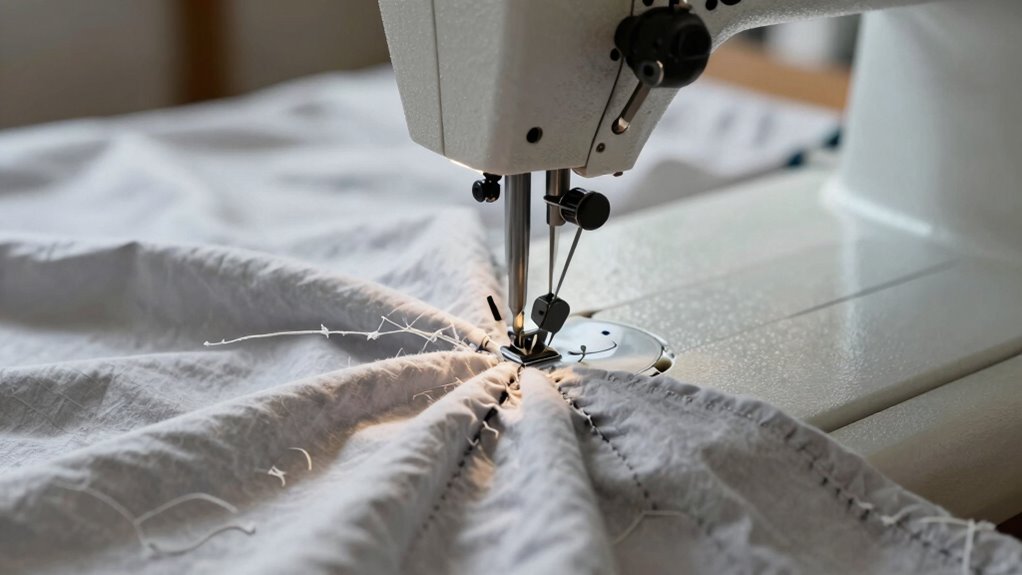
When sewing over bulky seams, machines often struggle to produce smooth, even stitches, leading to skipped stitches and uneven finishes. One common cause is improper thread tension. If the tension is too tight, the thread can break or cause puckering, especially when the fabric thickness varies. Conversely, if the tension is too loose, the stitches may not hold properly, resulting in skipped stitches or loose loops. Adjusting your machine’s thread tension to suit the fabric and seam thickness is vital. You want just enough tension to keep the stitches secure without pulling the fabric or causing puckers. Many machines have tension dials or digital settings; take the time to test on scrap fabric before working on your project.
Proper thread tension is essential for smooth, even stitches on bulky seams—adjust and test before sewing your project.
Another key factor is needle size. Using an incompatible or dull needle can make your machine struggle to penetrate thick layers, increasing the likelihood of skipped stitches. For bulky seams, a larger needle—such as a size 90/14 or 100/16—can handle thicker fabric and multiple layers more effectively. These needles have a stronger, sharper point that pushes through heavy fabric smoothly. If you’re using a smaller needle, it may bend or break when encountering bulk, disrupting the stitching process and resulting in skips. Always check the needle type recommended for your fabric and choose a size that matches the seam’s bulkiness.
In addition to thread tension and needle size, the type of needle plays a role in how well your machine handles thick seams. For example, ballpoint needles are best for knits, while sharp, universal needles work well for woven fabrics. Using the right needle ensures clean penetration and reduces skipped stitches. Also, consider the sewing speed; sewing too fast can cause missed stitches, especially when handling bulky areas. Slowing down gives the machine more control and allows the needle to pass through heavy layers smoothly. Proper machine maintenance, such as keeping the feed dogs clean and well-lubricated, can also significantly improve seam handling and stitch quality. Additionally, adjusting stitch length for heavy fabrics can help the machine sew more effectively through bulky seams. Ensuring your presser foot pressure is correctly adjusted can further improve fabric feeding and prevent skipped stitches.
Furthermore, proper presser foot pressure can make a significant difference in handling bulky seams more smoothly. Lastly, your machine’s feed dogs and presser foot settings influence how well your fabric advances under the needle. If the presser foot isn’t pressing firmly enough, or if the feed dogs aren’t gripping the fabric properly, skipped stitches are more likely. Ensuring your presser foot pressure is appropriate and that the feed dogs are clean and functioning properly can help your machine handle bulky seams more successfully. By paying attention to thread tension, needle size, and these other factors, you can greatly reduce skipped stitches and achieve a more professional, even finish when sewing through thick seams.
heavy duty sewing machine needles
As an affiliate, we earn on qualifying purchases.
As an affiliate, we earn on qualifying purchases.
Frequently Asked Questions
How Can I Prevent My Machine From Skipping Stitches on Bulky Seams?
To prevent your machine from skipping stitches on bulky seams, start by using a sharp, appropriate sewing needle designed for heavy fabrics. Adjust the stitch length to a longer setting, which helps the machine handle thick layers more smoothly. Also, make certain your machine is properly threaded and clean. These steps reduce tension issues and allow the needle to glide through bulky fabric without skipping, resulting in even, professional-looking seams.
Are Specific Sewing Machine Models Better for Thick Fabrics and Seams?
If you often work with thick fabrics, consider a model like the Janome HD3000. These machines excel because they have sturdy build quality, strong motors, and specialized sewing machine features for handling bulky seams. Regular machine maintenance guarantees smooth operation, reducing skipped stitches. You’ll find that choosing a machine designed for heavy-duty use helps you sew through even the thickest seams without frustration or skipped stitches, making your projects much easier.
Does Thread Type Impact the Machine’s Ability to Handle Bulky Seams?
Thread type definitely impacts your machine’s ability to handle bulky seams. Using the right thread compatibility guarantees smooth stitching without skipping. Opt for strong, high-quality threads designed for heavy fabrics, and match them with the appropriate needle selection. A larger needle, like a size 16 or 18, can also help maneuver through thick seams more easily. Together, proper thread and needle choices prevent skipped stitches and improve your sewing experience.
How Do I Adjust Tension Settings for Bulky Seam Sewing?
To adjust tension settings for bulky seams, start by increasing the thread tension to prevent loose stitches, then gradually tighten it until the stitches are even and secure. Simultaneously, modify the stitch length to accommodate the bulk, making it longer for thicker seams. Keep testing on scrap fabric, ensuring your thread tension and stitch length work together smoothly, creating balanced stitches that handle bulky seams effortlessly.
Can Using Different Presser Foots Improve Sewing Over Bulky Areas?
Using different presser feet can definitely improve your sewing over bulky areas. For thick seams, try a walking foot or a roller foot, which help feed multiple layers smoothly. Adjust your seam allowances to reduce bulk, and choose a presser foot designed for heavy fabrics. These tools and techniques work together to prevent skipped stitches and guarantee even, professional-looking seams when tackling bulky projects.
Conclusion
Understanding why your machine skips over bulky seams can save you time and frustration. Usually, it’s due to tension issues or needle choices that aren’t suited for thick fabrics. Did you know that 65% of sewing problems stem from machine adjustments? By ensuring your machine is properly tuned and using the right tools, you can easily navigate those tough seams. Keep experimenting, and you’ll master sewing through bulky layers in no time!