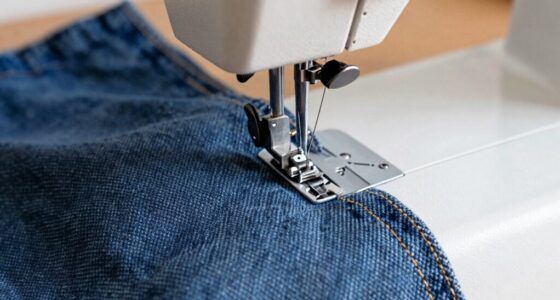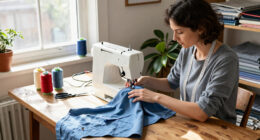
To choose between a serger and a coverstitch machine, consider what finishing techniques you need. A serger is best for quickly enclosing raw edges, trimming excess fabric, and creating flexible seams, especially for stretch fabrics. A coverstitch machine handles hem finishes and decorative topstitching for a professional look. Think about your projects and skill level; understanding their features will help you pick the right tool to enhance your sewing. Keep exploring to find out more details.

Get business pricing on tools and workshop supplies
- Business-only prices and quantity discounts
- Tax-exempt purchasing
- Multiple users, one account, clear invoices
Key Takeaways
- Determine the primary sewing task: sergers are for seam finishing and trimming, while coverstitch machines are for hems and decorative topstitching.
- Consider fabric types: sergers handle stretch and woven fabrics for raw edge finishing; coverstitch machines excel at professional-looking hems.
- Assess skill level: sergers often require more setup and threading; coverstitch machines are generally easier for decorative and finishing stitches.
- Evaluate project needs: use a serger for quick, durable seams; choose a coverstitch for professional hems and decorative details.
- Check machine features: sergers offer trimming and overlocking functions; coverstitch machines provide multiple stitch options for finishing and embellishment.
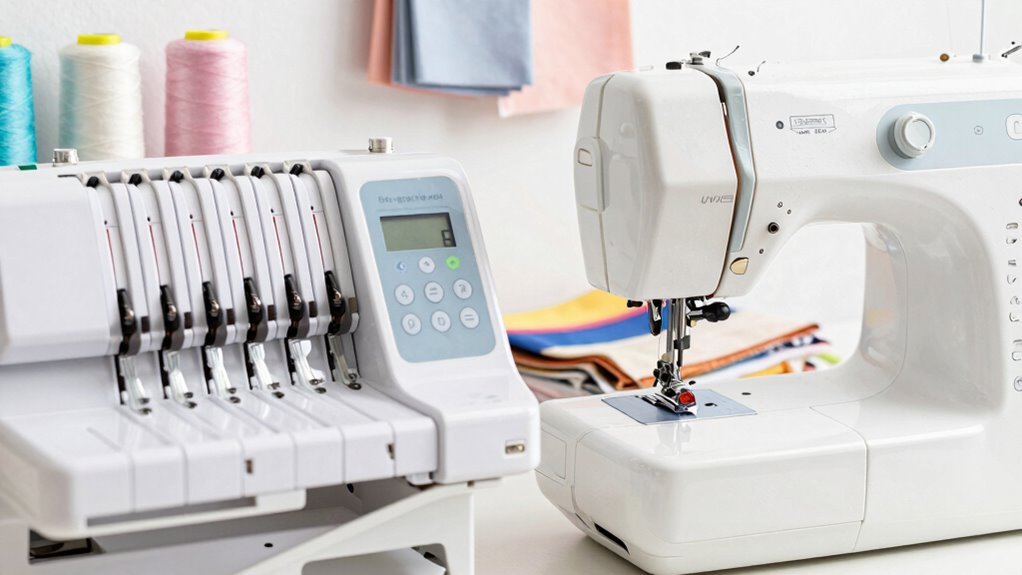
When you’re deciding whether to invest in a serger or a coverstitch machine, understanding their distinct functions can help you make the right choice. Each machine is designed for specific sewing tasks, and knowing how they handle different fabric types and thread options is key to making an informed decision. A serger, also called an overlock machine, is primarily used to finish raw edges and seam allowances quickly and professionally. It’s ideal for fabrics like knits, jersey, stretchy materials, and woven fabrics that need secure, flexible seams. Sergers excel at working with various fabric types because they trim excess fabric and enclose raw edges in one step, preventing fraying and giving your garments a polished look. When it comes to thread options, sergers typically use multiple cones of polyester or nylon threads, which provide strength and elasticity—especially important for stretch fabrics. You might choose different thread colors for decorative effects, but overall, the versatility of thread choices in a serger allows you to adapt to different projects seamlessly. Additionally, thread options in a serger are crucial for achieving durable and flexible seams tailored to your fabric needs. Understanding the different types of stitches a serger can produce can also help you optimize its use for various sewing techniques. Many sergers now feature automatic tension adjustments, making them easier to use across different fabric weights and types. Some sergers also incorporate built-in rolled hem functions, which are perfect for finishing lightweight fabrics in a delicate, professional manner. Furthermore, knowing the specific applications of each machine can help you determine which one is most suitable for your projects and skill level.
As an affiliate, we earn on qualifying purchases.
Frequently Asked Questions
Can I Use Both Machines on the Same Project?
Yes, you can use both machines on the same project. Switch between your serger and coverstitch machine as needed, adjusting thread tension to guarantee smooth stitching. Make certain your fabric is compatible with each machine’s specific stitches; some fabrics work better with sergers, while others suit coverstitch machines. Using both machines allows you to achieve professional-quality seams and hems, enhancing your project’s durability and appearance.
Which Machine Is Better for Beginners?
For beginners, a coverstitch machine is better because it’s simpler to operate. You mainly focus on adjusting thread tension and stitch width to get neat hems and topstitching. Sergers can be more complex with multiple threads and settings, making them harder to learn initially. Starting with a coverstitch machine helps you build confidence, then you can explore sergers as you become more comfortable with sewing techniques.
How Much Maintenance Does Each Machine Require?
Imagine you’ve just finished a sewing project, and now you need to maintain your machine. You’ll find that a serger requires regular thread tension adjustments and occasional needle replacements to keep stitches neat. A coverstitch machine needs less frequent maintenance but still benefits from checking thread tension and replacing needles when they dull. Overall, both machines demand routine care, but sergers generally need a bit more attention to stay in top shape.
Are There Budget Options for Both Machines?
Yes, there are budget options for both sergers and coverstitch machines. When doing a machine comparison, you’ll find entry-level models that are more affordable, often offering essential features without extra bells and whistles. These options are perfect if you’re just starting out or sewing casually. Keep in mind, lower-priced machines may have fewer features and less durability, but they can still help you achieve professional-looking seams and hems.
Can I Upgrade My Machine Later?
Yes, you can upgrade your machine later, but consider machine compatibility before buying. Some sergers and coverstitch machines have modular parts or compatible accessories, making future upgrades easier. Research models that support additional features or attachments to guarantee your investment remains versatile. By choosing a machine with future upgrade options, you’ll save money and keep your sewing setup flexible as your skills grow or new technology emerges.
Conclusion
Ultimately, choosing between a serger and a coverstitch machine depends on your sewing needs and goals. Think about whether you want professional finishes or versatile stitch options. Remember, “A jack of all trades is a master of none,” but in sewing, having the right tool can turn your projects from good to great. Trust your instincts, and you’ll find the machine that helps your creativity flourish.
Fall yard work Picks
leaf blowers
As an affiliate, we earn on qualifying purchases.