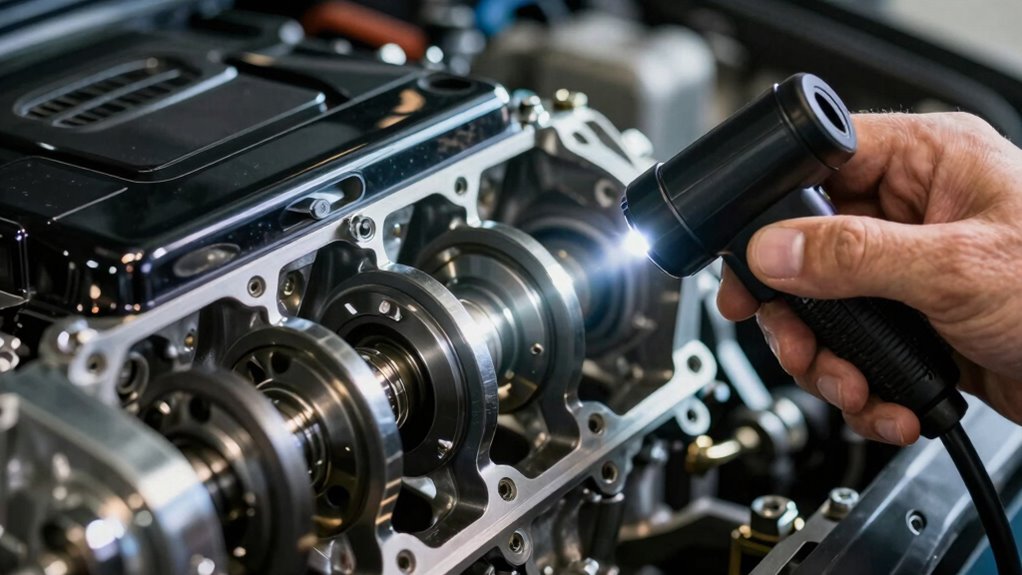

To check if your machine’s timing is off, start by listening for unusual noises like knocking or squealing, and watch for vibrations or irregular operation. Inspect for rough running or stalling, which can signal timing issues. Access the timing marks on pulleys or gears, and verify they align properly with reference points. If you notice misalignment or damaged parts, realigning and replacing them can restore proper timing. Keep exploring for more detailed steps to fine-tune your machine’s performance.

Get business pricing on tools and workshop supplies
- Business-only prices and quantity discounts
- Tax-exempt purchasing
- Multiple users, one account, clear invoices
Key Takeaways
- Observe unusual noises, vibrations, or rough operation during machine use.
- Turn off the machine, then inspect timing marks on pulleys or gears for misalignment.
- Check belts, pulleys, and sprockets for wear, cracks, or looseness.
- Follow manufacturer instructions to realign timing components if marks are off.
- Regularly perform preventive maintenance and monitor machine performance for early signs of timing issues.
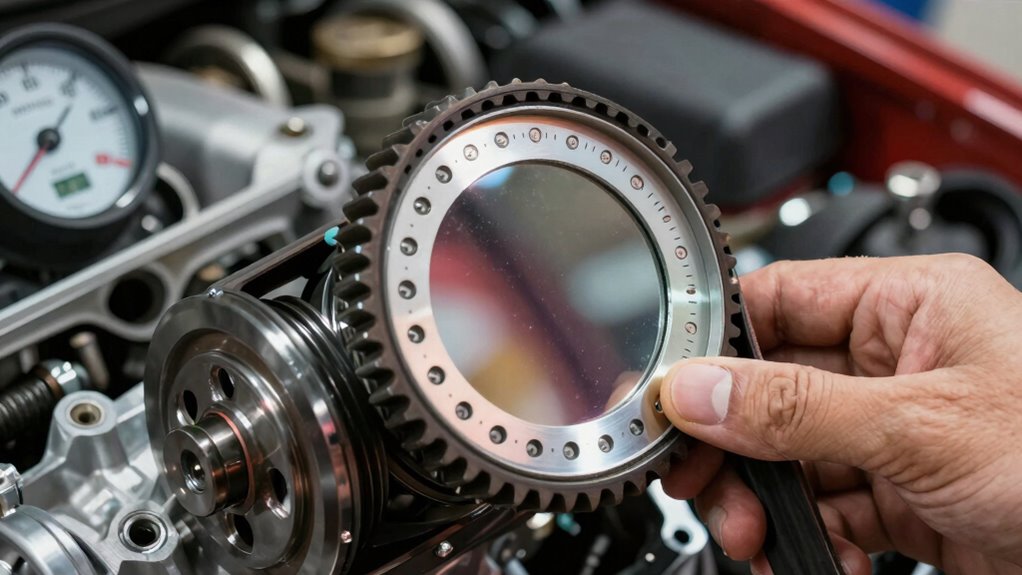
If your machine isn’t performing as smoothly as it used to, it might be due to timing issues. Recognizing the signs early can save you from costly repairs and downtime. Start by paying attention to troubleshooting signs such as unusual noises, vibrations, or inconsistent operation. If your machine runs roughly, stalls unexpectedly, or produces odd sounds, these could be indications that the timing is off. Proper maintenance tips, like regularly inspecting belts, pulleys, and timing belts, help ensure everything stays aligned and functions correctly. Neglecting these aspects can lead to mis-timing, which affects the overall performance.
Early signs of timing issues include strange noises, vibrations, and inconsistent operation, so inspect belts and pulleys regularly.
When you suspect timing problems, the first step is to consult your machine’s manual or technical documentation. These often include specific instructions on how to check timing marks or align components properly. To do this, you’ll need to turn off the machine, disconnect it from power, and access the timing cover or designated inspection points. Once exposed, look for timing marks on pulleys, gears, or belts. They should line up with reference indicators on the machine’s body or casing. If these marks are misaligned, it’s a clear sign that your timing is off.
Next, you can perform a simple visual inspection to identify any signs of wear or damage. Frayed or cracked belts, loose pulleys, or worn sprockets can throw the timing off. Make sure all components are tight and in good condition. If you notice any discrepancies, replace the damaged parts before attempting to realign the timing. When realigning, follow the manufacturer’s recommended procedures carefully, ensuring all marks are aligned precisely. This process often involves loosening certain components, adjusting their positions, and then tightening everything back in place. Regularly inspecting timing components helps catch issues before they cause major problems. Additionally, performing routine machine maintenance can help prevent timing issues from developing over time. To maintain optimal operation, it’s also crucial to monitor machine operation during testing and make adjustments as needed. Keeping an eye on proper alignment ensures that your machine runs smoothly and efficiently.
As an affiliate, we earn on qualifying purchases.
Frequently Asked Questions
Can Incorrect Timing Cause Engine Knocking?
Yes, incorrect timing can cause engine knocking. When your ignition system fires too early or too late, it disrupts piston compression, leading to knocking sounds. This misfire can cause the air-fuel mixture to ignite at the wrong moment, creating knocking or pinging noises. Ensuring your ignition timing is accurate helps maintain proper piston compression cycles, preventing engine knocking and protecting your engine from potential damage.
How Often Should I Check My Machine Timing?
You should check your machine timing every 20,000 to 30,000 miles or as recommended by your vehicle’s manufacturer. Regularly inspect the ignition system and confirm the timing belt is in good condition, as these components directly affect timing accuracy. If you notice engine knocking, rough idling, or decreased performance, check the timing sooner. Routine checks help prevent major engine issues and keep your vehicle running smoothly.
What Tools Are Needed to Adjust Timing?
You’ll need a timing light and a feeler gauge to adjust your machine’s timing. The timing light helps you see the timing marks in real-time, making adjustments easier. Use the feeler gauge to set the correct gap in the timing mechanism, ensuring precision. These tools allow you to fine-tune your machine’s timing accurately, helping it run smoothly and efficiently. Always follow your machine’s specific manual for best results.
Can Timing Issues Affect Fuel Efficiency?
Think of your engine as a finely-tuned orchestra—ignition timing is the conductor, guiding each note perfectly. If the timing is off, it’s like the conductor misguiding the players, causing discord. This misstep can lead to poor fuel economy because your engine isn’t firing efficiently. Ensuring proper ignition timing keeps the harmony, helping your vehicle run smoothly and saving you fuel in the long run.
Is It Safe to Adjust Timing Myself?
Adjusting your machine timing yourself can be safe if you follow proper DIY safety precautions, like disconnecting the battery and wearing protective gear. However, if you’re unsure or uncomfortable, it’s best to seek professional assistance to avoid damaging your engine or risking injury. Remember, precise timing adjustments can be tricky, so when in doubt, consulting a mechanic guarantees your machine runs efficiently and safely.
Conclusion
If you suspect your machine timing is off, don’t ignore the signs; it’s better to catch issues early than deal with bigger problems later. Regularly checking your timing guarantees everything runs smoothly and keeps your machine in top shape. Remember, a stitch in time saves nine—addressing small timing issues now can save you a lot of headaches down the road. Stay vigilant and keep your machine humming along perfectly.
Halloween Picks
halloween
As an affiliate, we earn on qualifying purchases.