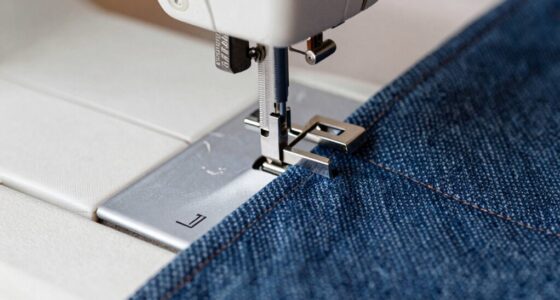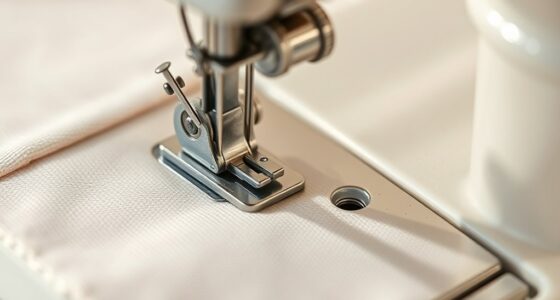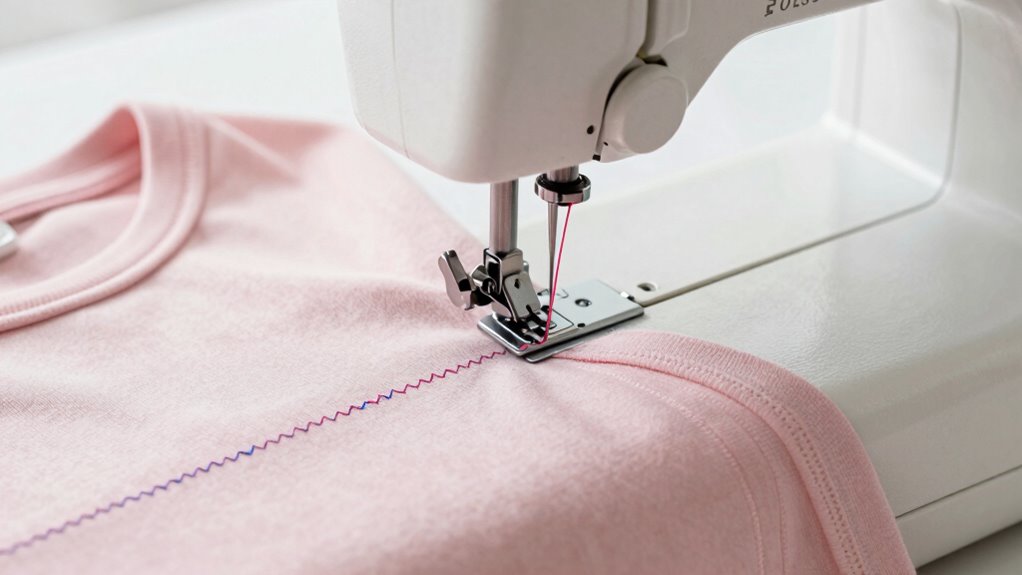
Before buying a coverstitch machine for t-shirts and leggings, consider fabric compatibility—choose one suited for lightweight cotton or stretchy materials like spandex. Look for features such as adjustable stitch length, compatible presser feet, and support for single or double-needle setups to handle different seams efficiently. Durability matters for frequent use, so opt for a sturdy build and reliable threading systems. To achieve professional, stretchable finishes, understanding these essentials will make your sewing smoother—keep exploring to get all the details.

Get business pricing on tools and workshop supplies
- Business-only prices and quantity discounts
- Tax-exempt purchasing
- Multiple users, one account, clear invoices
Key Takeaways
- Ensure the machine supports stretch fabrics with suitable stitch options like coverstitch, twin-needle, or flatlock for professional finishes.
- Check compatibility with different fabrics such as cotton, spandex, nylon, or polyester to prevent puckering or skipped stitches.
- Prioritize ease of use features like adjustable stitch length, automatic tension, and clear setup guides for beginners.
- Confirm durability and reliable threading systems for consistent performance on multiple layers and thick fabrics.
- Research customer reviews and compatibility with presser feet to assess long-term reliability and project versatility.

If you’re looking to achieve professional-looking finishes on your T-shirts and leggings, a coverstitch machine is an essential tool. This machine is designed to create clean, stretchable seams that mimic those found in ready-to-wear clothing. Before you buy, it’s important to understand how different fabric types and sewing techniques influence your choice. T-shirts are usually made from lightweight, stretchy fabrics like cotton jersey or blends with spandex, while leggings often use thicker or more elastic materials such as nylon, spandex, or polyester. Knowing your fabric types helps you select a machine with the right stitch options and tension settings to handle these materials without puckering or skipped stitches.
When working with lightweight fabrics like cotton jersey, you want a coverstitch machine that offers a narrow, flexible stitch that doesn’t add bulk. For stretchy fabrics like leggings, look for a machine that can handle multiple layers and provides a smooth, consistent stretch seam. The sewing techniques you’ll use also matter. A coverstitch machine primarily excels at creating hemming seams, topstitching, and decorative finishing, all of which are vital for T-shirts and leggings. Ensuring your machine can handle both single and double-needle setups gives you versatility for different projects. If you plan to do more elaborate sewing techniques, such as flatlock seams or decorative topstitching, check whether the machine supports these functions or if additional attachments are needed.
Another aspect to evaluate is ease of use. Some coverstitch machines come with adjustable stitch length and width, making it easier to customize your seams based on fabric weight and your sewing techniques. For beginners, a machine with clear guides or automatic tension adjustments can save frustration and help you achieve professional results faster. Durability also counts—select a model with sturdy construction and reliable threading systems, especially if you plan to sew regularly or work on thicker fabrics. Compatibility with your existing sewing setup is another factor; some coverstitch machines can double as sergers or offer compatibility with a variety of presser feet. Additionally, understanding the stitch options available on a coverstitch machine ensures you can adapt it to different types of projects and fabrics. Considering maintenance requirements is also crucial to keep your machine running smoothly over time. Being aware of threading systems can also make setup and troubleshooting much simpler, especially for new users. Moreover, researching customer reviews can give insights into the machine’s reliability and long-term performance, which is vital for ongoing projects.
coverstitch machine for stretch fabrics
As an affiliate, we earn on qualifying purchases.
As an affiliate, we earn on qualifying purchases.
Frequently Asked Questions
Can a Coverstitch Machine Handle Thick Fabric Layers?
Yes, a coverstitch machine can handle thick fabric layers, but it depends on the fabric thickness and the machine’s versatility. For very thick fabrics like multiple layers of leggings or heavyweight T-shirts, check if your machine has adjustable stitch settings and a powerful motor. Some models are designed for versatile use, making it easier to sew through thicker fabric layers without skipping or bunching. Always test on scrap fabric before sewing your project.
What’s the Average Maintenance Required for a Coverstitch Machine?
Think of your coverstitch machine as a finely-tuned orchestra—regular maintenance keeps it harmonious. You’ll need to check and adjust thread tension, ensuring stitches stay smooth and even. Keep your needle compatibility in mind, swapping out needles when they dull or break. Routine cleaning, oiling, and occasional parts replacement prevent breakdowns, letting your machine perform its symphony of perfect hems and seams, stitch after stitch.
Are Coverstitch Machines Suitable for Beginner Sewists?
Yes, coverstitch machines are suitable for beginners, especially if you focus on adjusting thread tension and maintaining stitch quality. They are user-friendly and designed for sewing hems and stretchy fabrics like T-shirts and leggings. As a beginner, you’ll want to practice proper tension adjustments to achieve neat, professional-looking stitches. With some patience, you’ll quickly get comfortable and enjoy creating polished garments with your coverstitch machine.
How Loud Are Coverstitch Machines During Operation?
You might find it surprising, but the noise level of coverstitch machines varies quite a bit. During operation, they typically produce a moderate sound, similar to a household vacuum or a busy street. Some models are quieter, making them suitable for shared spaces, while others can be a bit louder. If noise level is a concern, look for machines with sound-dampening features or quieter motors to keep your sewing peaceful.
Can Coverstitch Machines Do Decorative Stitches?
Yes, coverstitch machines can do decorative stitches. They often offer various decorative options and stitch customization features, allowing you to add unique details to your garments. You can choose from different stitch patterns, widths, and lengths, giving you creative control. This versatility makes them great for enhancing your T-shirts and leggings with decorative topstitching or finishing touches, giving your projects a professional and personalized look.
Conclusion
Before you buy a coverstitch machine for T-shirts and leggings, remember that around 65% of home sewists report improved garment durability and professional finishes with this tool. It’s an investment that can elevate your sewing projects, making them look polished and hold up over time. So, choose wisely—consider your fabric types, sewing frequency, and budget. Once you find the right fit, you’ll enjoy creating stylish, long-lasting garments with confidence.
Fall Picks
fall essentials
As an affiliate, we earn on qualifying purchases.