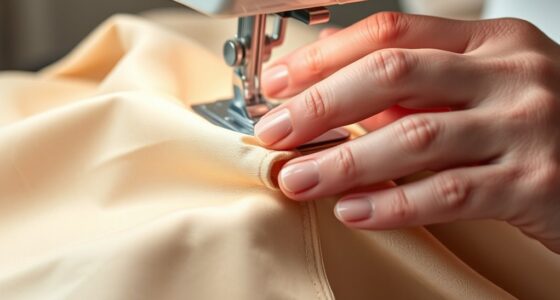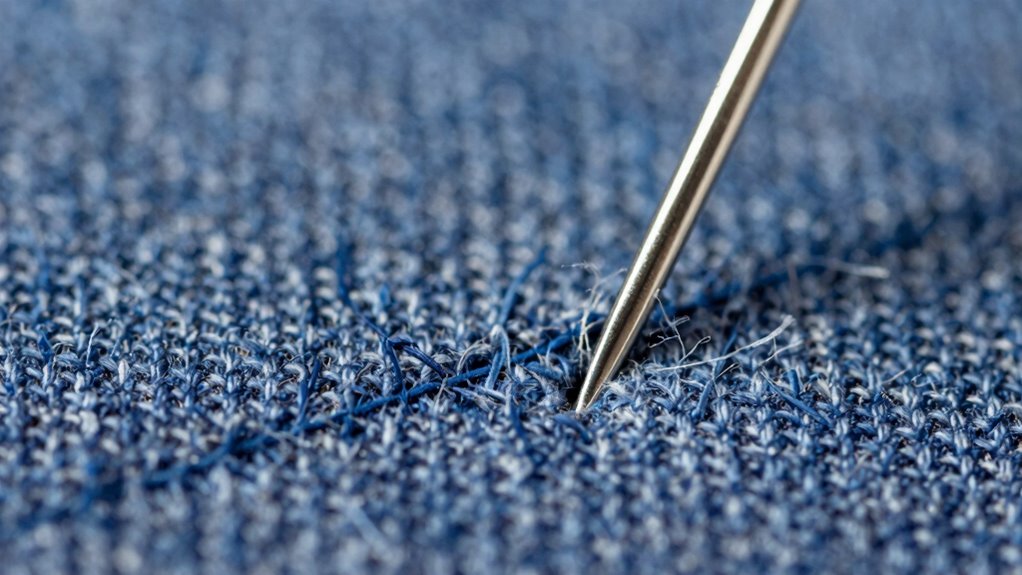
Universal needles often fail on certain fabrics because they’re designed to handle a wide range of materials but don’t focus on specific fabric needs. They can cause skipped stitches, puckering, or fabric damage on delicate or thick materials. Since they don’t account for differences in weave, thickness, or fiber content, your sewing results suffer. To improve, you need needles tailored to each fabric type. Keep going to discover how choosing the right needle makes all the difference.

Get business pricing on tools and workshop supplies
- Business-only prices and quantity discounts
- Tax-exempt purchasing
- Multiple users, one account, clear invoices
Key Takeaways
- They don’t account for variations in fabric weave, thickness, or fiber content, leading to poor stitching performance.
- Their all-purpose design makes them unsuitable for specific fabrics requiring specialized needles.
- They may cause skipped stitches, puckering, or fabric damage on delicate or heavy materials.
- Universal needles lack the sharpness or size options needed for certain fabric types.
- Using them without proper machine maintenance or correct threading can exacerbate fabric-specific sewing issues.
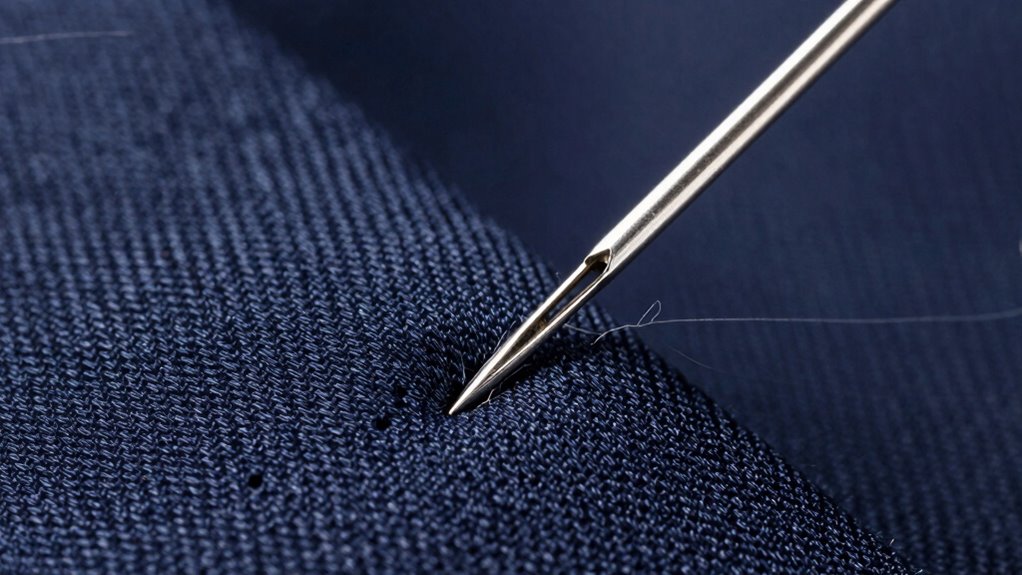
Have you ever relied on universal sewing needles only to find they don’t perform well on certain fabrics? It’s a common frustration among sewers, especially when your projects don’t turn out as smooth as you’d like. Universal needles are designed to handle a wide range of materials, but they often fall short on delicate or specialty fabrics. This mismatch can lead to skipped stitches, puckering, or even fabric damage. The key to avoiding these issues isn’t just picking the right needle but also maintaining your sewing machine properly and mastering needle threading techniques.
Sewing machine maintenance plays a crucial role in guaranteeing your machine works well with any needle you choose. Regularly cleaning lint and dust from your machine, oiling moving parts, and checking for worn-out components keep everything running smoothly. When your machine is well-maintained, it’s less likely to cause needle breakage or skipped stitches, which are common problems when using the wrong needle for a fabric. Additionally, using the correct needle type and size for specific fabrics can considerably improve your sewing results. For example, a sharp or microtex needle might be better suited for delicate silk, while a denim needle is more appropriate for thick, heavy fabrics.
Needle threading techniques also influence sewing performance substantially. Properly threading your needle is essential because a poorly threaded needle can cause skipped stitches or uneven tension, especially on tricky fabrics. Always make certain your thread passes smoothly through the needle’s eye without resistance, and double-check that it’s securely threaded. When switching fabrics, it’s wise to adjust your tension settings and needle type accordingly. This attention to detail minimizes the risk of fabric puckering or skipped stitches, common when using generic, all-purpose needles on complex fabrics.
Universal needles often fail because they don’t account for the subtle differences in fabric weave, thickness, or fiber content. They’re built to serve as a jack-of-all-trades, but that makes them less effective on specific materials requiring special treatment. By investing in the right needles and practicing good sewing machine maintenance, you’ll reduce frustrations and improve your stitch quality. Mastering needle threading techniques guarantees your machine works at its best, no matter the fabric. Remember, a little extra effort in choosing the right needle and keeping your machine in top shape can make a big difference in achieving professional-looking results.
Popular right now

De'Longhi Linea Classic Espresso Machine with Adjustable Milk Frother

Breville Barista Pro Espresso Machine with Grinder, Brushed Stainless Steel

Breville Bambino Espresso Machine, Brushed Stainless Steel
As an affiliate, we earn on qualifying purchases.
Frequently Asked Questions
Do Universal Needles Work Better With Specific Thread Types?
Yes, universal needles work better with specific thread types because of thread compatibility and needle sharpness. When you use the right thread, like polyester or cotton, the needle’s sharpness helps it glide smoothly through fabrics without snagging. Choosing the correct needle ensures the thread and fabric move seamlessly, preventing skipped stitches or damage. So, matching your thread type with the right universal needle improves your sewing results considerably.
How Can I Tell if a Needle Is Dull or Damaged?
To tell if a needle is dull or damaged, perform a thorough needle inspection. Look for damage indicators like bent shanks, burrs, or rough spots. Dull needles often cause skipped stitches or fabric snagging, while visible damage signals the need for replacement. Feel the needle’s tip for roughness or irregularities. Regularly inspecting your needles guarantees smooth sewing, preventing problems caused by dullness or damage.
Are There Alternative Needles for Tricky Fabric Weaves?
Yes, there are alternative needles for tricky fabric weaves. You should focus on fabric compatibility and needle selection to achieve the best results. For delicate or tightly woven fabrics, try sharp or microtex needles, which penetrate smoothly without causing damage. For stretchy or heavy fabrics, ballpoint or denim needles work better. Always match your needle type to the specific fabric you’re sewing to prevent skipped stitches or fabric damage.
Can Needle Size Affect Fabric Damage During Sewing?
Absolutely, needle size can profoundly impact fabric damage during sewing. Thinner needles, like small sizes, glide gently through delicate fabrics, ensuring fabric compatibility and reducing tears. Conversely, thicker needles can cause costly creases or tears in fragile materials. Choosing the right needle thickness is essential; it’s like selecting the perfect tool for the task. When you match needle size to fabric type, you protect your project from unnecessary damage and achieve smooth, professional results.
How Often Should I Replace Sewing Needles for Optimal Performance?
You should replace your sewing needles after every 8-12 hours of sewing or at the first sign of dullness, bending, or damage. Regularly check needle compatibility to prevent fabric damage and guarantee smooth stitching. Proper sewing machine maintenance, including changing needles often, helps prevent skipped stitches and thread breakage. Changing needles frequently keeps your machine running efficiently and extends its lifespan, so don’t skip this crucial step for essential sewing performance.
Conclusion
So, next time you’re surprised that your universal needle struggles on a particular fabric, remember it might just be a coincidence of fiber type or weave. Sometimes, the fabric’s unique properties catch us off guard, even when we think we’re prepared. It’s a reminder that no needle is truly universal, and a little extra attention to fabric details can save you time and frustration. After all, luck might just be the unexpected stitch you need.