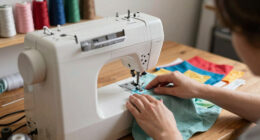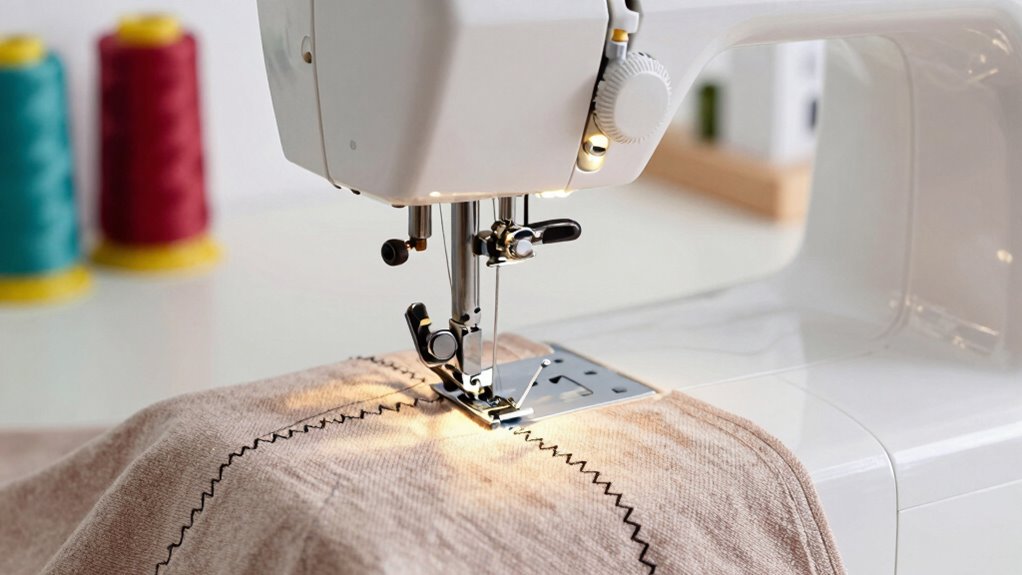
To sew knits easily on a regular machine, look for features like stretch or ballpoint needles, which glide smoothly between fibers and prevent snags. Adjust your stitch tension slightly lower than for woven fabrics, and test on scraps first. Machines with stretch stitches, adjustable tension settings, and a free arm make sewing curves and cuffs simpler. Using these features helps create even, professional-looking stitches. Keep exploring to discover more tips that can make your sewing project smoother.
Key Takeaways
- A stretch or ballpoint needle with a rounded tip helps glide between knit fibers, preventing snags and runs.
- Adjustable stitch tension, especially looser settings, accommodates the stretchiness of knits for even stitches.
- A machine with stretch stitch options or a stretch stitch setting simplifies sewing stretchy fabrics.
- Using the correct needle size (70/10 or 80/12) ensures smooth sewing based on fabric weight.
- Features like differential feed or stretch stitch modes improve seam quality and reduce puckering on knits.
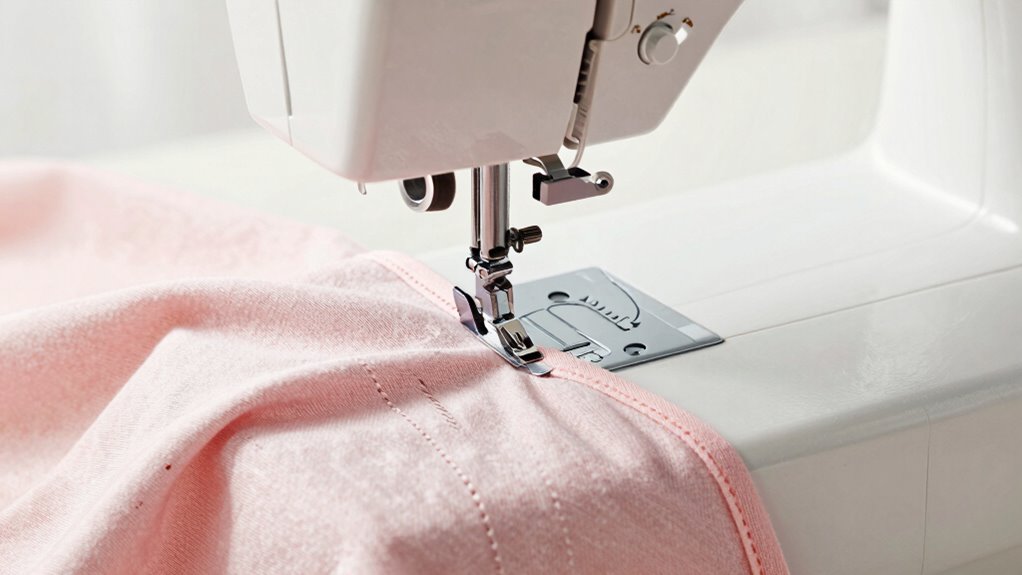
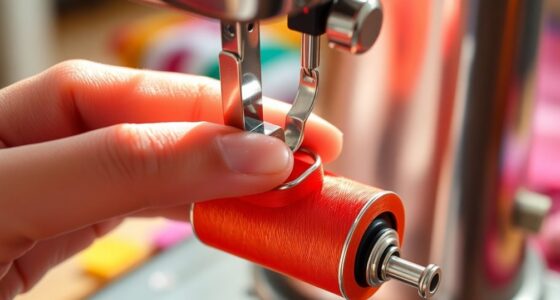
Have you ever wondered if you can sew knits on a regular sewing machine? The answer is yes, but it requires some understanding of your machine’s features and how to adapt your sewing techniques. One of the most important aspects is choosing the right machine needle. For knits, you’ll want to select a stretch or ballpoint needle. These needles are designed with a rounded tip that slips between the knit fibers rather than piercing through them, preventing runs or snags. Picking the correct needle size is also crucial; a size 70/10 or 80/12 needle typically works well for lightweight to medium-weight knits. Using the right needle helps you achieve smooth stitches and reduces skipped stitches, making your sewing experience much more manageable.
Once you have the proper needle, paying attention to stitch tension adjustment becomes essential. Knits tend to stretch, so you’ll need to loosen the stitch tension slightly from what you’d use for woven fabrics. This prevents puckering and keeps the stitches flexible enough to stretch with the fabric. Many machines have a tension dial or digital setting; start with a lower tension and test on scrap fabric to see how the stitches behave. If you notice the stitches are too tight or the fabric puckers, loosen the tension further. Conversely, if the stitches are loose and floppy, tighten it up a bit. Adjusting stitch tension is a balancing act — too tight, and your fabric might pucker; too loose, and the stitches can unravel or look uneven. Take the time to test different tension settings on scraps before sewing your final piece. Additionally, understanding machine features that support stretch sewing can make the process even easier and more consistent.

SCHMETZ Jersey Ball Point Sewing Machine Needles – Stretch Knit & Universal Supplies, Size 80/12, 5-Needle Cards, Pack of 1
Superior Control & Consistency: The SCHMETZ Jersey Ball Point needle features a rounded medium ball point design that…
As an affiliate, we earn on qualifying purchases.
As an affiliate, we earn on qualifying purchases.
Frequently Asked Questions
Can I Sew Stretchy Knits Without a Special Needle?
You can sew stretchy knits without a special needle, but using a regular needle may make stitching trickier. To improve your results, try stretchy fabric tips like adjusting the tension and using a zigzag stitch. Knitting needle alternatives, such as ballpoint or stretch needles, are recommended for better flexibility and less fabric damage. These tips will help you achieve smoother seams and more professional-looking stretchy garments.
How Do I Prevent Puckering When Sewing Knits?
To prevent puckering when sewing knits, you should stabilize the fabric with a lightweight stabilizer or tissue paper, which helps control seam stretching. Use a stretch or ballpoint needle to reduce fabric damage. Also, opt for a stretch stitch or a narrow zigzag stitch to allow for flexibility. Keep your stitches slightly looser, and sew slowly to maintain even tension, preventing puckers and ensuring smooth, professional results.
Is a Walking Foot Necessary for Sewing Knits?
Did you know that around 70% of sewists find using a walking foot helpful with knit fabrics? While a walking foot isn’t strictly necessary, it considerably eases sewing stretchy or slippery knit fabric types by evenly feeding layers. To prevent issues, make sure your sewing machine maintenance is up-to-date, especially when working with various knit fabrics. A walking foot helps keep stitches even, reducing puckering and stretching, making your sewing smoother and more professional.
Can I Use a Standard Zigzag Stitch for All Knits?
You can use a standard zigzag stitch for all knits, but adjusting your machine settings and fabric preparation makes a big difference. Set your stitch length and width appropriately, usually a wider zigzag works best. Before sewing, stretch and lightly steam your fabric to prevent puckering. These steps help the zigzag stitch glide smoothly over the knit, providing flexibility and durability without needing special features.
How Do I Choose the Right Thread for Sewing Knits?
Choosing the right thread for sewing knits is essential—don’t underestimate its power! You want thread types that stretch with your fabric, like polyester or nylon, to prevent puckering or breaking. Match your thread color perfectly to your fabric to hide seams or create a bold contrast. The right combo makes your project look professional and lasts forever. So, pick wisely, and your knits will thank you!

Juki, MO-50E, 3 or 4 Thread Serger, Lay In Tensions, Adjustable Differential Feed, Built In Rolled Hem, Automatic Lower Looper Threader, Retractable Upper Knife (MO-50E/UL)
Lay in tension
As an affiliate, we earn on qualifying purchases.
As an affiliate, we earn on qualifying purchases.
Conclusion
Just like Huck steering the Mississippi, sewing knits on a regular machine requires patience and a few special features. When you choose a machine with stretch stitches, adjustable tension, and a walking foot, you’re equipped to conquer any knit fabric that comes your way. With these tools, you’ll sail smoothly, transforming your fabric into comfortable, stylish creations. So, embrace these features and enjoy the journey—your sewing adventure is bound to be as legendary as Huck’s river voyage.

Brother Sewing Machine, XM2701, Lightweight Machine with 27 Stitches, 6 Included Sewing Feet
27 Unique built-in stitches: The XM2701 includes 27 built-in stitches including decorative, blind hem, zigzag, and stretch stitches…
As an affiliate, we earn on qualifying purchases.
As an affiliate, we earn on qualifying purchases.
Brother Sewing Machine, XM2701, Lightweight Machine with 27 Stitches, 6 Included Sewing Feet
27 Unique built-in stitches: The XM2701 includes 27 built-in stitches including decorative, blind hem, zigzag, and stretch stitches…
As an affiliate, we earn on qualifying purchases.
As an affiliate, we earn on qualifying purchases.