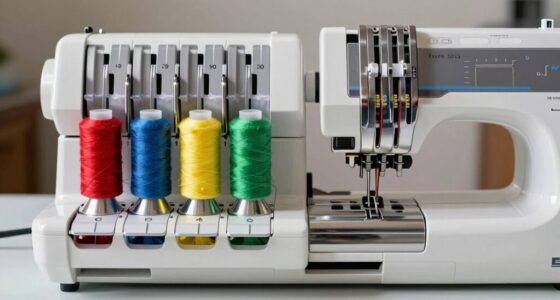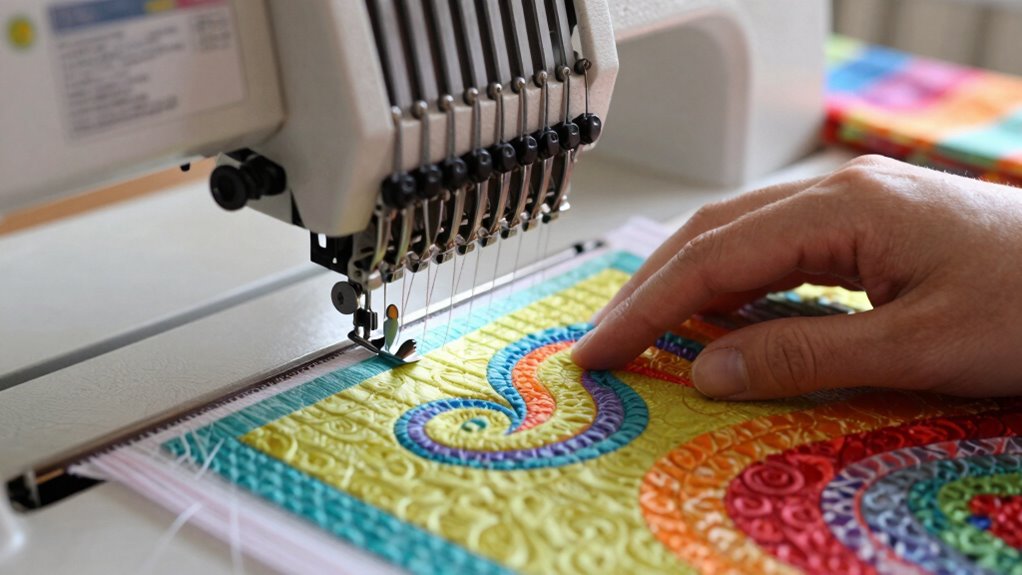

Stitch regulation acts like a steady hand, helping you keep your stitches even and consistent, no matter your fabric or speed. It syncs your hand movements with the needle, so your quilting looks professional and polished. By managing fabric tension and machine calibration, it reduces puckering, skipped stitches, and uneven lines. This control lets you focus on your design and creativity. Keep exploring to find out how mastering stitch regulation can elevate your quilting skills even further.
Key Takeaways
- Ensures consistent stitch length during free-motion quilting for a polished look.
- Synchronizes hand movements with needle action, improving control and precision.
- Prevents irregular stitches caused by fabric tension issues and machine miscalibration.
- Allows quilters to focus on design without worrying about stitch consistency.
- Enhances the overall quilting quality, durability, and professional appearance.
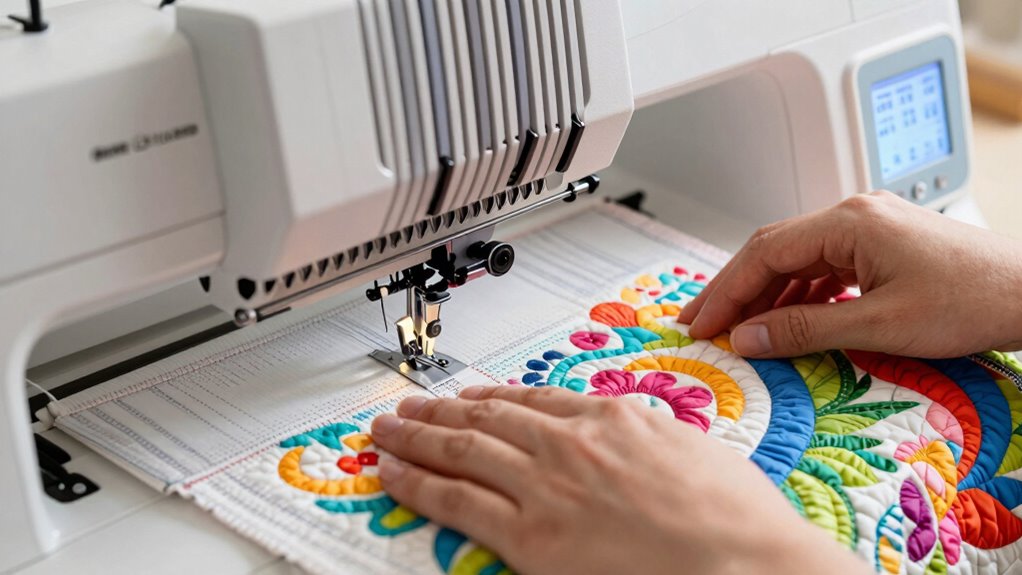
Free-motion quilting offers endless creative possibilities, but maintaining consistent stitch length can be challenging without proper stitch regulation. When you’re working on intricate designs, uneven stitches can distract from your overall masterpiece. That’s where stitch regulation comes into play—it’s an essential tool to help you control your stitches and achieve a polished look. Basically, stitch regulation systems work by synchronizing your hand movements with the machine’s needle action, ensuring each stitch is evenly spaced regardless of how fast or slow you move the fabric. This consistency is key to professional-looking quilting, especially when working on large projects or complex patterns.
Stitch regulation ensures even stitches, making free-motion quilting smoother and more professional-looking.
One of the biggest challenges in free-motion quilting is managing fabric tension. If your fabric tension isn’t balanced, you’ll notice irregular stitch length, puckering, or skipped stitches. Stitch regulation helps mitigate these issues by providing a steady, controlled stitch, but it’s equally important to keep your fabric tension properly adjusted. When your tension is off, even the best regulation system can’t compensate for the inconsistencies. Regularly checking and adjusting your tension settings on your machine ensures that your stitches remain uniform and smooth, which is essential when you’re working with different types of fabric or multiple layers. Additionally, understanding the role of tension in stitch regulation can help you troubleshoot and improve your quilting results. Proper tension control is also fundamental for achieving consistent stitches, which directly impacts the overall quality of your finished quilt. Being aware of how machine tension interacts with the regulation system can help you fine-tune your setup for optimal results.
Machine calibration is another critical factor that stitch regulation relies on. If your machine isn’t calibrated correctly, you might experience skipped stitches, uneven tension, or inconsistent stitch length, all of which undermine the benefits of regulation technology. Proper calibration involves fine-tuning your machine’s motor speed, foot pressure, and stitch settings so that they work harmoniously with the regulation system. When your machine is calibrated well, it responds precisely to your hand movements, allowing you to focus on your design without worrying about stitch quality. Regular maintenance and calibration checks ensure your machine delivers consistent results, making your quilting more enjoyable and less frustrating. Proper calibration is also vital for maintaining the longevity of your machine and ensuring it functions optimally over time. Investing time in calibration can significantly improve the accuracy and reliability of your stitch regulation system. Recognizing signs of miscalibration early can help prevent larger issues and maintain high-quality stitches throughout your quilting projects.
Ultimately, stitch regulation empowers you to focus on your creative process rather than fighting the machine. When fabric tension is balanced and your machine is properly calibrated, the regulation system can do its job effectively, producing even, professional-looking stitches. This consistency allows your quilting to flow smoothly, giving you the confidence to execute complex motifs or freehand designs with precision. In the end, stitch regulation acts as your partner in quilting, helping you produce beautiful, uniform stitches while freeing you to enjoy the artistry of free-motion quilting without the distraction of uneven stitches. Additionally, understanding how machine calibration impacts stitch regulation can help you troubleshoot and optimize your quilting experience.

Little Rebel Sewing and Quilting Machine with Built-in Stitch Regulation (Little Rebel)
- All-In-One Quilting & Sewing Machine | Switch from…
- Powerful Performance | Tackle big projects with ease…
- Quick Change System for Versatile Use | Easily switch between quilting and sewing: includes both sewing and quilting…
As an affiliate, we earn on qualifying purchases.
As an affiliate, we earn on qualifying purchases.
Frequently Asked Questions
Does Stitch Regulation Work With All Sewing Machine Brands?
Stitch regulation doesn’t work with all sewing machine brands, as compatibility depends on brand and model. Some brands integrate stitch regulation technology directly into their machines, offering seamless operation. Others require external devices or may not support regulation at all. Before purchasing, you should check your machine’s brand compatibility and whether it supports the technology integration necessary for stitch regulation. This guarantees you get the most accurate and reliable quilting results.
Can Beginners Effectively Use Stitch Regulation Devices?
Studies show that about 60% of beginners improve their quilting precision within the first few months. You can effectively use stitch regulation devices as a beginner, but it requires practice and patience. They help you shift from manual control to more consistent stitches, making quilting easier. While it might feel challenging initially, these devices can boost your confidence and skill, ultimately leading to more professional-looking quilts.
Is Stitch Regulation Necessary for All Free-Motion Quilting Styles?
Stitch regulation isn’t necessary for all free-motion quilting styles, especially if you prefer manual control and enjoy developing your quilting precision. It can be a helpful tool for maintaining consistent stitches, but many quilters achieve beautiful results without it. Your choice depends on your comfort level and the look you want. If you aim for perfect, even stitches, stitch regulation can be a valuable addition; otherwise, manual control works perfectly.
How Does Stitch Regulation Impact Quilting Speed?
Imagine your quilt gliding smoothly beneath your needle, stitches perfectly even. Stitch regulation boosts your quilting speed by maintaining consistent quilt tension, allowing you to work faster without sacrificing stitch quality. It helps you keep a steady rhythm, so your stitches stay uniform even as you increase your pace. With regulation, you can quilt more quickly while ensuring each stitch remains precise, giving your quilt a polished, professional finish effortlessly.
What Maintenance Is Required for Stitch Regulation Systems?
You need to regularly clean and check your stitch regulation system, especially the sensors, to guarantee peak performance. Automatic calibration helps keep the system accurate, so perform it as recommended by your machine’s manual. Keep an eye on sensor sensitivity—dust or lint can interfere, so gently clean sensors with a soft brush or cloth. Proper maintenance ensures smooth stitching, reduces errors, and prolongs your machine’s life.
Conclusion
Understanding stitch regulation helps you achieve consistent, professional-looking quilting, even if you’re just starting out. Imagine practicing a simple meander pattern; with regulation, your stitches stay even and smooth, making your quilt look polished. Think of it like having a steady hand guiding you through each stitch. Once you grasp how regulation works, you’ll gain confidence and enjoy the creative process more, turning your quilting projects into beautiful, finished works you’re proud of.