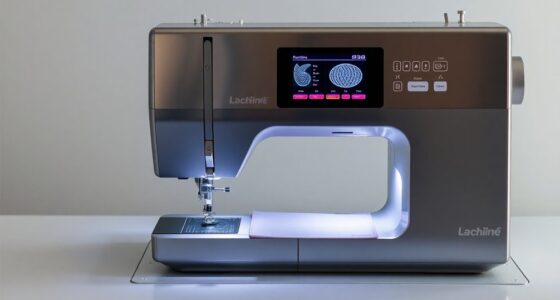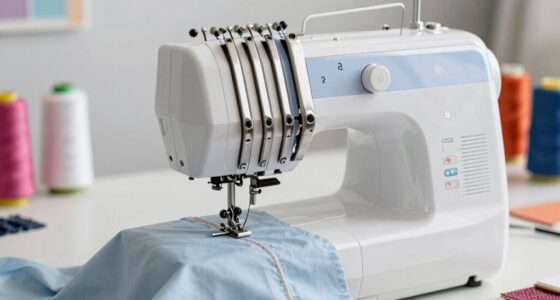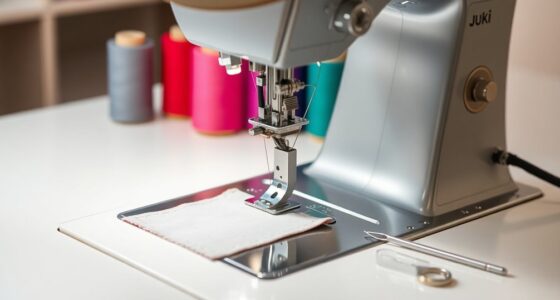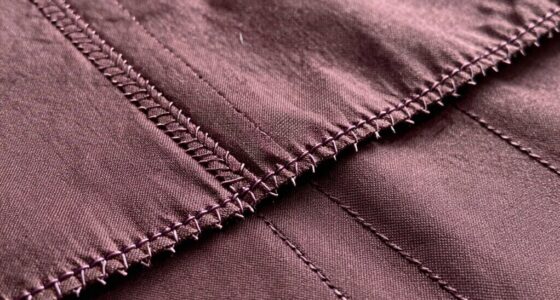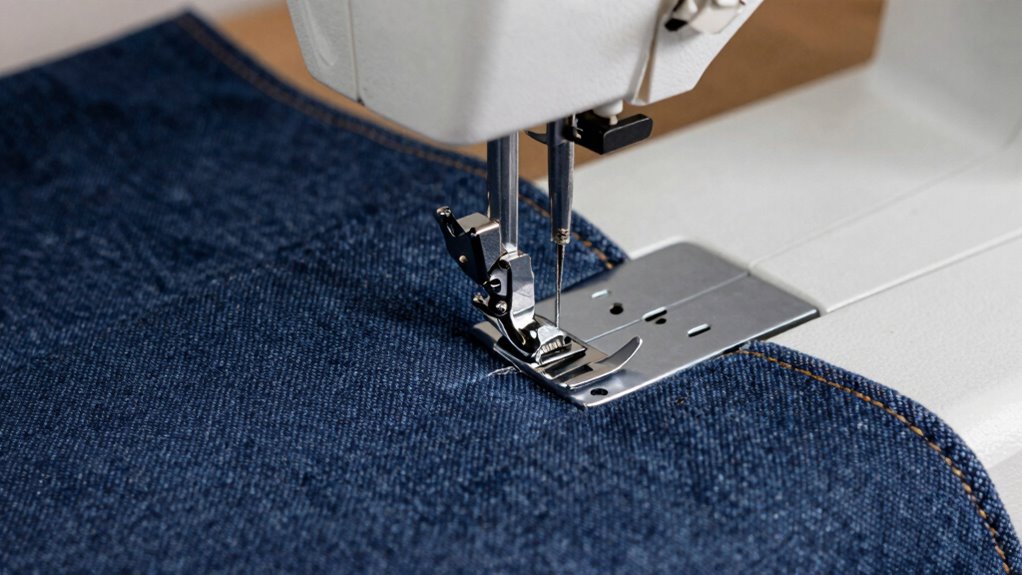
To test your sewing machine for denim without damaging your needle, start with a scrap piece of denim and lower your tension slightly. Sew a few test stitches, then check for even tension and secure stitches without puckering or bunching. Adjust the tension gradually based on what you see, and make sure your needle is sharp and suited for heavy fabrics. If you keep tweaking and testing, you’ll set your machine perfectly for your project.
Listen free for 30 days with Audible
Thousands of audiobooks and originals — cancel anytime.
As an affiliate, we earn on qualifying purchases.
Key Takeaways
- Use scrap denim fabric and a new, sharp needle to test settings before sewing your actual project.
- Adjust tension and stitch length gradually, observing stitch quality on the test fabric.
- Ensure bobbin thread and tension are properly set to prevent thread bunching or puckering.
- Perform multiple test runs to fine-tune machine adjustments without risking damage.
- Replace the needle if it shows signs of dullness or damage after testing.
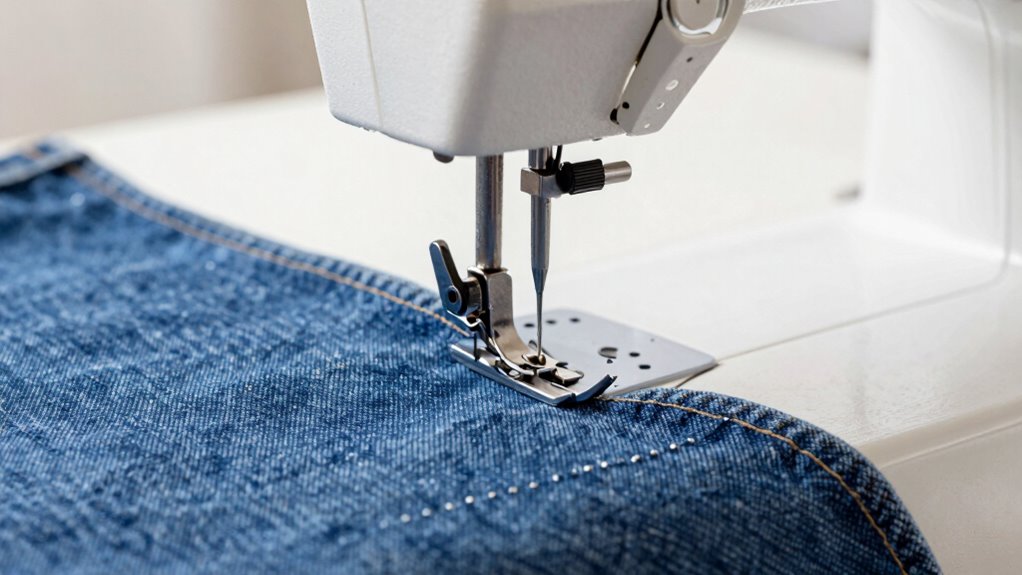
Ever wonder how to guarantee your sewing machine can handle heavy fabrics like denim? The key lies in understanding a few essential settings and components before you start stitching. First, you need to check the thread tension. Proper thread tension ensures your stitches are even and secure without puckering or bunching the fabric. When sewing denim, start with a slightly looser tension than you would for lighter fabrics. Test your settings on scrap pieces to find the perfect balance—if the stitches are too tight, they’ll pucker the fabric; if too loose, the seams won’t hold. Adjust the tension gradually, and always observe how the stitches look on your test fabric. Another vital factor is bobbin quality. Using a good-quality bobbin and thread can greatly influence how smoothly your sewing machine operates on dense materials like denim. A poor-quality bobbin might cause thread jams or uneven stitching, which can damage your needle or disrupt your project. Make sure your bobbin is wound evenly, with consistent tension, and that it’s compatible with your machine. When testing, observe how the bobbin thread interacts with the top thread. If you notice skipped stitches or uneven tension on the underside, it might be time to replace the bobbin or re-wind it carefully. Before you start sewing on your actual denim project, do a few test runs on scrap fabric of similar weight and texture. Use the same thread and needle size you plan to work with. Set your machine to a heavier stitch length, which helps in evenly distributing the stitches across the dense fabric. Keep an eye on how the thread tension and bobbin work together—these two elements are interconnected and essential for smooth sewing. If you notice the thread bunching or the fabric puckering, make small adjustments and test again. Also, ensure your needle is sharp and appropriate for denim—typically a size 90/14 or 100/16 works well. Understanding sewing machine components is crucial for achieving professional-looking results on heavy fabrics. Additionally, familiarizing yourself with machine settings can help you fine-tune your sewing process for optimal results. Properly maintaining and adjusting tension is also key to preventing issues and ensuring your denim projects come out perfect. Regularly checking your machine’s presser foot pressure can also help achieve even stitches and prevent fabric slippage during sewing.
As an affiliate, we earn on qualifying purchases.
Frequently Asked Questions
Can I Use a Regular Needle for Testing Denim?
You shouldn’t use a regular needle for testing denim because denim fabric stretch and needle compatibility are vital. Regular needles can break or cause skipped stitches on heavy, durable denim. Instead, opt for a heavy-duty or denim needle designed specifically for thick fabrics. This guarantees smooth sewing, preserves your machine, and prevents damage to both the fabric and needle, giving you reliable test results without risking needle breakage.
How Often Should I Test My Machine on Denim?
Think of your sewing machine as a race car needing regular pit stops. You should test it on denim every few projects, especially after changing fabric types or altering settings. Before testing, guarantee fabric preparation and needle alignment are correct. This way, you catch issues early, prevent skipped stitches, and keep your machine humming smoothly. Regular testing keeps your denim projects running flawlessly, much like a well-tuned engine on the open road.
What’s the Best Thread for Sewing Denim?
You should use a heavy-duty thread like polyester or a strong cotton-wrapped polyester for sewing denim. Look for thread with high thread strength to withstand the thick fabric. Pair it with a larger needle size, such as 90/14 or 100/16, to prevent breaking and guarantee smooth stitching. This combination offers durability and helps your seams stay secure, especially on thicker or layered denim projects.
Does Machine Type Affect Denim Testing Procedures?
If you’re testing a machine for denim, the type definitely impacts your testing techniques. For example, a heavy-duty industrial machine handles thicker denim differently than a standard home machine. Always check machine compatibility first. Use the appropriate needle and tension settings, then run a few test stitches on scrap denim to gauge performance. Adjust your techniques accordingly, ensuring the machine handles denim smoothly without damaging your needle or fabric.
How Do I Fix Skipped Stitches on Denim?
To fix skipped stitches on denim, start by checking your fabric tension—make sure it’s not too tight or loose. Next, consider using a larger needle size, like 90/14 or 100/16, which handles thick denim better. Also, re-thread your machine to guarantee smooth stitching. Adjust the tension and needle if needed, and test on scrap fabric before sewing your project. These steps should help achieve even, secure stitches.
Conclusion
Testing your sewing machine for denim doesn’t have to be intimidating. By starting with scrap fabric, adjusting your settings, and observing the stitch quality, you guarantee your machine handles thick materials without damaging your needle. Remember, a stitch in time saves nine—taking these precautions now will save you time and frustration later. With patience and care, you’ll confidently sew denim projects that stand the test of time.
NFL season / tailgating Picks
team gear
As an affiliate, we earn on qualifying purchases.