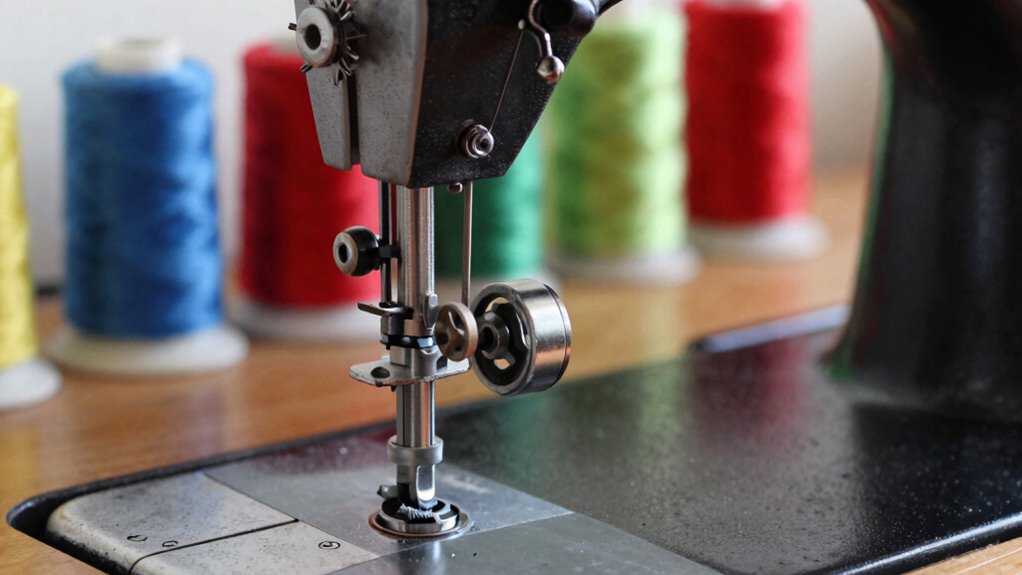

Differential feed is a bigger deal than fancy extras because it directly controls how fabric moves through your machine, ensuring even stitches and preventing puckering or stretching. While decorative features are nice, they don’t improve the quality or durability of your sewing results. Proper use of differential feed helps you handle tricky fabrics and layered textiles with ease, making your projects look professional. Keep exploring to discover how mastering this feature can truly elevate your sewing skills.

Get business pricing on tools and workshop supplies
- Business-only prices and quantity discounts
- Tax-exempt purchasing
- Multiple users, one account, clear invoices
Key Takeaways
- Differential feed directly controls fabric movement, preventing puckering and uneven seams, essential for professional-quality results.
- It manages fabric layers during sewing, unlike tension adjustments that only affect fabric tightness.
- Proper use of differential feed improves stitch consistency and fabric handling on challenging textiles.
- Many sewists overlook its importance, yet it is fundamental to maintaining sewing precision and fabric integrity.
- Differential feed enhances overall machine performance, making it a smarter investment than decorative features.
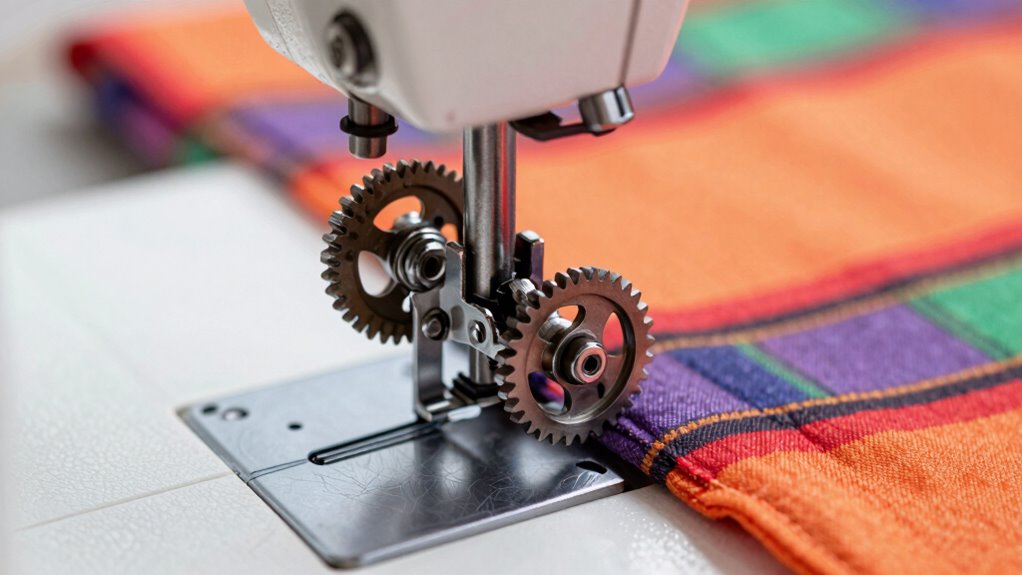
Have you ever wondered how sewing machines achieve smooth, even stitches on multiple layers of fabric? It all comes down to the intricate dance of sewing machine mechanics working behind the scenes. One of the most essential components in this process is the differential feed, which often gets overlooked in favor of fancy stitches or decorative features. However, it’s the differential feed that truly makes a difference when you’re sewing tricky fabrics or multiple layers. It guarantees your stitches stay even and your fabric doesn’t pucker or stretch out of shape. Without it, even the most advanced sewing machine’s fancy extras fall short in delivering professional results.
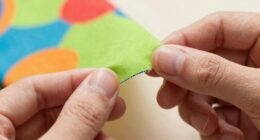
The differential feed ensures even stitches and prevents fabric puckering, especially on tricky or layered textiles.
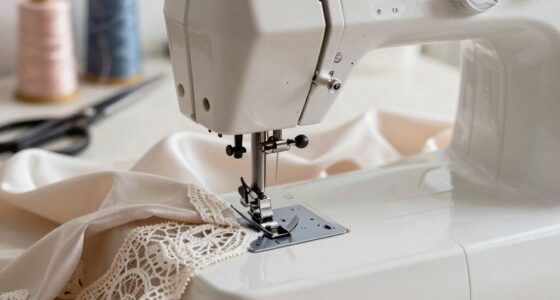
The core of a machine’s ability to produce consistent stitches lies in fabric tension adjustment and how the machine handles layers. The differential feed is responsible for controlling the movement of the fabric from the front and back, effectively matching the feed rate of the top and bottom layers. When you’re sewing knit fabrics or slippery textiles, standard feed mechanisms can struggle to keep everything aligned perfectly. That’s where the differential feed shines—it allows you to fine-tune the fabric’s movement, preventing unwanted stretching or bunching. This is especially essential when working on delicate or stretchy materials where maintaining proper tension is key to a clean finish. Understanding fabric mechanics is crucial for achieving perfect results, especially since different fabrics require different feeding techniques for optimal performance. Additionally, the differential feed plays a vital role in maintaining seam quality, particularly when working with challenging fabrics.
Many sewists overlook the importance of the differential feed because they assume that a good stitch depends solely on the tension dials. While fabric tension adjustment is necessary, it only addresses one part of the equation. The differential feed complements this by managing how the fabric moves through the machine, providing a level of control that’s fundamental for high-quality results. In fact, the differential feed is often considered a mechanical advantage that enhances the machine’s overall performance. It’s not about adding bells and whistles; it’s about mastering the mechanics that keep your stitches even. When you understand and utilize the differential feed, you’re less likely to encounter puckering, uneven seams, or fabric stretching that can ruin your project.
In essence, the differential feed isn’t just a fancy feature—it’s a foundational aspect of sewing machine mechanics that directly impacts the quality of your sewing. It’s a tool that helps you adapt to different fabrics and layers, giving you the ability to craft professional-looking garments and projects with ease. While many might chase after decorative stitches or high-tech features, understanding and using the differential feed effectively will always be a smarter investment. It’s the unsung hero that keeps your stitches smooth, even, and precise, proving that sometimes, the simplest features make the biggest difference in sewing.
differential feed sewing machine
As an affiliate, we earn on qualifying purchases.
As an affiliate, we earn on qualifying purchases.
Frequently Asked Questions
How Does Differential Feed Affect Fabric Stretchability?
Differential feed considerably impacts fabric stretchability by improving fabric stability and enhancing stretch quality. When you use differential feed, it adjusts the feed rates of the top and bottom threads, allowing your fabric to stretch smoothly without puckering or puckering. This results in better control over stretch, especially with delicate or stretchy fabrics, ensuring your finished project has consistent elasticity and a professional look.
Can I Use a Differential Feed Setting on All Sewing Machines?
Not all sewing machines have a differential feed setting, so you can’t use it universally. If your machine does, it’s great for embroidery techniques and quilting methods, helping to prevent puckering and manage fabric stretch. Check your machine’s manual to see if it offers this feature. Using differential feed wisely enhances your sewing projects, especially when working with delicate or stretchy fabrics in embroidery and quilting.
What’s the Best Way to Adjust the Differential Feed?
Adjusting the differential feed is simpler than you might think—it’s the secret to flawless sewing! First, make sure your thread tension is balanced, then tweak the differential feed dial gradually while sewing a test fabric. Watch for puckering or stretching; if it happens, make small adjustments. Focus on maintaining consistent stitch length, and you’ll master it in no time, creating smooth, professional-looking seams effortlessly.
Does Differential Feed Impact Seam Durability?
Yes, differential feed impacts seam durability by ensuring proper fabric alignment and stitch tension. When the differential feed is correctly adjusted, it prevents puckering and uneven stitching, which can weaken seams over time. If the fabric isn’t properly aligned, the stitches may be too tight or loose, reducing seam strength. So, maintaining the right differential feed is essential for creating durable, professional-looking seams that last.
How Does Differential Feed Influence Puckering?
Differential feed helps reduce puckering by adjusting fabric feed, especially with delicate or textured fabrics. It guarantees even fabric movement, leading to smoother seams and improved stitch quality. When you use differential feed, you control fabric tension better, preventing gathers or puckers. This results in a cleaner, professional finish, particularly on tricky fabrics. Without it, puckering becomes more likely, compromising both fabric texture and the overall appearance of your stitches.
Conclusion
Imagine your fabric flowing smoothly under your fingers, guided effortlessly by the gentle dance of the differential feed. It’s the quiet hero that keeps your seams straight and fabric from puckering, making your sewing feel almost magical. While fancy extras catch your eye, it’s this simple mechanism that truly transforms your project into something professional. So next time you sew, appreciate the steady rhythm of the differential feed—your fabric’s best friend.
Halloween Picks
halloween
As an affiliate, we earn on qualifying purchases.