When using a twin needle, start by adjusting your machine’s upper thread tension to medium and test on scrap fabric. Verify both spools are properly threaded through tension discs and guides. Use the right needle size and stitch length for your fabric, and select the straight stitch setting. Make small tension tweaks to prevent puckering and check your stitches on the underside. For more tips to master double needle sewing, keep exploring the details below.
Key Takeaways
- Properly thread both spools through tension discs and guides before inserting the twin needle.
- Adjust the upper thread tension to a medium setting (around 4-5) and fine-tune for even stitches.
- Use the correct needle size and type suitable for your fabric to prevent skipped stitches.
- Test on scrap fabric to adjust tension and stitch length for optimal stitch quality.
- Use straight stitches with a length of 2.5mm to 3mm for professional-looking double-needle sewing.
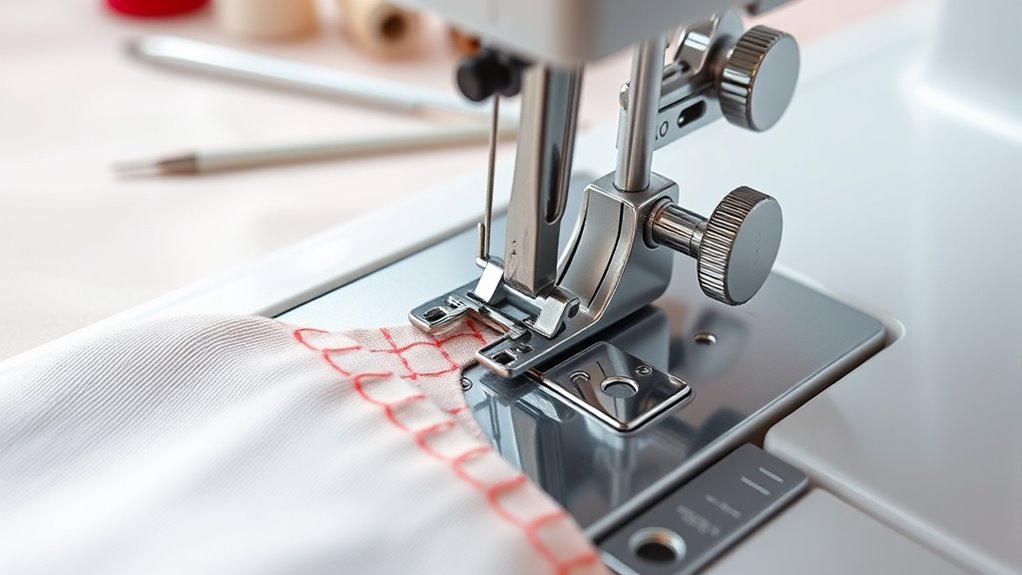
Twin needle sewing can be a game-changer for creating professional-looking hems, topstitching, and decorative seams, but it requires some specific techniques to master. One of the most important aspects is understanding how to set your machine correctly, particularly when it comes to thread tension and stitch selection. Proper thread tension guarantees that your stitches are even and balanced on both sides of the fabric, preventing puckering or loose stitches. When using a twin needle, you’ll want to start by adjusting your upper thread tension to a medium setting—usually around 4 or 5 on most machines. However, if you notice uneven stitches, don’t hesitate to make small adjustments. Sometimes, increasing or decreasing the tension slightly can make a significant difference, especially with different fabric types or thread brands. Additionally, selecting the right needle size and type for your fabric can significantly improve stitch quality and durability and reduce skipped stitches.
Stitch selection is equally critical. For most hemming or topstitching, you’ll want to choose a straight stitch with a length between 2.5mm and 3mm. This provides a clean, professional finish while allowing the twin needles to work smoothly. Some machines have a specific stitch setting for twin needle sewing, which can help maintain consistent stitch quality. Avoid using zigzag or decorative stitches unless your machine explicitly supports twin needle use with those settings, as they can cause skipped stitches or uneven tension. When selecting your stitch, consider the fabric weight and the look you want to achieve. Heavier fabrics might require a slightly longer stitch length, while delicate fabrics benefit from shorter stitches to prevent puckering.
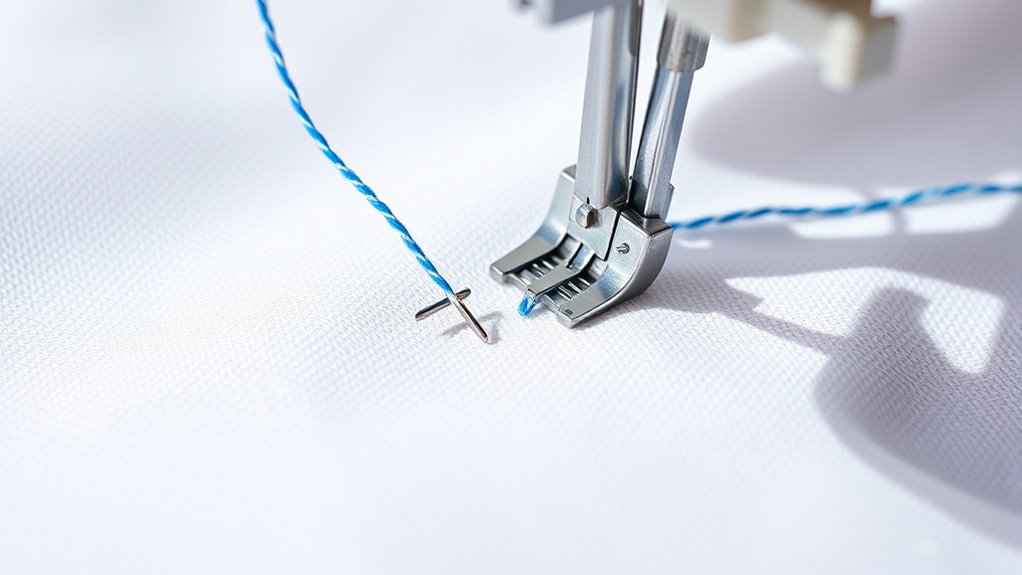
Before you start sewing, it’s best to test your settings on scrap fabric. Thread your machine with two spools of matching or contrasting thread, and make sure both threads are properly threaded through the tension discs and guides. When you attach the twin needle, double-check that the needle is inserted securely, and the twin needle is aligned correctly. Run a few test stitches to observe the stitch quality and make further adjustments if needed. Pay attention to how the tension affects the appearance on both sides of the fabric—if the underside looks loose or uneven, tweak your tension settings accordingly.
Frequently Asked Questions
Can I Use Any Twin Needle on My Sewing Machine?
You can’t use any twin needle on your sewing machine. Check if your machine is compatible with twin needles; most modern machines are, but some older or specialized models may not be. Always match the needle sizes to your fabric and project needs, typically between 2.0mm and 4.0mm. Using the wrong needle type or incompatible sizes can cause skipped stitches or damage, so double-check your machine’s specifications before sewing.
How Do I Fix Skipped Stitches With a Twin Needle?
To fix skipped stitches with a twin needle, start by checking your thread tension; it should be balanced for even stitches. Verify your twin needle is compatible with your machine and fits properly. Use the correct needle size and type for your fabric. Also, clean your machine’s bobbin area, as lint or debris can cause issues. Adjust tension if needed, and test on scrap fabric before sewing your project.
What Fabrics Are Best Suited for Double Needle Sewing?
Imagine your fabric’s perfect match—cottons, lightweight linens, and soft knits are ideal for double needle sewing. You’ll want to contemplate fabric compatibility and needle size, ensuring the fabric isn’t too thick or delicate, which can cause skipped stitches or puckering. Light to medium weight fabrics work best, providing smooth, even stitches. Always match your needle size to your fabric for clean, professional results and a comfortable sewing experience.
How Do I Adjust Tension Settings for Twin Needle Sewing?
To adjust tension settings for twin needle sewing, start by calibrating the tension dial to a mid-range setting. Test on scrap fabric, checking for balanced stitch consistency on both sides. If the stitches are puckering or uneven, gradually loosen or tighten the tension as needed. Keep adjusting until you achieve smooth, even stitches with no puckering, ensuring ideal tension calibration for professional-looking double needle sewing.
Can I Sew Decorative Stitches With a Twin Needle?
Ever wonder if you can add embroidery patterns or decorative stitches with a twin needle? Absolutely! You can create beautiful, intricate decorative stitches using a twin needle, perfect for embellishing your projects. Just keep in mind that some embroidery patterns might require adjustments for tension and stitch length. Experiment with different stitches to see what unique effects you can achieve—your sewing projects will look more professional and personalized!
Conclusion
Using a twin needle can transform your sewing projects with professional-looking double stitches, but it’s essential to test on scrap fabric first. Some believe it weakens seams, but with proper tension and technique, your stitches stay strong. Think of it like a well-balanced recipe—when you follow the right steps, the results are impressive. So, trust the process, experiment, and enjoy creating beautiful, durable double-stitched seams that elevate your sewing game.